Celana pendek
This lecture asserts that true sovereignty rests solely with God, rejecting the concept of human or national governance. It emphasizes that ownership, in its entirety, belongs to God, with all possessions – including one’s own body and progeny – being held in trust. The discussion refutes any form of human rule, whether individual kingship, national dominion, or popular sovereignty, deeming them forms of associating partners with God. The speaker stresses that God, or His appointed representatives, are the sole law-givers, and true authority emanates only from the Divine.

71
Dr. Israr Ahmad explains that contemporary Urdu utilizes easily understood vocabulary rooted in common usage. He points out that words like ‘Asr’ (era/time) and ‘Khassara’ (loss) are well-established in Urdu. The lecture emphasizes that even words with Arabic origins are integrated naturally into the language, demonstrated by terms like ‘Iman’ (faith) and ‘Wasi’at’ (breadth). The discussion highlights the seamless blend of Arabic and Urdu, making the language accessible and relatable.
62
This lecture discusses the potential re-establishment of a caliphate rooted in the principles of the Prophet Muhammad, specifically predicting its emergence in Pakistan and Afghanistan following a potential division of Afghanistan and the integration of Pashtun areas with Pakistan. It posits that the Sindh Valley, as envisioned by Iqbal, will become the center of this caliphate, from which forces will operate. The lecture also addresses the Shia belief in the return of the twelfth Imam, who has been in occultation for over a thousand years, and their expectation of his leadership. It suggests this leader will establish a government and raise armies, while highlighting a perceived lack of strength in Arab nations.
64
This lecture explores the concept of national identity, presenting the nation-state as a modern construct akin to a deity. It argues that in the contemporary era, the nation has replaced traditional faiths as a primary source of allegiance and purpose. The poem emphasizes the nation’s all-encompassing nature, where national identity is interwoven with religious belief. The speaker calls for strength derived from the principles of Tawhid (Oneness of God) and emphasizes the importance of Islam as a guiding force for the nation. The lecture ultimately proposes that patriotism, when rooted in Islamic values, can be a powerful force for national progress and spiritual elevation.
50
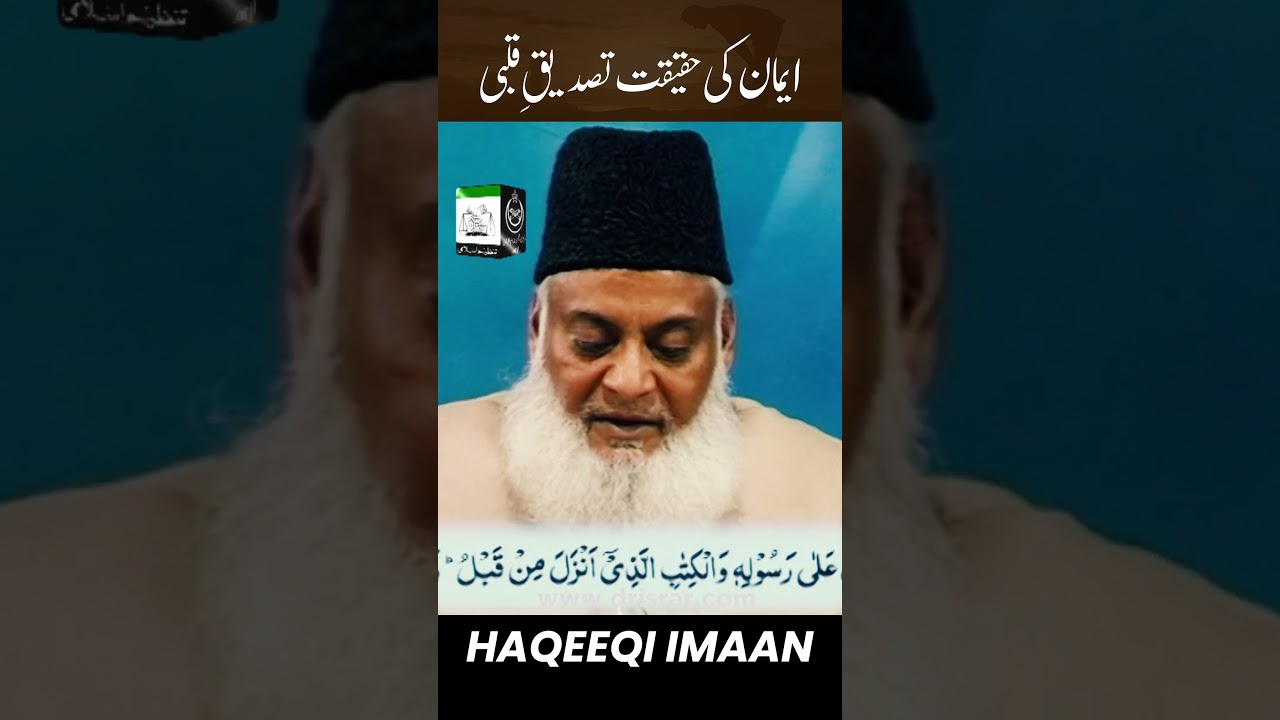
The text discusses the true nature of faith, emphasizing that genuine belief requires both verbal affirmation and sincere conviction of the heart. It contrasts this with the hypocrisy of those who profess faith but lack inner belief. The passage highlights the importance of believing in God, His angels, His books, His messengers, and the Day of Judgement. Rejecting any of these constitutes profound error and leads to severe spiritual deviation. True faith encompasses complete acceptance of divine guidance and the consequences of belief or disbelief.
52
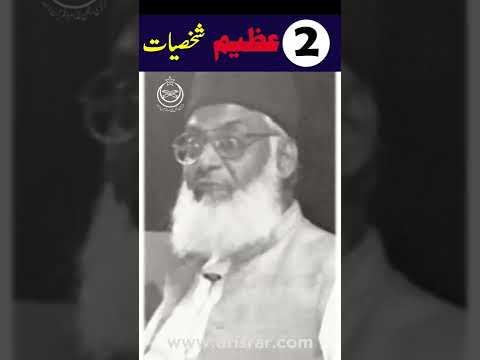
Dr. Israr Ahmad delineates the distinct yet complementary roles of Allama Iqbal and Quaid-e-Azam in the creation of Pakistan. He emphasizes that Iqbal was the visionary and philosopher who conceived the idea of a separate homeland, while Quaid-e-Azam was the architect and founder who materialized that vision into reality. Iqbal focused on conceptualizing the nation through thought and imagination, while Quaid-e-Azam concentrated on the practicalities of building and establishing it. The lecture highlights the importance of recognizing this difference in their contributions.
60
