شلوار کوتاه
This lecture asserts that true sovereignty rests solely with God, rejecting the concept of human or national governance. It emphasizes that ownership, in its entirety, belongs to God, with all possessions – including one’s own body and progeny – being held in trust. The discussion refutes any form of human rule, whether individual kingship, national dominion, or popular sovereignty, deeming them forms of associating partners with God. The speaker stresses that God, or His appointed representatives, are the sole law-givers, and true authority emanates only from the Divine.

71
This lecture discusses the underlying unity of the African continent, despite its diverse cultures, languages, and physical appearances. The speaker highlights a shared spiritual resonance, symbolized by the continuous recitation of ‘Labbaik Allahumma Labbaik’ during pilgrimage, indicating a common faith and devotion. The continuous arrival of pilgrim groups exemplifies this widespread spiritual connection, creating a powerful, unifying presence across the land. The lecture emphasizes that this spiritual unity transcends geographical and cultural boundaries.
59
The Prophet Muhammad (peace be upon him) once asked his companions about bankruptcy. They defined it as a lack of wealth. The Prophet corrected them, stating the true bankrupt in his nation will be the one who comes with a large number of prayers, fasts, and pilgrimages, but also with the burdens of having wronged others – having insulted someone, unjustly taken their wealth, or falsely accused them. On the Day of Judgment, these wronged individuals will present their claims, depleting the bankrupt’s good deeds. If the deeds are insufficient, their sins will be transferred to them, leading to their destruction in Hell. This is the true meaning of bankruptcy – a spiritual and moral deficiency.
57
This lecture details the Prophet Muhammad’s (peace be upon him) exceptional character, particularly his modesty and self-reliance. The narrative recounts how the Prophet never asked anyone for personal favors, even during the challenging time of migration to Medina. It highlights his foresight in preparing for the journey with the help of Hazrat Abu Bakr, ensuring swift transportation. The account further illustrates the Prophet’s humility, demonstrated by his willingness to perform even the simplest tasks himself, refusing to ask others for assistance. The lecture concludes with a powerful affirmation of support from his companions, declaring themselves ‘Ansarullah’ – helpers of God.
72
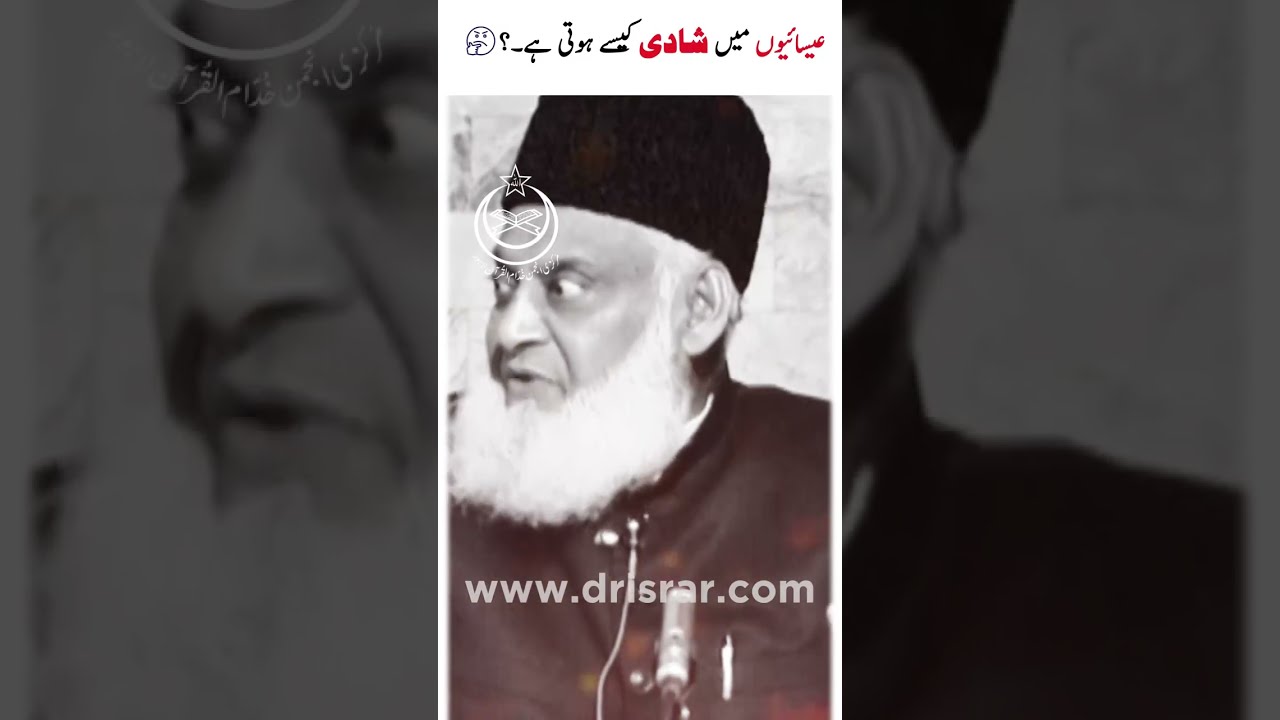
Dr. Israr Ahmad discusses the differences between Christian and Islamic marriage ceremonies. He highlights that in Christian weddings, the bride and groom stand face-to-face before the priest, openly professing their acceptance of each other. This contrasts with the Islamic practice where the bride and groom often remain somewhat secluded during the Nikah. He observes the respect afforded to the church and the priest within the Christian tradition, and contrasts this with the often-devalued position of the Imam or Nikah officiant in some Muslim communities. The lecture emphasizes the importance of dignity and reverence in religious practices.
73
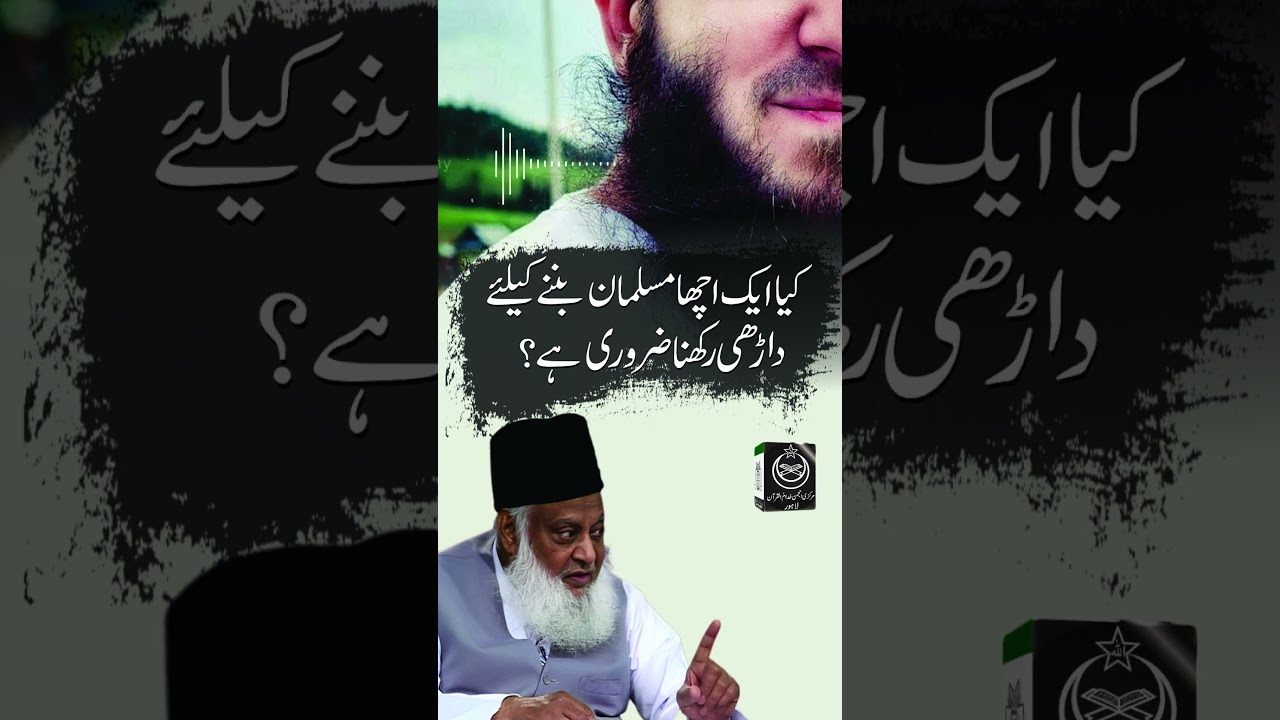
Prioritizing the purification of the heart is essential, though physical cleanliness is also necessary. Maintaining a beard is a strongly recommended tradition of the Prophet Muhammad, peace be upon him, not an obligation. While adhering to religious practices is important, genuine intention and a pure heart are paramount. Following the Prophet’s commands, even in seemingly minor matters, benefits one’s spiritual and worldly life. A clean heart and sincere intentions are foundational to a meaningful life.
63
