ショーツ
This lecture clarifies the permissibility of dedicating the reward of charitable deeds to others, specifically deceased parents or loved ones. It distinguishes between financial donations, where transferring the reward is acceptable, and acts of worship like prayer and Quran recitation, where the reward belongs solely to the worshipper. The speaker emphasizes that dedicating worship directly to anyone other than Allah constitutes shirk (associating partners with God) and renders the act impermissible. Financial charity’s reward can be transferred, but the reward for obligatory worship remains with the individual performing it.

109
This lecture clarifies the distinction between faith (iman) and submission (islam), highlighting a prevalent issue where people adopt the rituals of Islam without genuine belief in their hearts. Dr. Israr Ahmad explains that merely declaring faith or belonging to a Muslim family does not equate to true iman. He emphasizes the importance of conscious, thoughtful acceptance of faith, warning against selective obedience to religious commandments. The speaker discusses the Quranic verses regarding hypocrites who profess Islam outwardly but lack inner conviction. True faith, he argues, necessitates complete surrender to Allah and His Messenger, and a sincere commitment to all divine teachings. Allah rewards sincere obedience even amidst imperfection, but selective adherence invites His displeasure. Ultimately, Dr. Israr Ahmad urges introspection and a conscious striving for genuine iman, not merely inherited or ritualistic Islam.
87

The Quran’s compilation involved both a chronological (نزولی) and the current (مصحف) arrangement. The earliest verses revealed were from Surah Al-Alaq, followed by Surah Al-Qalam, parts of Surah Al-Muzzammil, Surah Al-Mudaththir, and then Surah Al-Fatiha. The current arrangement begins with Surah Al-Fatiha, followed by Surah Al-Baqarah, revealed in Medina. The Prophet Muhammad (peace be upon him) guided the scribes in arranging the verses as they were revealed, ensuring the final compilation was also divinely guided. This process of arrangement and compilation was a divine act, directed by God through His Messenger.
86
This lecture details the signs and characteristics of the Dajjal, a figure in Islamic eschatology. It describes his immense power, including the ability to resurrect the dead, manipulate perceptions, control weather, and traverse vast distances instantaneously. The Dajjal will claim divinity and perform miracles, attracting followers through illusions and false promises. He will possess complete dominion over the universe and demonstrate his power by splitting a person in two and then restoring them. This bayān explains these prophecies as detailed in hadith.
70
Human life is a constant series of choices. At every moment, individuals face a crossroads, deciding between worldly gain and divine guidance. This perpetual decision-making process defines our values and priorities. Each step involves prioritizing some things over others, a continuous evaluation of what we hold most dear. The choice between immediate profit and long-term spiritual well-being, between embracing corruption or adhering to ethical principles, shapes our destiny. This lecture explores the fundamental nature of these choices and their impact on our lives.
63
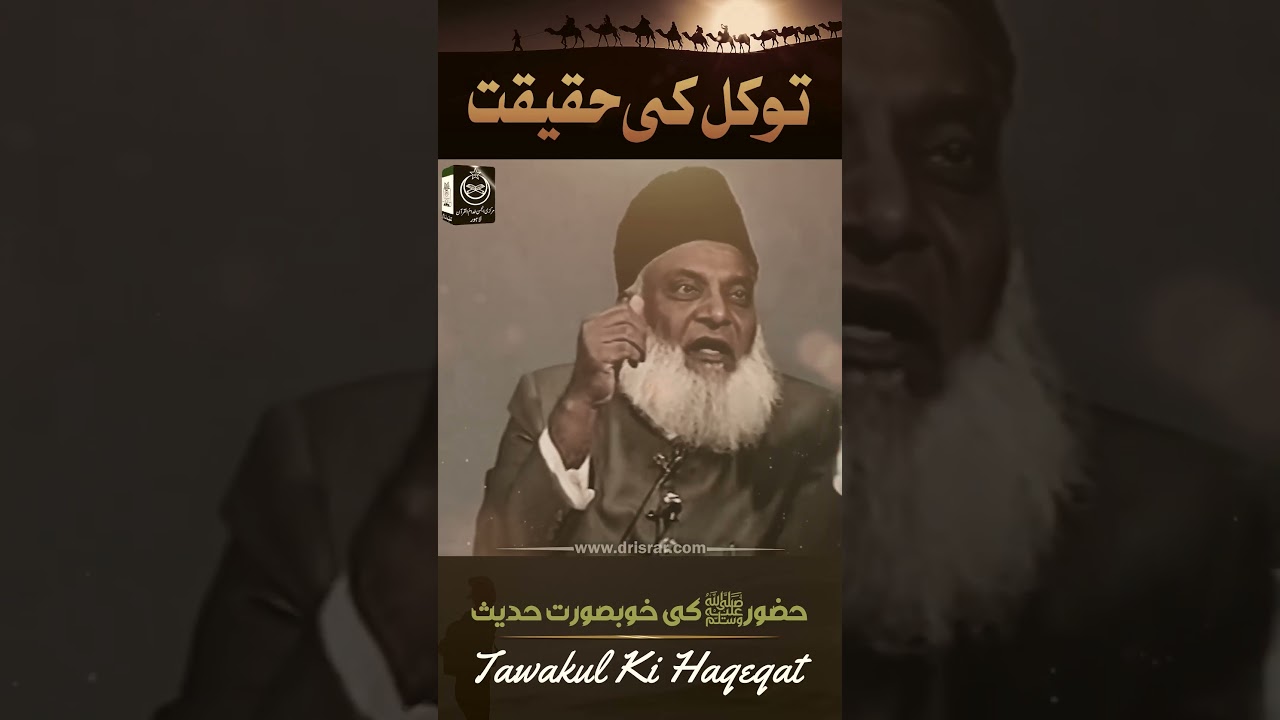
Dr. Israr Ahmad discusses the balance between intellect and emotion, emphasizing that while reason guides us in understanding goals and direction, it is passion that fuels action. He uses the analogy of an Arab Bedouin tying a rope to their camel’s leg to prevent escape, representing practical precautions. The Bedouin then ties the rope to their head to symbolize a commitment to a path, trusting in God after taking necessary steps. He illustrates this with the story of Prophet Ibrahim and the fire of Nimrod, highlighting that faith should not negate responsibility or practical measures. True devotion requires both action and reliance on a higher power, and prioritizing worldly survival over divine purpose is unacceptable.
56
