Corti
This lecture addresses the dangers of linguistic and cultural biases, clarifying that regional, ethnic, and linguistic identities are not inherently sinful. It emphasizes that every culture and language has a right to flourish, provided any elements conflicting with Islamic teachings are removed. The lecture highlights the unique status of the Arabic language not due to its speakers, but because it is the language of the Quran and the sayings of the Prophet Muhammad, making its study essential for direct understanding of religious texts. It cautions against exclusionary attitudes based on language or culture, likening such behavior to a useless tool.

66
The Quran is uniquely preserved compared to all other texts. The world’s scholars acknowledge this fact. Every letter and pronunciation within the various recorded recitations – Sab’a Qira’at and ‘Ashara Qira’at – is meticulously documented, detailing even the use of *zabar* or *zir* for each word. The official text was standardized by Hazrat Uthman (RA), a significant service to the Muslim community. This preservation extends to the precise documentation of variations in recitation, ensuring the integrity of the divine text.
57
Human beings, like all animals, are driven by fundamental needs: sustenance and procreation. These base desires, originating from the *nafs* (ego/self), are inherently amoral, demanding satisfaction without regard for ethical considerations like *halal* (lawful) or *haram* (unlawful). The Quran emphasizes the need to control these primal urges. The human self is a source of both potential and temptation, requiring spiritual guidance and discipline to avoid succumbing to base instincts. This lecture explores the nature of these desires and the importance of self-control in Islam.
71
This lecture explores the unparalleled glory and status of the Prophet Muhammad (peace be upon him). It emphasizes that after Allah, the Prophet is the most significant figure in existence. The speaker highlights the Prophet’s luminous face as the source of all light and acknowledges the human mind’s inability to fully comprehend the Prophet’s greatness. The lecture ultimately asserts that seeking refuge in the Prophet’s presence is the path to salvation, recognizing his unmatched spiritual stature.
82
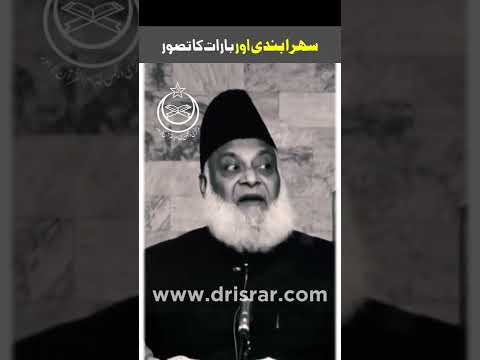
Dr. Israr Ahmad explains that the practice of *barat* (wedding processions) has no basis in Islamic scripture. He details its origins in pre-Islamic, specifically Hindu, customs. Historically, *barats* originated as armed escorts to transport the bride and her dowry safely between villages, protecting against bandits. These processions evolved into extravagant, multi-day celebrations involving feasting and displays of wealth. Dr. Ahmad asserts that this entire practice is foreign to Islamic teachings and represents a cultural import, not a religious obligation. The custom’s roots lie entirely outside Islam.
60
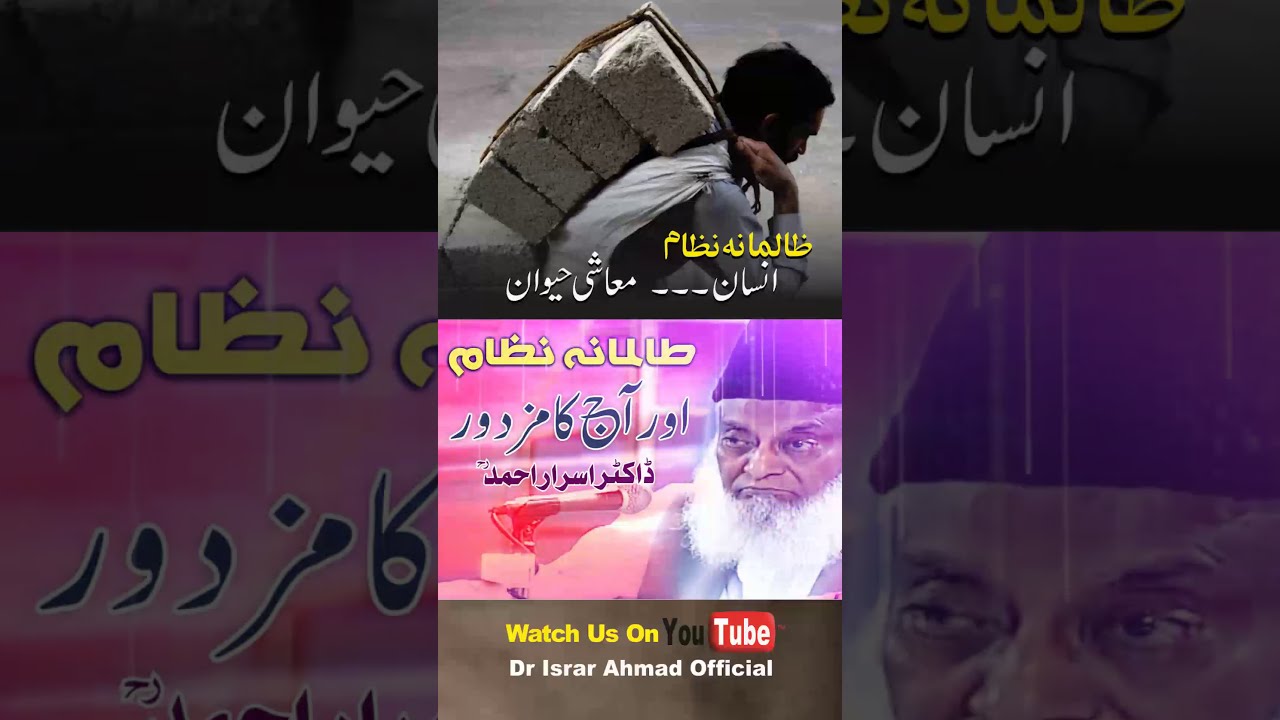
This lecture addresses the plight of the impoverished, highlighting the harsh realities faced by those struggling to meet basic needs. It emphasizes that individuals preoccupied with daily survival – those who cannot consistently secure even two meals a day and labor for ten to twelve hours – are deprived of the capacity for spiritual contemplation. The speaker asserts that systemic poverty degrades humanity, reducing individuals to a bestial existence, akin to livestock. This degradation strips them of their dignity and their ability to connect with the divine.
1,424
