السراويل القصيرة

The text details the historical origins of sectarian division between Shia and Sunni Muslims, attributing it to Abdullah Ibn Saba, a figure who emerged during the early Islamic period. Ibn Saba is accused of falsely claiming divine status for Hazrat Ali, sparking discord and ultimately laying the foundation for the Shia-Sunni split. He presented himself to Hazrat Ali and his followers, proclaiming him God, and even offered to be burned alive as a test of faith, a claim Hazrat Ali rejected and threatened with punishment. The text asserts this event is the root cause of the ongoing division.

86

This lecture emphasizes that true faith necessitates action, striving, and sacrifice. It refutes the misconception that mere belief alone guarantees salvation or progress. The speaker argues that a life devoid of effort, dedication, and selfless contribution is ultimately futile. Genuine faith, coupled with righteous deeds, mutual encouragement towards truth, and patience in adversity, are essential for a meaningful existence and achieving success in this life and the hereafter. It stresses the imperative of continuous effort and commitment as fundamental requirements for spiritual and worldly advancement, rejecting the notion of effortless attainment.
72

This lecture explores the concept of divine uniqueness, emphasizing that God is free from any partners, progeny, or need for support. It highlights the attributes of God as the sole sovereign, creator, and sustainer of the universe, deserving of all praise and magnification. The discussion centers on the affirmation of God’s absolute oneness and transcendence, rejecting any form of association or limitation to His divine essence. It underscores the importance of recognizing God's perfect attributes and submitting to His will.
49

This lecture explores the difference between superficial observation and true understanding. It asserts that animals perceive the external world, but humans possess the capacity to grasp the underlying reality of things. The speaker emphasizes that genuine vision comes from the heart, not merely the eyes, and seeks a deeper comprehension of existence, as exemplified in the prophetic supplication to see things as they truly are. True insight requires moving beyond appearances to grasp the essence of reality. The lecture highlights the importance of inner vision and spiritual understanding.
46

Islam is founded upon five pillars: the declaration of faith (belief in one God and the prophethood of Muhammad), the performance of prayer, the giving of charity (Zakat), fasting during Ramadan, and pilgrimage to Mecca for those who are able. These five pillars constitute the core of Islamic practice and belief, forming the foundation upon which the religion stands.
78
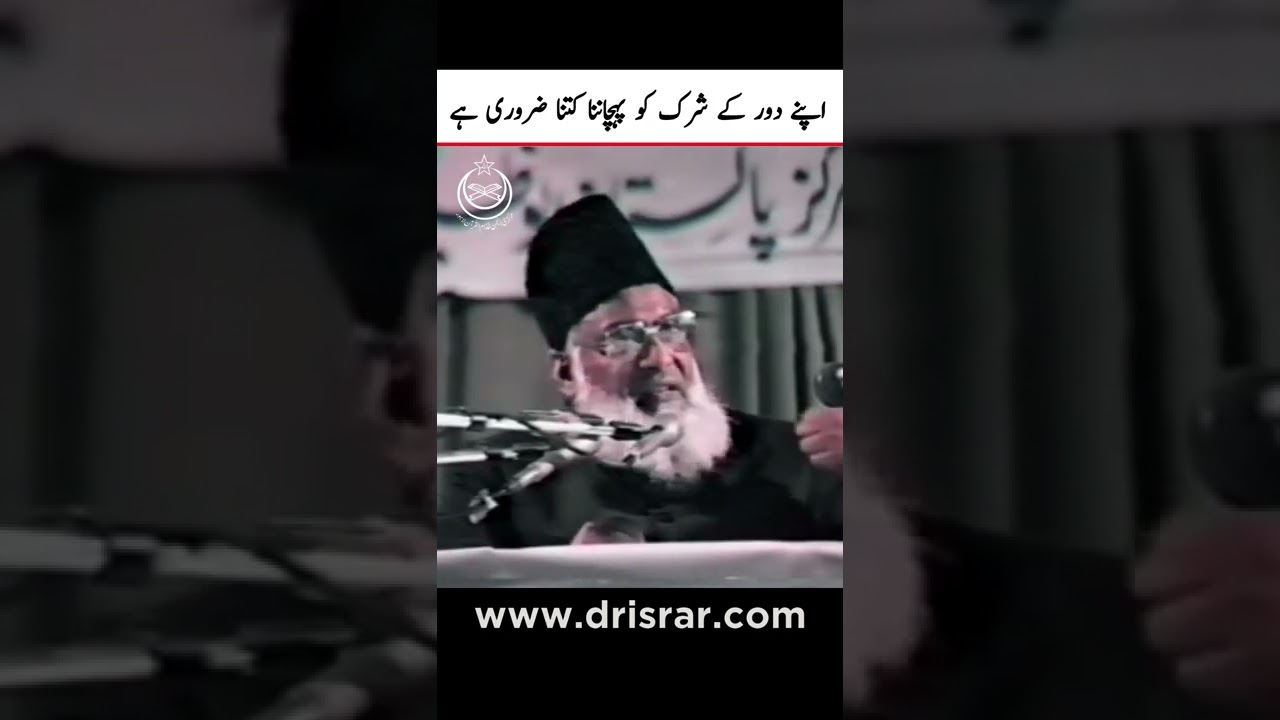
Shirk, or associating partners with God, manifests differently across eras. The forms of shirk prevalent centuries ago are not necessarily identical to those of today. New forms of shirk emerge, requiring continuous discernment and intellectual insight. Without this insight, individuals may mistakenly label practices as shirk based on historical rulings, while failing to recognize contemporary expressions of shirk. The ability to identify and reject the shirk of one’s own time is crucial, as demonstrated by scholars like Ibn Taymiyyah, but recognizing *current* forms of shirk demands ongoing vigilance.
56
