Celana pendek
The text details the historical origins of sectarian division between Shia and Sunni Muslims, attributing it to Abdullah Ibn Saba, a figure who emerged during the early Islamic period. Ibn Saba is accused of falsely claiming divine status for Hazrat Ali, sparking discord and ultimately laying the foundation for the Shia-Sunni split. He presented himself to Hazrat Ali and his followers, proclaiming him God, and even offered to be burned alive as a test of faith, a claim Hazrat Ali rejected and threatened with punishment. The text asserts this event is the root cause of the ongoing division.

86
Hajj involves performing specific rituals at designated locations. Pilgrims travel to Mecca, perform Tawaf around the Kaaba, and depart for Mina on the 8th or 9th of Dhulhijjah. They spend a night in Mina before proceeding to Arafat. The stay in Arafat is until sunset, after which pilgrims depart to Muzdalifah to offer the Maghrib and Isha prayers combined. All Hajj rituals are tied to specific places and times, requiring adherence to these conditions for proper completion.
74
A truly accepted pilgrimage, Hajj-e-Mabroor, is achieved through earnings from lawful sources and meticulous adherence to all its conditions, avoiding disputes and prioritizing the needs of fellow pilgrims. This selfless act fosters piety and guarantees a reward from Allah. Such a pilgrimage cleanses one of past sins, akin to a newborn's purity. It emphasizes the importance of sincerity, lawful income, and selfless service during Hajj to attain divine acceptance and spiritual renewal.
68
The greatest act of gratitude is towards one’s parents, a concept emphasized five times in the Quran. Simply *looking* at the Kaaba with reverence is considered an act of worship. Similarly, looking at one’s parents with love and respect is also an act of worship. This act of reverence, even without verbal interaction, holds significant spiritual reward. The Quran highlights the immense importance of honoring and showing affection to parents.
76
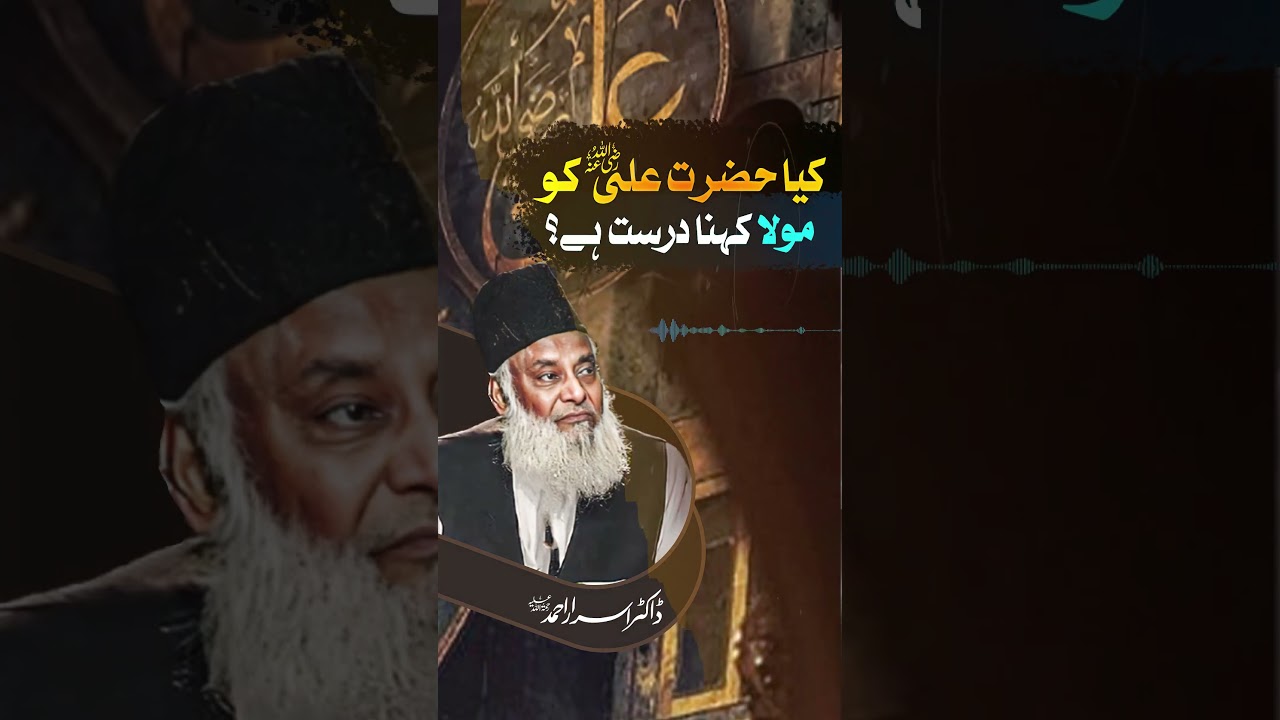
This lecture clarifies the varying interpretations of the term “Moula” (master/lord) in relation to Hazrat Ali. It explains that while using the term is not inherently problematic, some interpretations, particularly within Shia Islam, elevate Hazrat Ali to a status exceeding his role as a companion and leader. The speaker emphasizes that attributing problem-solving solely to Hazrat Ali is inaccurate, as he himself faced difficulties and unresolved conflicts during his life. The lecture cautions against exaggeration and excessive devotion, highlighting that true power and resolution reside with Allah alone. The discussion focuses on understanding the correct reverence for historical figures within an Islamic framework.
72
The history of Islam doesn't begin solely with the Prophet Muhammad ﷺ; its origins trace back to Prophet Adam. While the historical details from Adam to Moses are less preserved, the Israelites represent the first nation to emerge on the world stage. According to available knowledge, the Israelites were the first nation, and the final nation is the Ummah of Muhammad ﷺ. This lecture explores the historical lineage of Islam, emphasizing its continuity from the earliest prophets to the final messenger.
58
