شلوار کوتاه
Sheikh Abdul Qadir Jilani emphasized that true power and provision come solely from Allah. Nothing possesses inherent efficacy; fire cannot burn, water cannot drown, poison cannot kill, or anything benefit without Allah’s will. Reliance should be placed entirely on Allah, not on worldly means or intermediaries. The lecture stresses complete trust in Allah for all needs and outcomes.

57
This lecture clarifies the nature of faith (Iman) in Islam. It distinguishes between the declaration of faith – the verbal profession of ‘La ilaha illallah Muhammadur Rasulullah’ – and the inner conviction of the heart (yaqeen-e-qalbi). The speaker explains that simply being born into a Muslim family or joining a community adopting Islam does not automatically equate to true faith. True faith necessitates a deep, internal certainty. The initial declaration establishes a legal status of being a Muslim, but genuine belief requires a conviction within the heart. This discussion emphasizes the difference between outward profession and inward acceptance.
61
This lecture clarifies the obligation to make up missed fasts (qaza) due to illness or other valid reasons. It distinguishes between those who are medically unable to fast and those who are capable, emphasizing that healthy individuals must fulfill their obligation by fasting. The discussion also covers the permissible form of compensation (fidyah) for those with permanent, incurable illnesses or conditions where fasting poses a significant health risk. It details that providing a meal to a needy person can serve as fidyah in specific cases, but is not a substitute for fasting when one is able.
127

Dr. Israr Ahmad explains that indirect interest (andariki sood) permeates modern life, extending beyond direct loans to encompass nearly all commodities due to interest-based funding at various stages of production. He argues that even consuming basic necessities like wheat involves participating in a system fueled by interest. The only atonement for this unavoidable involvement is a dedicated effort to transform the existing system into one that eradicates interest completely. He stresses that escaping the pervasive influence of indirect interest is impossible without systemic change.
78
This lecture discusses the unique sanctity of Mecca, highlighting its historical role as a place of peace amidst a turbulent Arab society. Despite centuries of tribal conflict, feuds, and cycles of revenge killings, Mecca’s sacred precinct remained a sanctuary. Even those seeking retribution for deeply personal grievances—like the murder of a father—would refrain from violence within its boundaries. This demonstrates Allah’s provision of security and peace to the city, earning it the title 'City of Peace.' This inherent protection continues to be a defining characteristic of Mecca today.
41
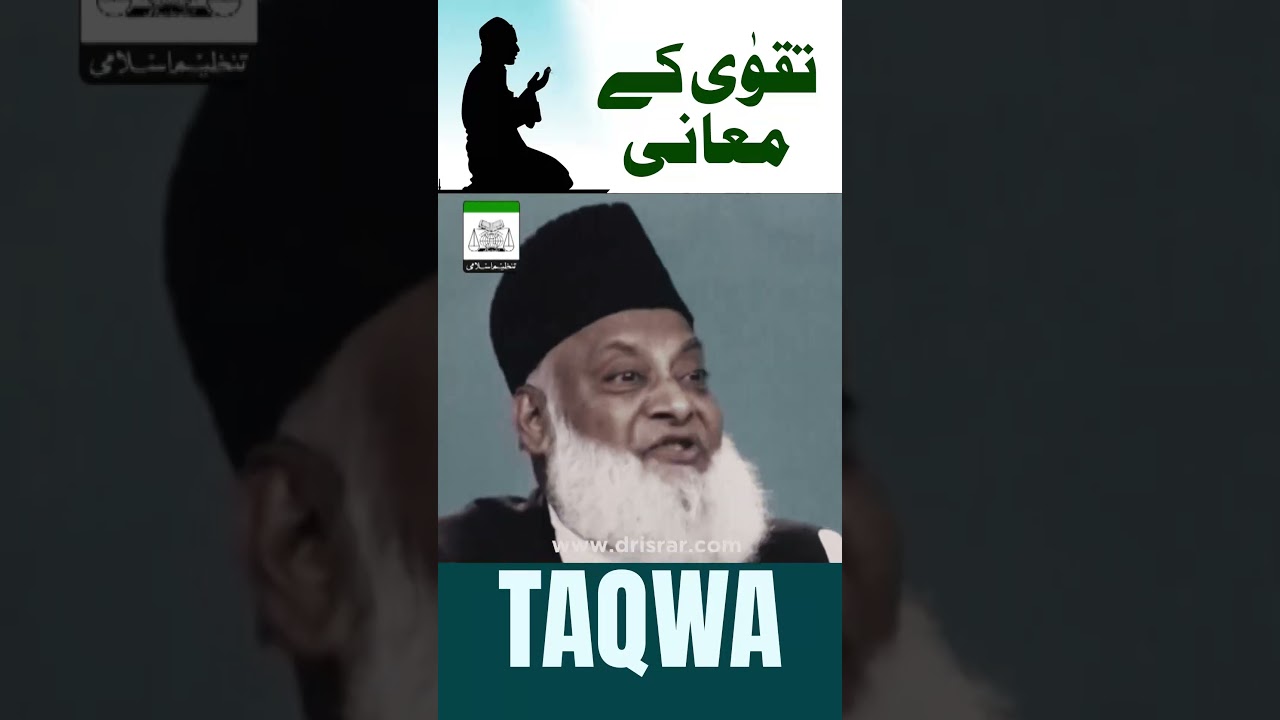
Taqwa, often translated as piety or God-consciousness, is fundamentally about safeguarding oneself from disobedience to God. It encompasses avoiding prohibited acts, adhering to divine commands, and shielding oneself from God’s wrath and the consequences of wrongdoing in this life and the hereafter. This involves a consistent, lifelong effort to protect oneself from anything that displeases God, fostering a constant awareness of divine judgment. It's a proactive approach to avoiding sin and seeking God's favor.
46
