Shorts
This lecture emphasizes the fulfillment of promises made to Muslims – establishing righteous governance, enabling the practice of their faith, and achieving ultimate peace. It highlights the deficiency of worship in the absence of a system governed by divine law, warning against societal disobedience and the consequences of rejecting Allah’s guidance. The speaker stresses the importance of courage, collective action, and unwavering faith in pursuing the establishment of a just and divinely ordained order. It cautions against compromising on principles and adhering to systems of injustice, emphasizing that true worship is only complete when the entire life is submitted to Allah’s will. The lecture concludes by urging believers to step forward with courage and establish Allah’s dominion.

61

Dr. Israr Ahmad discusses the historical significance of Prophet Muhammad (peace be upon him). He references Dr. Michael Hart’s book, *The 100*, which ranks Prophet Muhammad as the most influential figure in human history. The lecture highlights the revolutionary impact of the Prophet’s life and teachings, establishing him as a pivotal figure who reshaped the course of history. Dr. Hart’s research involved selecting one hundred of the most influential individuals throughout history and ranking them based on their impact, ultimately placing the Prophet Muhammad at the top.
43
This lecture asserts that the ultimate right is the sovereignty of God, and its implementation is essential. Resistance to this divine right is considered rebellion. The speaker critiques secularism and popular sovereignty, arguing they contradict the fundamental right of God’s rule. True teaching of right involves facing resistance, while compromise and agreements that cause no harm are insufficient. The lecture emphasizes the importance of upholding God’s sovereignty even in the face of opposition.
61
This lecture emphasizes the individual responsibility to actively oppose wrongdoing. It asserts that every person has a duty to counter evil, first through direct action if capable, and if not, through vocal opposition. Remaining silent in the face of injustice is condemned as akin to supporting it, and even if unable to speak out, a strong internal aversion to evil must be maintained. The speaker warns against inviting divine wrath through inaction and complicity.
291
This lecture emphasizes the severe consequences of mocking others based on their physical appearance or perceived flaws. It argues that outward imperfections should not be the basis of ridicule, as true worth lies in inner piety, love for God and His Messenger, and virtuous character. Mocking a believer is presented as an act of hostility towards God Himself, citing a divine tradition warning those who antagonize God’s friends will face His wrath. The lecture stresses the importance of respecting all believers and avoiding actions that cause them emotional pain.
56
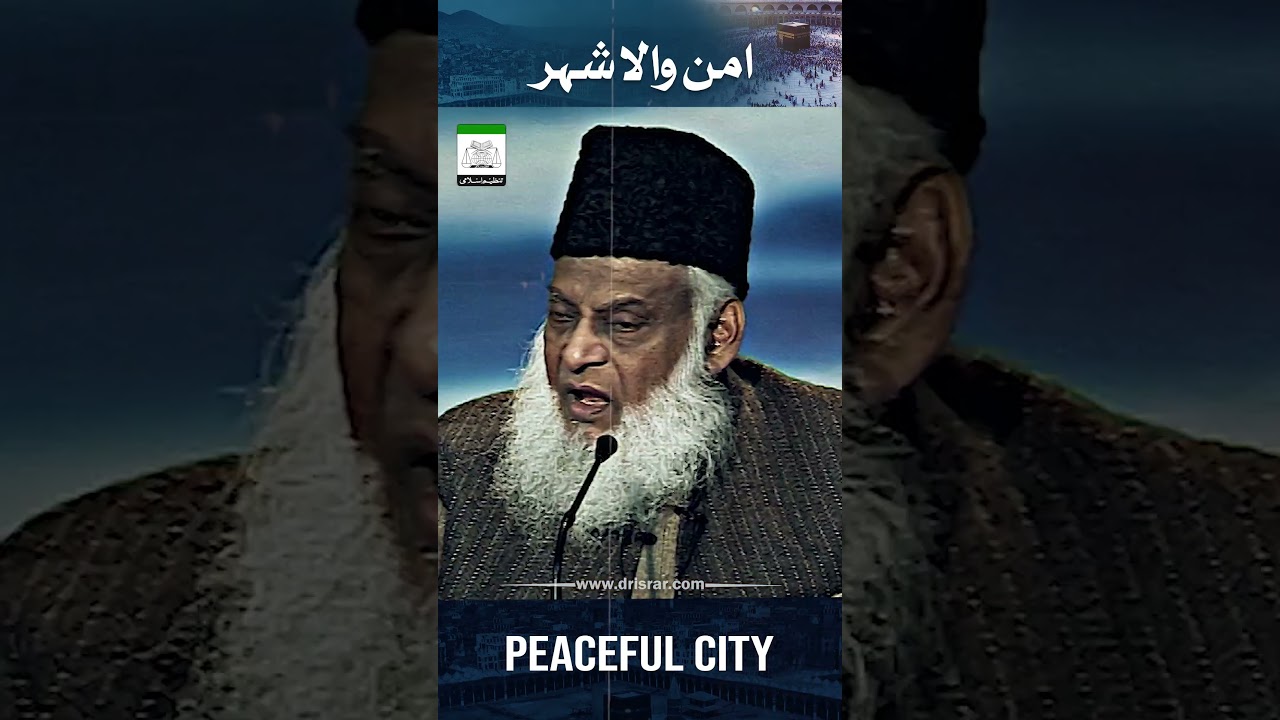
This lecture discusses the unique sanctity of Mecca, highlighting its historical role as a place of peace amidst a turbulent Arab society. Despite centuries of tribal conflict, feuds, and cycles of revenge killings, Mecca’s sacred precinct remained a sanctuary. Even those seeking retribution for deeply personal grievances—like the murder of a father—would refrain from violence within its boundaries. This demonstrates Allah’s provision of security and peace to the city, earning it the title 'City of Peace.' This inherent protection continues to be a defining characteristic of Mecca today.
43
