শর্টস

This lecture explores the boundless power and knowledge of Allah. It emphasizes humanity's limited capacity to fully comprehend divine attributes. The speaker highlights the vastness of creation, from the Earth to the galaxies, and how our understanding falls short. The discussion centers on recognizing Allah’s absolute power while acknowledging the limits of human perception and intellect. It asserts that while we cannot measure Allah’s attributes, we can perceive His signs and become grateful worshippers. The lecture underscores the importance of acknowledging Allah’s greatness and submitting to His will.

60

This lecture clarifies the distinction between Allah’s personal name and His attributes. It explains that ‘Allah’ is the sole proper name, while all other names found in the Quran represent divine attributes. By removing the definite article and adding *tanween*, names transform into descriptive qualities. For example, ‘Al-Qadir’ is a name, but ‘Qadir’ or ‘Qadeer’ is an attribute. Similarly, ‘Al-‘Alim’ is a name, while ‘Alim’ or ‘‘Aleem’ is a quality. Essentially, names serve as indicators of a being, and Allah's personal name is unique.
59
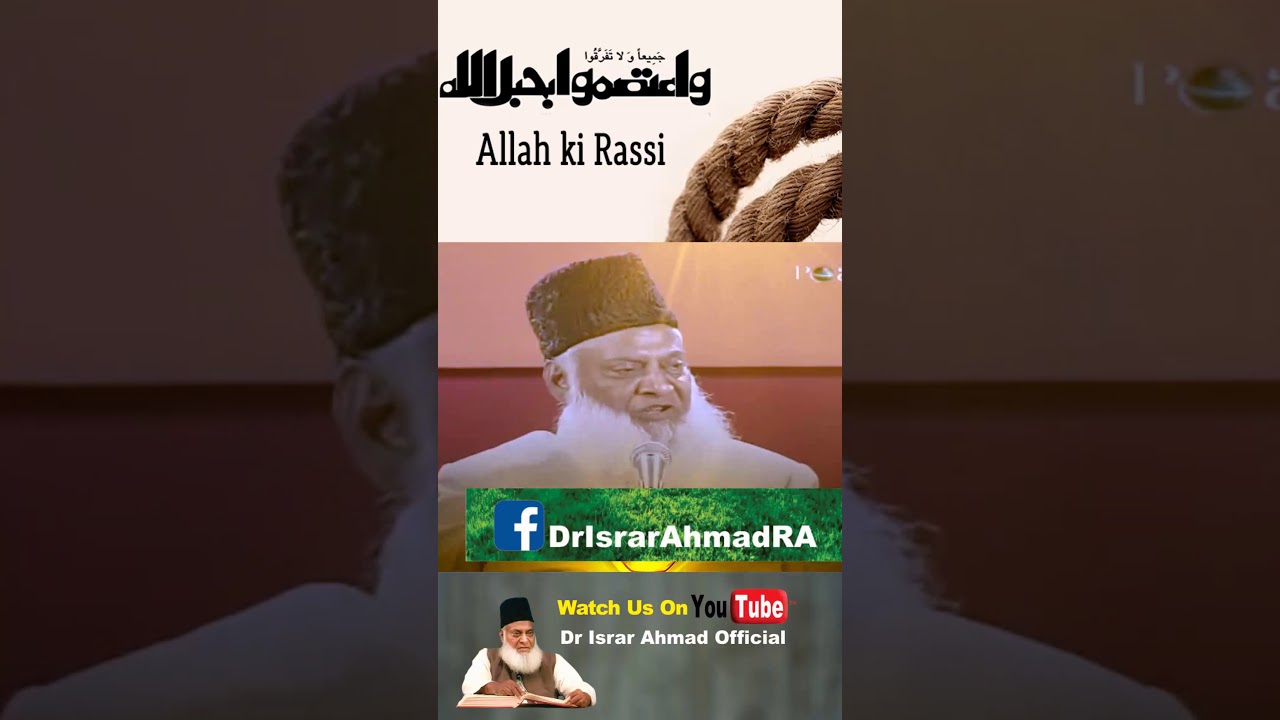
The Quran is presented as the direct connection, or ‘rope,’ between Allah and humanity. It’s the primary means of achieving nearness to Allah. This connection is twofold: one end is within our grasp, allowing us to act upon its guidance, while the other end is held by Allah, signifying divine support and blessing. The lecture emphasizes that the Quran is not merely a book, but a living pathway to spiritual closeness with Allah, offering guidance and facilitating a deep, personal relationship with the Divine.
129
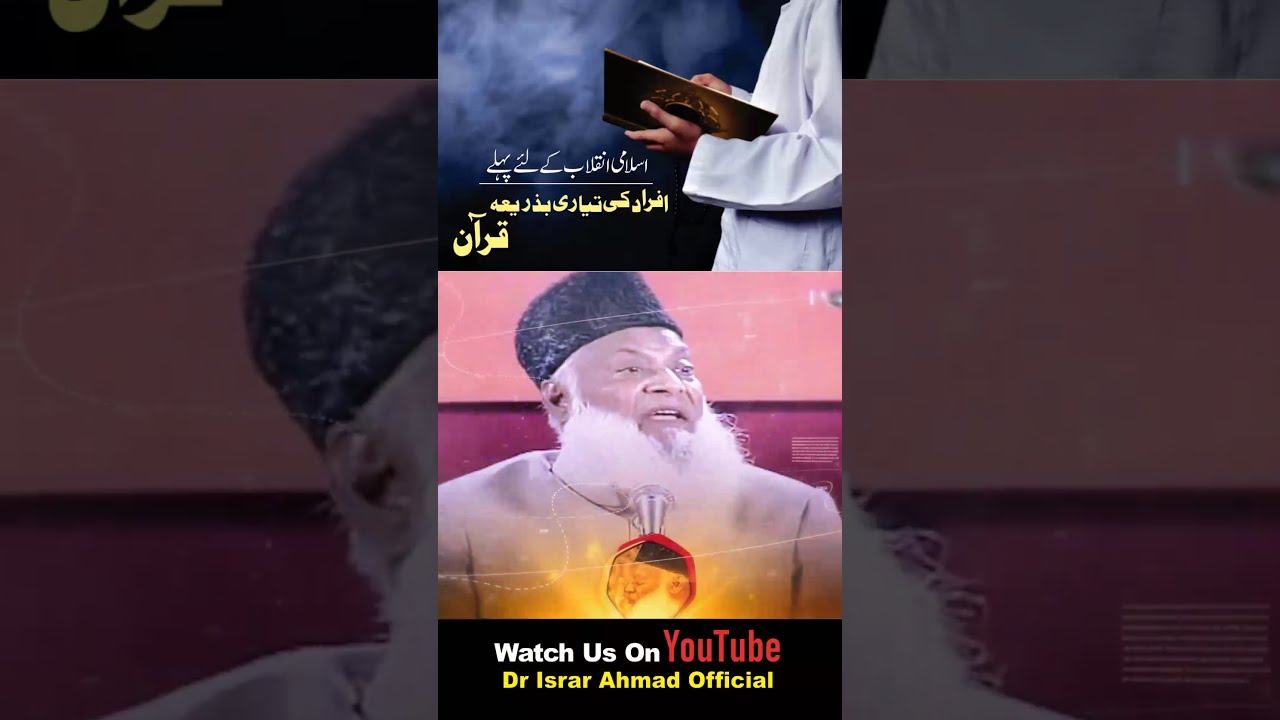
Dr. Israr Ahmad emphasizes the pivotal role of the individual in shaping the destiny of nations. He asserts that a nation's fate rests in the hands of its people, with each individual acting as a guiding star for the community. True progress stems from individual piety, devotion, and sincerity of purpose – working solely for the pleasure of God and striving for success in the afterlife. This lecture stresses the importance of solidifying individual character before uniting for collective advancement, with the Quran as the essential binding force.
85
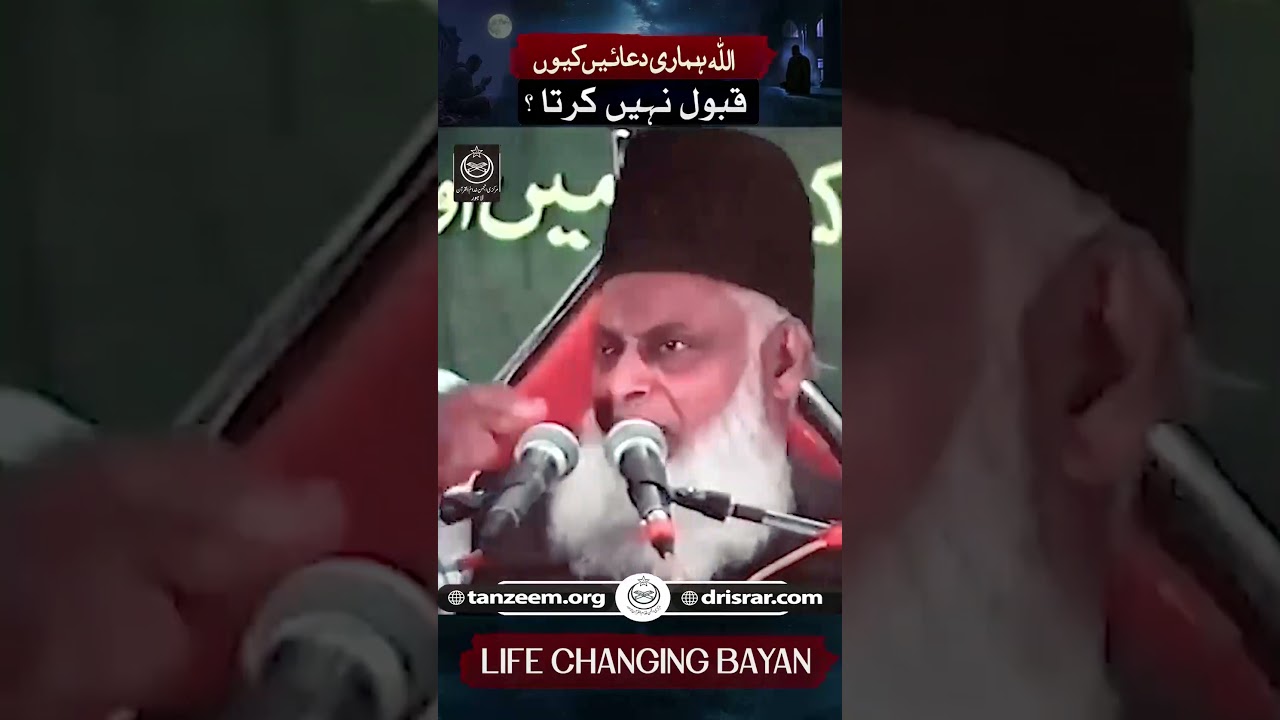
This lecture addresses why prayers often go unanswered. It asserts that simply performing religious rituals like Hajj and reciting the Quran are insufficient. True connection with God requires practical implementation of divine teachings in one’s life and community. The speaker emphasizes establishing faith within oneself, in one’s home, and then uniting with others in a covenant to uphold those principles. This involves a commitment to living by the entirety of revealed scripture, encompassing both Quran and Hadith, and acting upon its guidance.
61

This lecture addresses a critical deviation within the Muslim community, identifying a shift towards Murjiya – a state of complacency where outward claims of faith overshadow genuine inner conviction. It clarifies the distinction between legalistic faith, reliant on outward actions, and true faith rooted in sincere belief and heartfelt certainty. The speaker emphasizes that authentic faith necessitates the inseparable integration of belief and practice, where deeds are not merely supplementary but integral components of a living, breathing faith. The lecture warns against prioritizing outward adherence to rituals over cultivating genuine fear of God and hope for His mercy, advocating for a balanced state between these two essential qualities.
50
