শর্টস
This lecture explores the concept of inner revolution as the true catalyst for lasting societal change. Dr. Israr Ahmad argues that external revolutions are temporary if not rooted in a fundamental transformation of individual character. He draws parallels to the revolution initiated by the Prophet Muhammad, highlighting the internal transformation within the Sahaba (companions) as the driving force behind its rapid expansion and unprecedented success. The lecture emphasizes the immense potential of this internal revolution to reshape the world, referencing a vision of its potential reach across vast geographical areas. The speaker contrasts this with the failed attempt at internal revolution, and resulting discord, by Abdullah ibn Saba, and the slowing of Muhammad’s revolution. The lecture posits that genuine and lasting change originates from within the individual, ultimately manifesting as a global phenomenon.

65
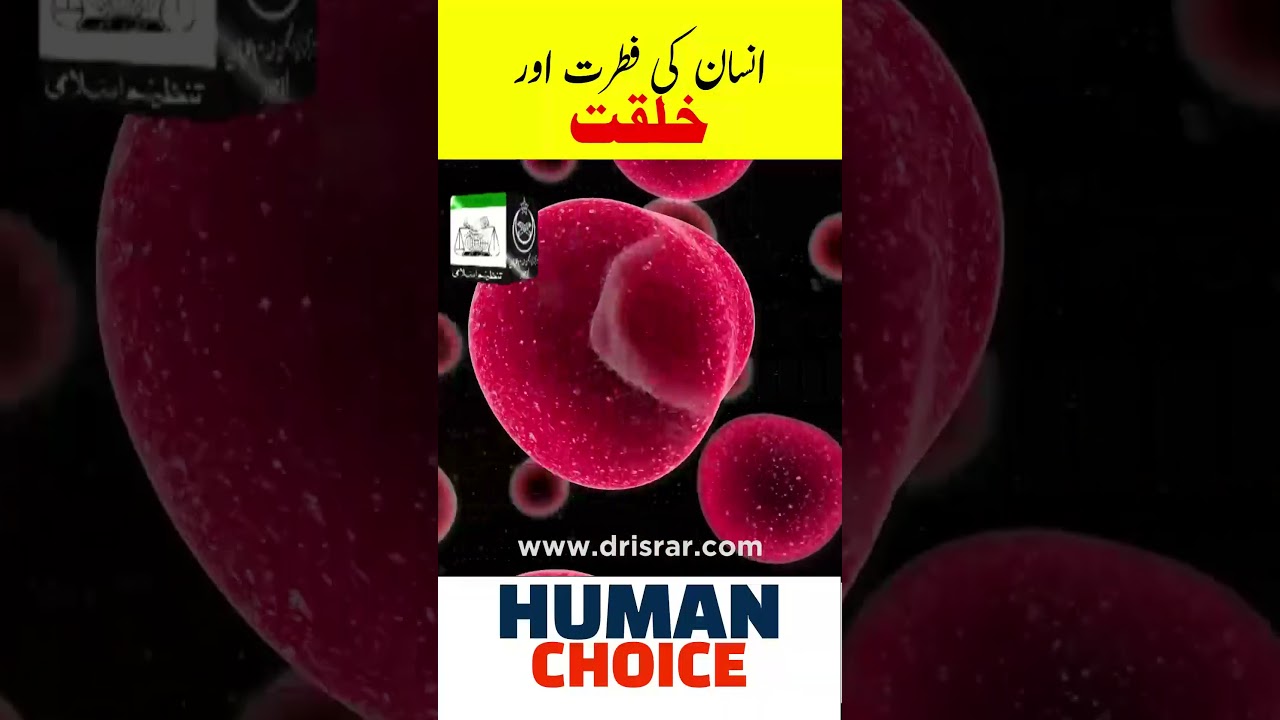
Human life begins with a unique creation, possessing inherent vitality from conception. Even before fertilization, both sperm and ovum exhibit life. All characteristics of life are present in the developing embryo. The embryo is a living organism, not an inanimate object. A crucial stage arrives approximately 120 days after conception. Prior to this, the creation is linked to four specific elements detailed in religious texts. The spirit, or soul, is infused into the embryo after this 120-day period, encompassing and permeating its very being.
48
This lecture discusses the Islamic perspective on charitable giving and the rights of heirs. A companion of the Prophet Muhammad (peace be upon him) inquired about donating all his wealth for the sake of Allah. The Prophet advised against leaving heirs destitute, emphasizing their rightful share. The companion then proposed donating half, then a third, with the Prophet accepting the one-third contribution as appropriate. This highlights a balanced approach to charity, respecting both the act of giving and the welfare of one’s family.
62

This lecture explores the limits of human knowledge and emphasizes the absolute knowledge of Allah. It highlights that no soul knows what it will earn tomorrow or where it will die. The text illustrates this with the example of someone traveling and unexpectedly passing away, contrasting it with those who live for years in one place. It reinforces that Allah is the All-Knowing, the All-Aware, and that He alone possesses complete knowledge of the unseen and future events. The discussion centers on the concept that everything is within Allah’s knowledge, including what is in the wombs and the circumstances of death.
44
The Prophet Muhammad (peace be upon him) serves as the best example for those who believe in God and the Day of Judgement, and who consistently remember God. The Quran provides guidance for all, but only those who are pious and fulfill specific conditions—faith in God and the afterlife, and constant remembrance of God—will truly benefit. This lecture highlights the Prophet’s life as a complete argument for humanity. The establishment of Islam's social justice system was achieved through persistent effort, hardship, sacrifice, patience, perseverance, and resilience, not through miracles or divine comforts. The example of the Battle of Tabuk demonstrates the dedication of early Muslims, even sharing meager rations to support one another. This is the essence of the Prophet’s legacy.
63
The Quran is uniquely preserved compared to all other texts. The world’s scholars acknowledge this fact. Every letter and pronunciation within the various recorded recitations – Sab’a Qira’at and ‘Ashara Qira’at – is meticulously documented, detailing even the use of *zabar* or *zir* for each word. The official text was standardized by Hazrat Uthman (RA), a significant service to the Muslim community. This preservation extends to the precise documentation of variations in recitation, ensuring the integrity of the divine text.
51
