מִכְנָסַיִים קְצָרִים

This lecture explores the concept of inner revolution as the true catalyst for lasting societal change. Dr. Israr Ahmad argues that external revolutions are temporary if not rooted in a fundamental transformation of individual character. He draws parallels to the revolution initiated by the Prophet Muhammad, highlighting the internal transformation within the Sahaba (companions) as the driving force behind its rapid expansion and unprecedented success. The lecture emphasizes the immense potential of this internal revolution to reshape the world, referencing a vision of its potential reach across vast geographical areas. The speaker contrasts this with the failed attempt at internal revolution, and resulting discord, by Abdullah ibn Saba, and the slowing of Muhammad’s revolution. The lecture posits that genuine and lasting change originates from within the individual, ultimately manifesting as a global phenomenon.

65

The origins of the name Ramadan are debated. One view connects it to the intense heat that historically impacted the Arabian Peninsula, causing hardship and natural purification. This led to a belief that Ramadan offered a time of spiritual cleansing. Another perspective links the name to one of the names of God, signifying that Ramadan is God's month. This is supported by a saying of the Prophet Muhammad, who identified Sha’ban as his month and Ramadan as the month of God. The purpose of fasting during Ramadan is fundamentally to purify the impurities accumulated within the human body.
56

Dr. Israr Ahmad explains that a prayer is not accepted if the individual’s sustenance, clothing, and even physical being are derived from unlawful sources. He emphasizes that prayers offered while burdened with sin and sustained by illicit means will not reach God. The lecture details how a person’s entire existence must be purified and aligned with righteousness for their supplications to be answered. The speaker highlights the importance of earning lawful livelihood and abstaining from unlawful sources to ensure the acceptance of prayers.
51

This lecture discusses the esteemed position of Hazrat Ali (RA) within Islamic history and theology. It establishes him as one of the rightly guided Caliphs and highlights his exceptional virtues among the companions of the Prophet Muhammad (peace be upon him). The discussion clarifies his rank relative to Abu Bakr, Umar, and Uthman (RA), acknowledging their superior position, while affirming Hazrat Ali’s prominence among all other companions. The lecture focuses on the sequential order of Caliphs according to the Sunni perspective and establishes Hazrat Ali's elevated status within that framework.
83

This lecture addresses the grave sin of associating partners with God, specifically the pre-Islamic Arabian practice of assigning gender to God and believing in divine offspring. It highlights how attributing progeny to Allah is the most egregious form of *shirk*. The discussion condemns the notion of God having sons and daughters, referencing the verse about God's displeasure with angels who assigned gender to Him. The lecture emphasizes the immense audacity of such a claim and warns against its consequences.
35
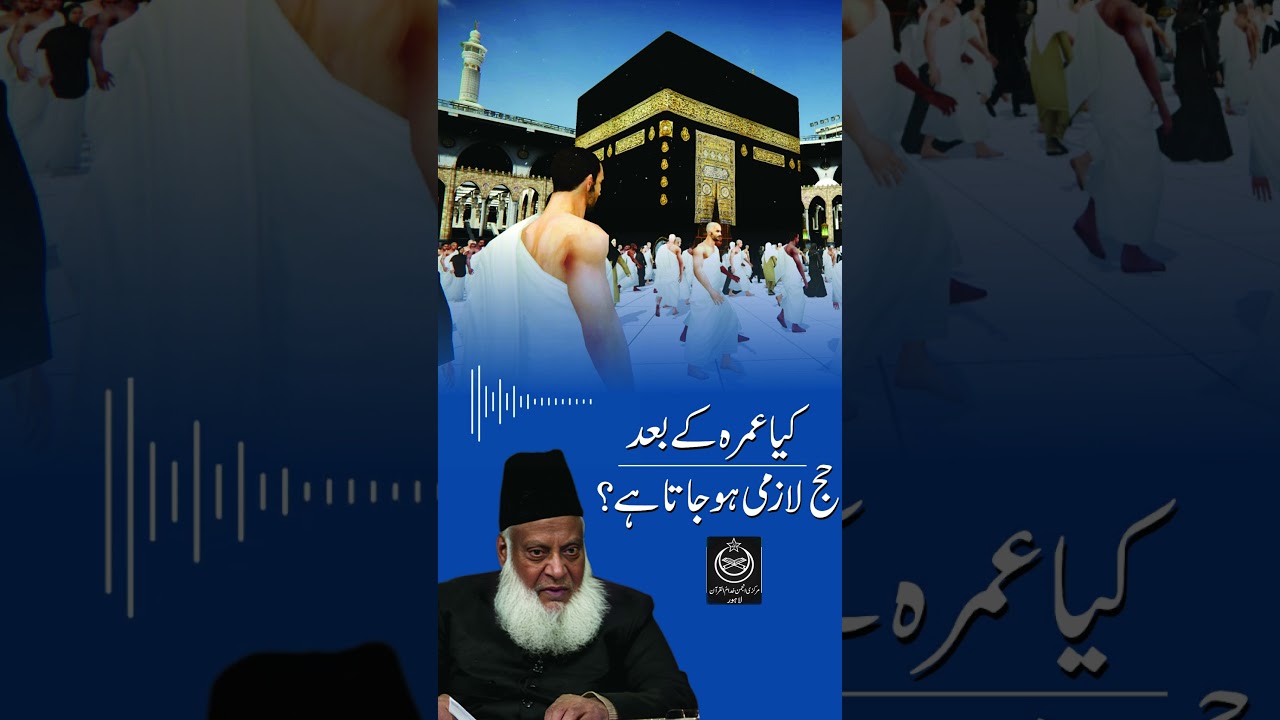
This lecture clarifies whether performing Umrah necessitates performing Hajj. It addresses the scenario of someone performing Umrah while on official government travel, funded by the state, and lacking the financial means for Hajj. The core point is that Umrah itself does not automatically make Hajj obligatory. However, if an individual possesses the financial capability, they should prioritize fulfilling the obligatory Hajj pilgrimage. The lecture emphasizes that if someone can afford to perform Hajj, it becomes an obligation upon them.
71
