निकर
True goodness isn't merely external ritual; it’s an internal transformation affecting the entire being. The essence of worship, like prayer, lies not in its technicalities, but in achieving a spiritual presence with God. Genuine prayer evokes a heartfelt connection, a sense of joy, and a direct communion with the Divine. The experience should be one of complete surrender and humility before God. Without this spiritual depth, the act remains incomplete.

44
This lecture emphasizes that complete devotion to God requires the establishment of a caliphal system mirroring the Prophetic methodology. Without it, adherence to divine law is incomplete. The speaker highlights the necessity of implementing all of God’s commands, including legal penalties, to achieve true worship. Current selective obedience, mixing divine and man-made laws, constitutes *shirk* (associating partners with God). Complete worship and obedience will only be realized with the restoration of a rightly guided caliphate, ensuring exclusive devotion to God.
178

This lecture explains a crucial Islamic principle: the balance between reliance on God (Tawakkul) and utilizing practical means (Asbab) to achieve goals. The Prophet Muhammad (peace be upon him) rebuked a Bedouin for leaving his camel untethered, emphasizing that true faith requires both trust in God *and* responsible action. The speaker clarifies that simply relying on God without making an effort is incorrect, and neglecting to utilize available resources after making an effort is also a mistake. Results ultimately come from God, but effort is a prerequisite. It is crucial to strive, use resources, and *then* place trust in God for the outcome. True Tawakkul is not passivity, but a confident reliance on God *after* taking all necessary steps.
90
The criteria for success and failure are presented, emphasizing that true success isn’t found in wealth, status, or possessions. Instead, it stems from faith and righteous action. These elements are fundamental necessities for salvation, and one cannot compromise on them. The lecture stresses that genuine achievement is rooted in spiritual foundations, not material gains.
58
Hazrat Ali (RA) narrates that the Prophet Muhammad (peace be upon him) foretold of a great tribulation (fitna). When asked about the means of salvation, the Prophet (peace be upon him) stated that the Quran is the source of guidance. It contains accounts of those who came before and those who will come after, and holds the solutions to all disputes and differences.
63
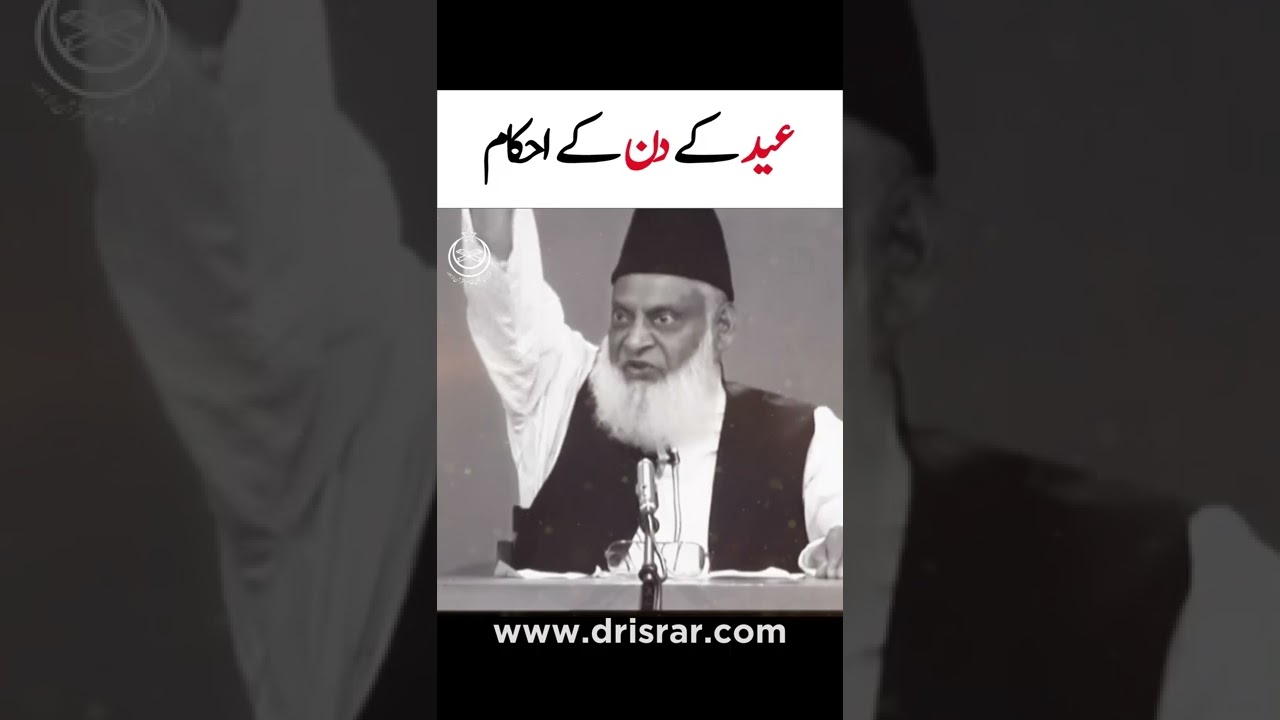
This lecture details the performance of Eid al-Fitr prayers, specifically the additional *takbirat* (proclamations of greatness). The Hanafi school of thought prescribes six additional *takbirat*, while the Ahl-e-Hadith observe twelve. The speaker emphasizes performing these *takbirat* both on the way to and from the Eid prayer location, ideally using different routes to maximize the resonance of the divine proclamation throughout the community. The core message is a call to establish and defend the true faith through dedicated effort, sacrifice, and struggle, demonstrating gratitude for divine guidance. The lecture urges listeners to proclaim and uphold God’s sovereignty.
79
