Celana pendek

True goodness isn't merely external ritual; it’s an internal transformation affecting the entire being. The essence of worship, like prayer, lies not in its technicalities, but in achieving a spiritual presence with God. Genuine prayer evokes a heartfelt connection, a sense of joy, and a direct communion with the Divine. The experience should be one of complete surrender and humility before God. Without this spiritual depth, the act remains incomplete.

44

This lecture discusses the concept of *shirk-e-khafi* (subtle idolatry), which is more insidious than overt *shirk*. It explains how actions performed to gain the approval of others, even during religious practices like prayer, constitute a form of hidden idolatry. The speaker illustrates this with an example of prolonging prostration in prayer when observed by others, intending to display piety rather than solely seeking God’s pleasure. Recognizing *shirk-e-khafi* is presented as extremely difficult, akin to spotting a black ant on a black stone in the darkness. The lecture emphasizes that this is a matter of the heart and requires careful self-reflection.
95
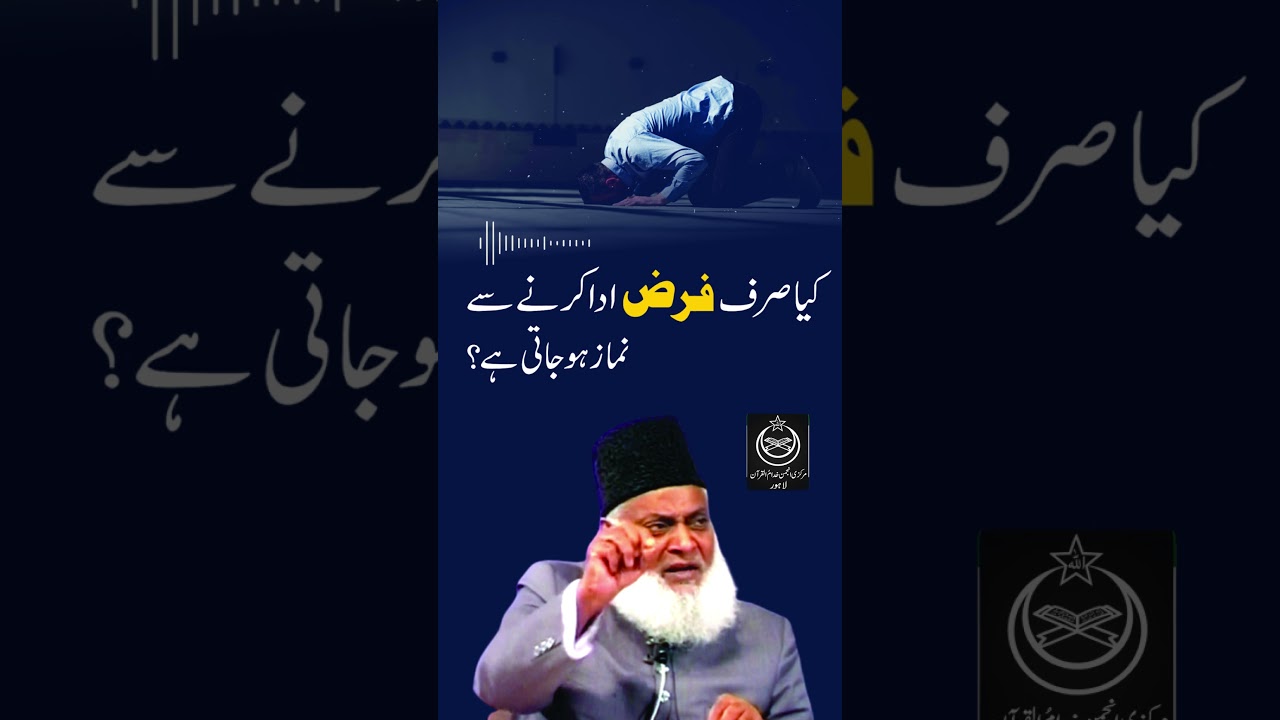
This lecture clarifies that fulfilling obligatory prayers is the minimum requirement for prayer. While fulfilling obligations is essential, incorporating voluntary prayers (sunnah and nafl) adds depth to one's spiritual practice. The speaker categorizes these voluntary acts based on their emphasis by the Prophet Muhammad, differentiating between those regularly practiced (sunnah mu’akkadah), those practiced occasionally (sunnah ghair mu’akkadah), and other optional prayers (nawafil). It’s recommended to participate in these supplementary prayers to the extent possible, aligning with the guidance of the Prophet and within the bounds of one’s time.
164

This lecture details the deceptive nature of Satan, explaining how he operates beyond human perception. It highlights that Satan’s influence extends to every aspect of human life, subtly impacting thoughts and actions. The discussion emphasizes that Satan doesn’t require effort to maintain his influence; his work progresses autonomously. Instead, his focus is on disrupting those who actively resist his temptations, particularly those striving for spiritual growth. The lecture underscores that Satan targets vulnerable points within individuals, seeking to sever their connection with faith and righteousness, while his followers continuously work to advance his aims.
45

The Prophet Muhammad (peace be upon him) defined true impoverishment not as a lack of wealth, but as a lack of spiritual and moral capital. On the Day of Judgement, individuals may arrive bearing the outward signs of piety – prayers, fasts, pilgrimage, and charity – only to find their rewards diminished due to past injustices. Those harmed by their wrongful actions – through slander, false accusations, or violations of rights – will present their claims, and the offender's good deeds will be allocated to compensate the victims. This lecture highlights the critical importance of earning wealth and performing religious obligations through lawful means, emphasizing that true prosperity lies in righteous conduct and the preservation of others’ rights.
52

The Quran, as divine speech, reflects the complete personality of its speaker – Allah. The eloquence and depth of language reveal the speaker's knowledge, sophistication, and the heights of their thought. It is a complete representation of divine attributes, offering insight into Allah’s characteristics, wisdom, and the breadth of divine understanding. The very nature of speech embodies the speaker’s status, intellect, and the scope of their perception. Consequently, the Quran serves as a perfect manifestation of Allah’s complete personality and attributes.
85
