短裤
This lecture explores the human condition as a test between spiritual enlightenment and worldly allure. The metaphor of a moth drawn to a flame represents the soul’s journey. One path leads to divine favor and eternal reward, while the other, captivated by the transient beauty of the world, results in loss. True success lies in prioritizing spiritual truths and the eternal blessings of the afterlife over fleeting worldly pleasures. The core message is a call to self-reflection and a conscious choice towards divine guidance.

67
This lecture explores the spiritual state of having one’s heart opened by God for Islam, contrasting it with the darkness of spiritual hardness. It highlights that divine guidance illuminates the heart, providing inner understanding and a connection with God. Those who reject this guidance and whose hearts become hardened against remembrance of God face destruction and are clearly astray. The lecture emphasizes that a receptive heart is essential for faith and spiritual growth, while a hardened heart leads to misguidance and ultimate loss.
77
Dr. Israr Ahmad discusses the comprehensive nature of Prophet Muhammad’s personality, highlighting his multifaceted roles as a ruler, leader, judge, husband, father, and spiritual guide. He contrasts this with the limitations of modern religious leaders who often struggle to fulfill even basic duties like leading five daily prayers consistently. The lecture emphasizes that the Prophet Muhammad embodied all these roles flawlessly, serving as a complete example for believers. The speaker points out a disconnect in modern religious practice, where individuals dedicated to self-purification often avoid leading congregational prayers.
49
The Quran was the instrument of revolution brought by the Prophet Muhammad (peace be upon him). It transformed minds, altered beliefs, and reshaped value systems. Before, life was the most cherished possession; now, martyrdom is the most welcomed. This revolution, initiated by a single individual, prioritized striving in the way of God over material gain. Surah Al-Furqan emphasizes the directive to not heed the disbelievers and to wage a great struggle through the Quran. The Quran itself was the greatest sword in the hands of the Prophet Muhammad (peace be upon him).
90
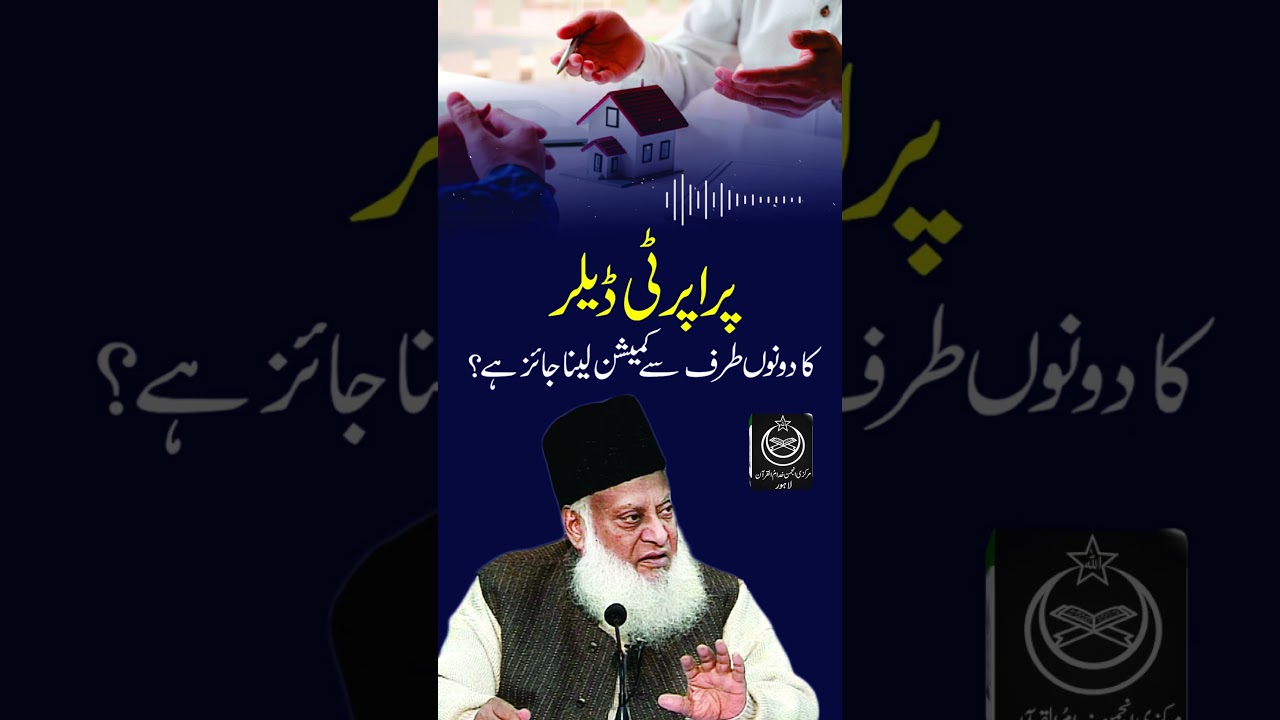
Dr. Israr Ahmad discusses the Islamic ruling on property dealers charging fees from both the buyer and seller, or from both landlord and tenant. He asserts that taking fees from both sides is *haram* (forbidden). The dealer should only take a commission from one party to incentivize securing the best possible deal for that client, whether a lower rental price or a better sale price. This approach ensures fairness and ethical conduct in property transactions.
69
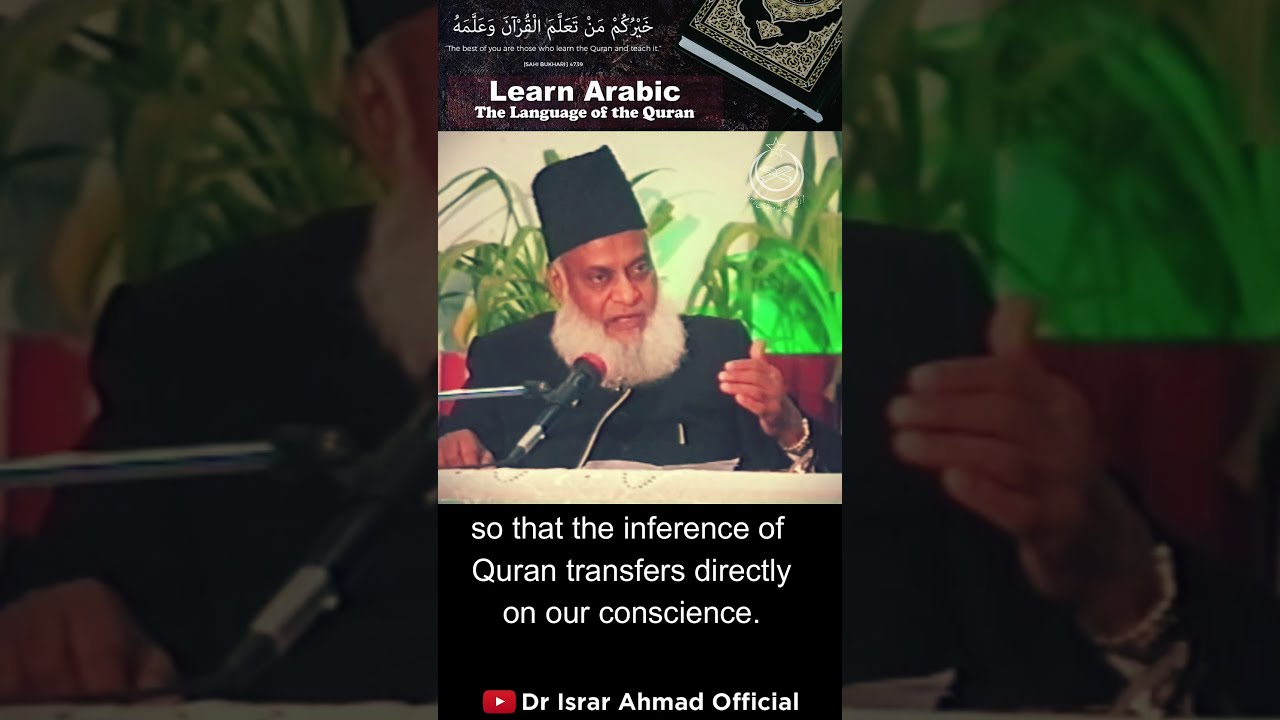
The Urdu language shares a profound connection with Arabic, extending beyond mere vocabulary. The script itself originates from Arabic, and numerous grammatical structures and lexical items are directly borrowed. This linguistic kinship makes learning Arabic particularly advantageous for Urdu speakers, facilitating a deeper understanding of religious texts like the Quran. Despite this inherent connection, sufficient effort hasn’t been directed towards mastering Arabic to directly grasp the Quran’s meaning. The speaker emphasizes the pervasive presence of Arabic-derived words in everyday Urdu speech, highlighting a missed opportunity for intellectual and spiritual enrichment.
50
