Kratke hlače
Every conscious human being has a purpose, an ideal, or an inspiration in life. They strive to achieve this ideal through effort and perseverance. A person without purpose is akin to an animal, living solely on instinct and fulfilling basic needs like eating and reproduction. Animals exist based on instinct, lacking a higher purpose. Such a life is considered base. The Quran emphasizes that a life devoid of purpose is animalistic. True humanity lies in having a defined goal and striving towards it.

97
This lecture addresses the grave sin of associating partners with God, specifically the pre-Islamic Arabian practice of assigning gender to God and believing in divine offspring. It highlights how attributing progeny to Allah is the most egregious form of *shirk*. The discussion condemns the notion of God having sons and daughters, referencing the verse about God's displeasure with angels who assigned gender to Him. The lecture emphasizes the immense audacity of such a claim and warns against its consequences.
42

This lecture explores the incomplete nature of the Prophet Muhammad’s mission, asserting that the complete prevalence of the Divine religion across the entire world is a prerequisite for the Day of Judgement. It details how, while significant portions of Arabia were illuminated by the light of monotheism during the Rashidun Caliphate, vast regions including China, India, Europe, and much of Africa remained untouched. The speaker emphasizes that until the entirety of the earth embraces the Divine message, the Prophet’s ultimate objective remains unrealized, highlighting the continuous need for striving and dedication towards its completion.
52

This lecture emphasizes accepting both blessings and trials from God with contentment and recognizing divine wisdom in all circumstances. It highlights the importance of surrendering to God’s will and finding peace through acceptance of His decree. The core message is to remain steadfast in faith and find satisfaction in God’s plan, understanding that all events, whether positive or negative, occur with a divine purpose. It stresses that true contentment lies in aligning oneself with God's will, acknowledging His sovereignty, and finding peace in surrendering to His decree.
61
This lecture explores the profound connection between the call to prayer (azan) at birth and the funeral prayer (salat-e-janaza) at death. It posits that life is an interval mirroring the time between the azan and iqamat preceding a prayer, and the prayer itself. The speaker draws a parallel between the commencement of life, marked by the azan, and its conclusion, represented by the funeral prayer, highlighting the transient nature of worldly existence. Life is presented as a brief pause between these two spiritual occurrences, emphasizing the temporary nature of this world.
45
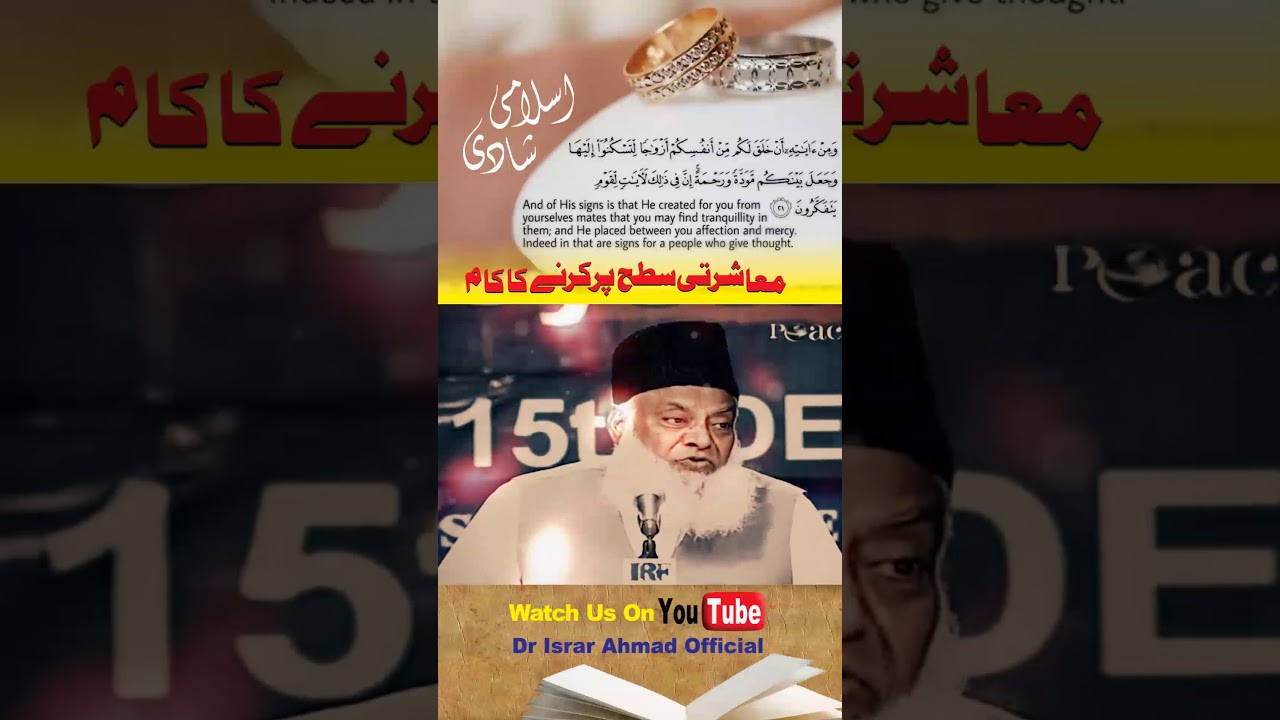
This lecture emphasizes adhering to the traditional Islamic method of marriage ceremonies, rooted in the practices of the Prophet Muhammad and his companions. It warns against incorporating innovations or customs not supported by authentic Islamic sources. The speaker stresses the importance of simplicity and rejecting practices that deviate from the established Sunnah, advocating for a return to the original, pure form of the marriage contract and celebration. Any social work related to marriage should align with these principles.
272
