מִכְנָסַיִים קְצָרִים
This lecture explores the concept of divine guidance and its profound impact on human life. It emphasizes that success and righteousness are not achieved through personal effort alone, but are gifts from God. The speaker highlights the importance of recognizing God's favor and the potential for life to drastically change with even the smallest deviation. It underscores that all praise and gratitude belong to God, who bestows guidance and directs individuals toward the right path. The lecture serves as a reminder of God's grace and the need for constant acknowledgment of His blessings.

58
Dr. Israr Ahmad discusses the degree to which adopting modern terminology with Islam is permissible or undesirable. He argues for caution regarding new terms, asserting each carries inherent connotations inseparable from its meaning. However, he acknowledges effective communication requires utilizing contemporary language to reach modern audiences, advocating for a balanced approach – using current terminology for conveyance but avoiding rigid adherence to it.
43
This lecture explores the profound and ineffable status of Prophet Muhammad (peace be upon him). Dr. Israr Ahmad cautions against attempting to fully comprehend or articulate this status, emphasizing its transcendence of human understanding. He draws a parallel to a rural man’s limited worldview, represented by his highest reference point being a local land administrator, to illustrate the human inability to grasp divine realities. The speaker highlights that any attempt to define the Prophet’s status risks diminishing it, and true reverence lies in acknowledging its sacredness and submitting to divine knowledge.
65
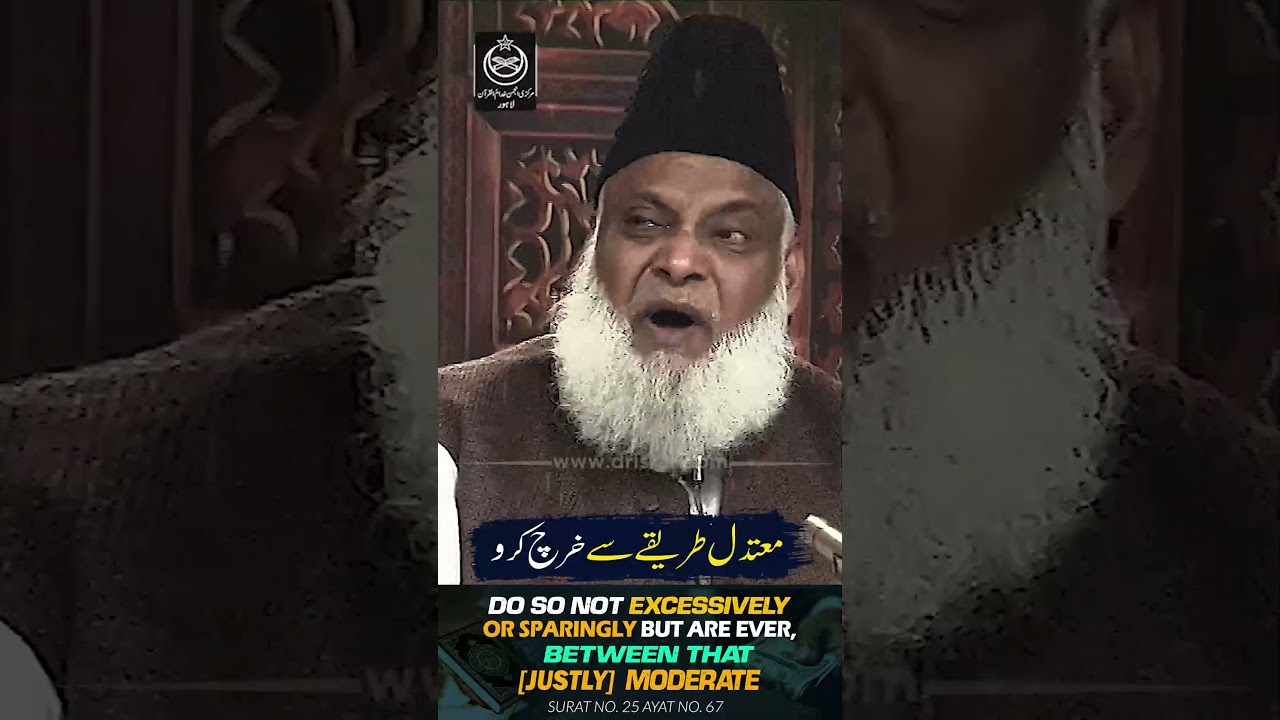
Extremism in charitable giving is undesirable. Intense emotion can lead individuals to impulsively donate all their wealth, potentially harming themselves. The Quran and the teachings of the Prophet emphasize the necessity of balance in spending. The verse from Surah Al-Furqan highlights that true believers spend neither stingily nor wastefully, but maintain a moderate course between these extremes. This approach ensures both the well-being of the giver and the effective distribution of resources to those in need. It’s crucial to consider consequences and adopt a reasoned approach to charity.
47
This lecture explores the concept of pure existence, arguing that ultimate reality transcends material comprehension. It posits that the truly knowing – the mystics and the wise – ultimately arrive at the understanding that ‘just being’ is fundamental. The material world is a construct, while the perception of the Divine is a matter of subjective experience. This reality is beyond human grasp, accessible only through profound contemplation and spiritual insight. The lecture emphasizes the limitations of rational understanding when confronting the infinite nature of existence.
73
This lecture emphasizes that propagating the message of Islam is no longer the sole responsibility of prophets, but a collective obligation incumbent upon the entire Muslim community. It argues that Muslims must actively convey the faith through their actions and outreach, becoming living examples of its principles. Failure to do so will result in a negative testimony on the Day of Judgment, with the community being held accountable for not upholding the legacy of the Prophet. The speaker stresses that establishing a clear argument for faith before all of humanity is a fundamental duty, requiring dedication of resources and abilities to effectively spread the message of Islam.
203
