Shorts
This lecture explores the concept of divine guidance and its profound impact on human life. It emphasizes that success and righteousness are not achieved through personal effort alone, but are gifts from God. The speaker highlights the importance of recognizing God's favor and the potential for life to drastically change with even the smallest deviation. It underscores that all praise and gratitude belong to God, who bestows guidance and directs individuals toward the right path. The lecture serves as a reminder of God's grace and the need for constant acknowledgment of His blessings.

58
This lecture emphasizes that prayer (dua) is the core of worship. God hears and responds to every sincere call, irrespective of the supplicant’s location or posture. God accepts prayers offered from any place, whether at home or elsewhere, and responds to those who turn to Him with devotion. The essence of faith lies in maintaining a constant connection with God through heartfelt supplication.
13
The speaker discusses the permissibility and desirability of conducting nikah ceremonies in mosques. Initially, the idea was met with some resistance, but convincing arguments were presented. He emphasizes a tradition from the Prophet Muhammad encouraging publicizing nikah and performing it in mosques, citing a narration from Jami’ al-Tirmidhi. While some scholars interpret the directive as not obligatory but rather recommended, the speaker questions why one would abandon a practice favored by the Prophet. He highlights that the nikah ceremonies of the Prophet’s daughters were also held in mosques and appeals to community leaders to embrace this practice, motivated by love for the Prophet.
63
Hazrat Umar Farooq established a land system where conquered territories weren't individually owned, but held in common trust by the Muslim community. Revenue generated from this land was designated for the welfare of Muslims, both contemporary and future generations. Those working the land, regardless of religion, were required to pay land revenue. This revenue-generating status of the land would remain perpetual, even under non-Muslim rule, and revert to its original status upon regaining independence.
62
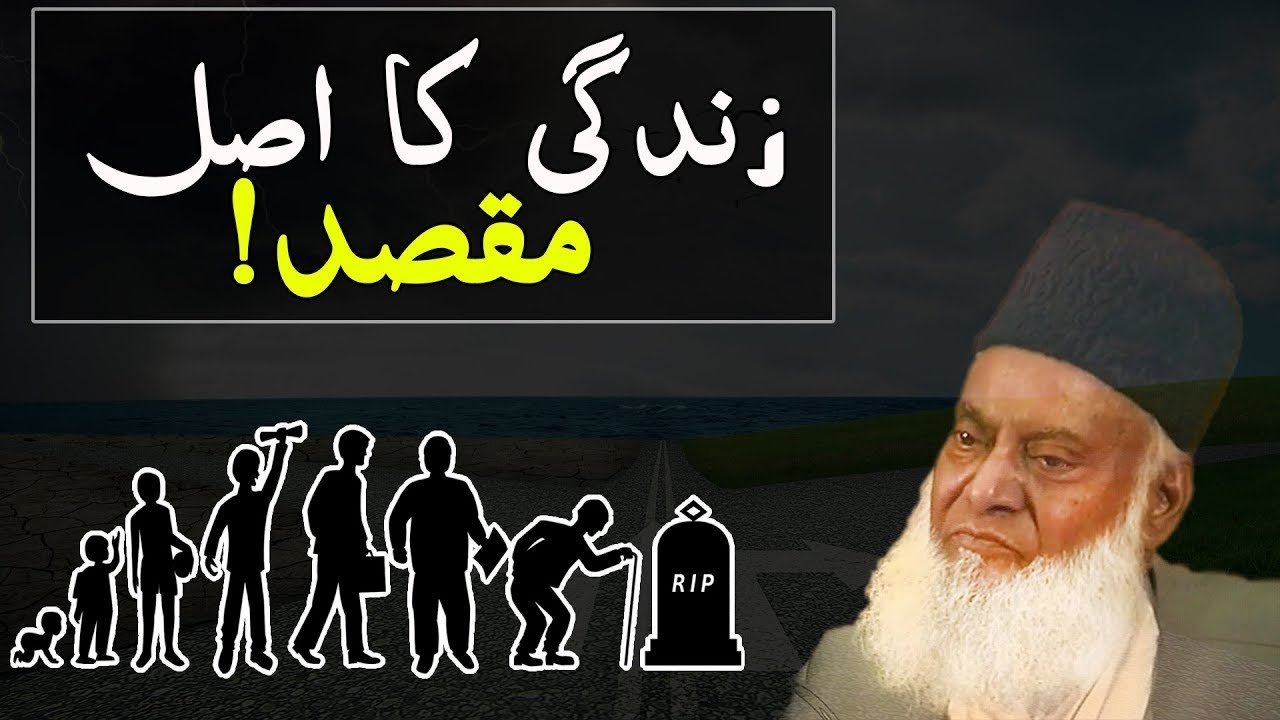
The speaker discusses the sacrifices people make for misguided ideologies, contrasting them with the dedication needed from capable individuals to strengthen religious work. He highlights the importance of educated and well-off youth devoting themselves to faith, questioning how progress can be achieved without their contribution. The lecture emphasizes that dedication to religion shouldn’t be a last resort for those lacking other opportunities, but a conscious choice made by those with the means and ability to contribute meaningfully.
60
Dr. Israr Ahmad explains that contemporary Urdu utilizes easily understood vocabulary rooted in common usage. He points out that words like ‘Asr’ (era/time) and ‘Khassara’ (loss) are well-established in Urdu. The lecture emphasizes that even words with Arabic origins are integrated naturally into the language, demonstrated by terms like ‘Iman’ (faith) and ‘Wasi’at’ (breadth). The discussion highlights the seamless blend of Arabic and Urdu, making the language accessible and relatable.
50
