Kratke hlače

The Prophet Muhammad is presented as the greatest benefactor of humanity, enduring significant hardships throughout his life. The text emphasizes that offering prayers (salutations) upon him is a means of acknowledging his virtues and receiving divine reward. It highlights the importance of recognizing his exemplary character and the blessings associated with remembering him.

255
This lecture discusses the foundational principles of Pakistan’s political system, highlighting its historical roots in British parliamentary democracy. It emphasizes the concept of a shared national identity encompassing both Muslims and non-Muslims, established during the creation of Pakistan. The speaker points out that despite establishing Pakistan with a different vision, the country largely retained the British parliamentary system. The lecture examines the perception that this system was considered divinely ordained, leaving little room for alternative models and solidifying its place as the established political norm.
79
The history of Islam doesn't begin solely with the Prophet Muhammad ﷺ; its origins trace back to Prophet Adam. While the historical details from Adam to Moses are less preserved, the Israelites represent the first nation to emerge on the world stage. According to available knowledge, the Israelites were the first nation, and the final nation is the Ummah of Muhammad ﷺ. This lecture explores the historical lineage of Islam, emphasizing its continuity from the earliest prophets to the final messenger.
58
This video recounts an incident where Hazrat Ali’s armor was stolen and recovered from a Jewish man. Hazrat Ali, despite being the Caliph, appeared before the judge as a plaintiff. He corrected the judge for addressing him by his kunya (nickname) instead of his name, emphasizing that he was present as an ordinary litigant seeking justice, not as a figure of honor. When the Jewish man failed to produce valid witnesses beyond his son and slave, Hazrat Ali requested other witnesses. Upon failing to do so, the case was dismissed, leading the Jewish man to confess the theft. This highlights Hazrat Ali's commitment to justice and fairness, even when personally involved.
57
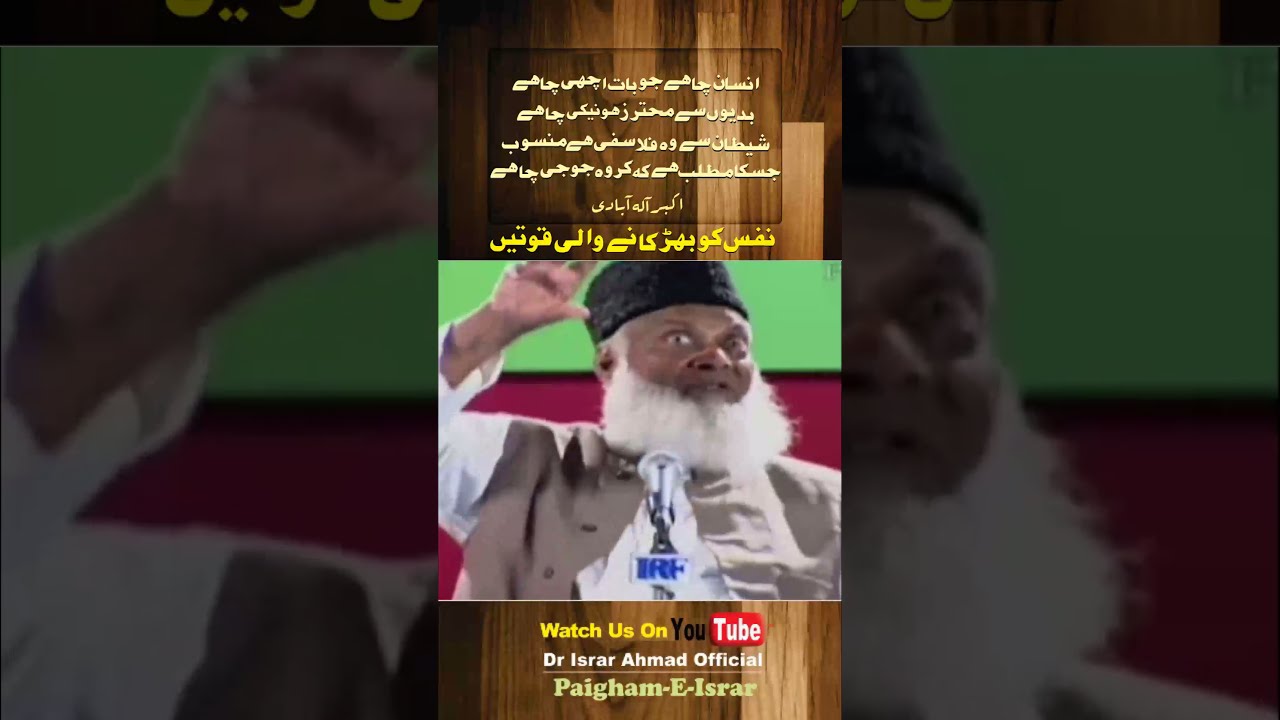
This lecture discusses the internal and external forces that incite the ego (nafs) to evil. It identifies both invisible forces—Satan and his jinn followers—and visible agents among humans who promote immorality as culture. The speaker emphasizes the necessity of actively resisting these pressures and recognizing Satan as an enemy to protect oneself from corruption and maintain spiritual integrity. Succumbing to these influences leads to spiritual decline and moral degradation. The core message is a call to vigilance and proactive opposition against all forms of evil.
61

It is a universally acknowledged truth that among all books claiming divine origin or containing the word of the universe’s creator, only the Quran maintains complete textual integrity. No other scripture has remained fully preserved in its original form. All other claimed divine texts have undergone alterations or lack complete historical corroboration of their original content. This lecture details the unique preservation of the Quran.
58
