শর্টস
The lecture details Iblis’s (Satan’s) rebellion against God, stemming from his refusal to prostrate before Adam and his declaration to lead humanity astray from the path of Tawhid (Oneness of God). Iblis believes he is superior to Adam, having been granted dominion and knowledge, and vows to challenge the obedience of Adam’s descendants to divine commands. He intends to constantly obstruct people from following the straight path of Tawhid at every step.

54
This lecture emphasizes true repentance (tawbah) as requiring a complete removal of un-Islamic practices from one’s life, family, and economic activities. Superficial displays of religious observance, such as multiple pilgrimages or verbal expressions of regret, are insufficient without genuine behavioral change. The speaker criticizes hypocrisy, particularly continuing interest-based transactions after performing Hajj. True repentance demands a willingness to sacrifice even personal comfort or face hardship rather than compromise on Islamic principles. The lecture also addresses the decline of modesty and the erosion of Islamic values in Pakistan, lamenting the failure to establish a society grounded in Islamic ethics.
87

This lecture clarifies that sustenance, despite all effort—farming, labor, protection of harvest, and processing—is fundamentally a blessing from Allah. It emphasizes that while humans exert effort, the actual provision is divine grace, differing from merit-based reward. True reward (qasab) applies to actions judged by morality; good or evil. Sustenance, however, is a gift given without expectation of deserving it, highlighting its status as a divine blessing.
57
This lecture discusses the common human tendency to idealize those we love and demonize those we dislike. It emphasizes the importance of overlooking the flaws of elders out of respect, even when disagreeing with their views. The speaker shares a personal example regarding Allama Iqbal, acknowledging his respect while maintaining independent thought. The lecture cautions against the habit of criticizing those with whom one has fallen out, urging viewers to avoid blind condemnation and prioritize constructive engagement. It promotes a balanced approach of respecting elders while also maintaining intellectual honesty.
52
Dr. Israr Ahmad discusses the proper disbursement of Zakat funds according to Hanafi jurisprudence. He emphasizes that Zakat should either be collected by the government or directly distributed to eligible recipients, ensuring they become the owners of the funds. He raises concerns about institutions receiving Zakat without direct ownership by the intended beneficiaries. He proposes that if the government allocates Zakat to hospitals, access to free services should be limited to those eligible for Zakat, with a fee structure in place for others. He also addresses the practice of government grants to madrassas, suggesting transparency in directing funds to eligible students. He requests understanding on this sensitive issue to avoid unnecessary controversy.
106
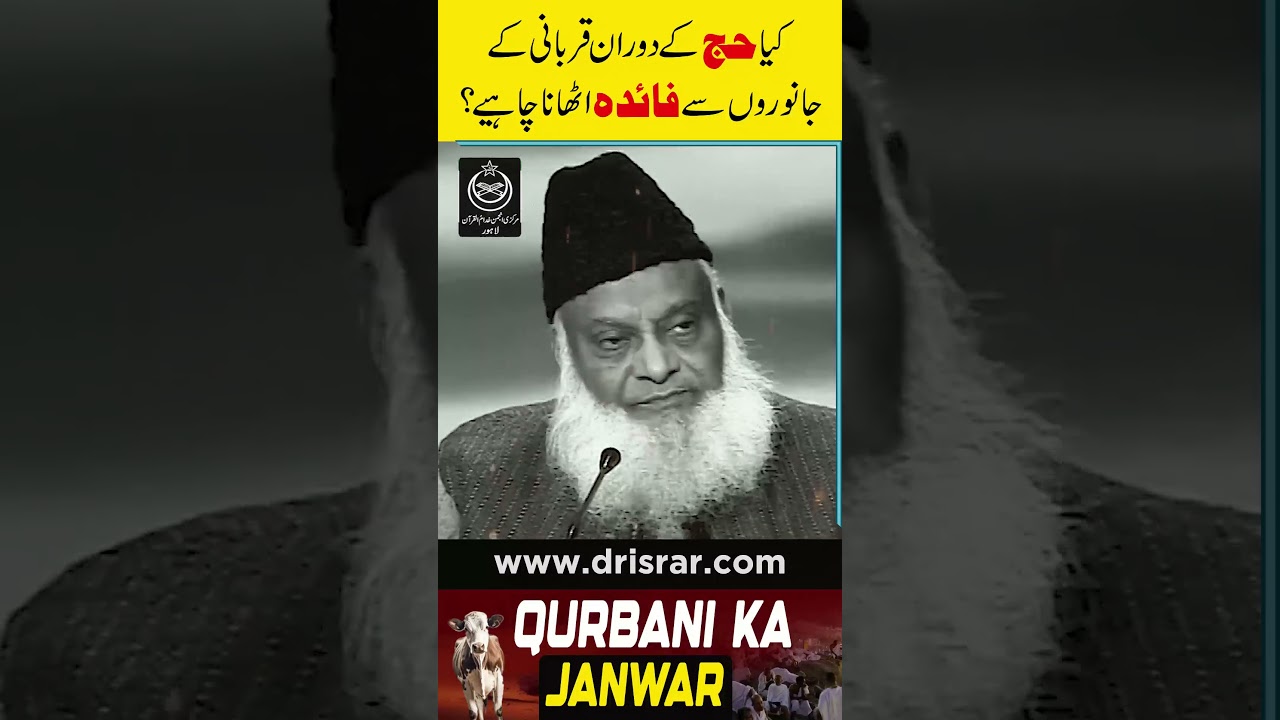
This lecture discusses the significance of sacrificial animals in Islam, specifically during Hajj and Eid al-Adha. It explains that these animals represent symbols of devotion to God and foster a spiritual connection. The benefits derived from these animals, such as milk and other resources, are permissible, highlighting the inherent goodness and blessings within the act of sacrifice. The practice reinforces faith and strengthens the believer’s relationship with the Divine.
48
