ショーツ

The lecture details Iblis’s (Satan’s) rebellion against God, stemming from his refusal to prostrate before Adam and his declaration to lead humanity astray from the path of Tawhid (Oneness of God). Iblis believes he is superior to Adam, having been granted dominion and knowledge, and vows to challenge the obedience of Adam’s descendants to divine commands. He intends to constantly obstruct people from following the straight path of Tawhid at every step.

54

This lecture addresses the core responsibility of Muslims: to convey the message of the Quran to all of humanity, not just the Muslim community. It emphasizes that failure to act upon and implement the Quranic principles has led to the current state of weakness, humiliation, and subjugation experienced by the Muslim world. The speaker highlights a pattern of powerful nations exploiting Muslim lands without regard for international law, driven by self-interest and targeting Muslim countries specifically. The current plight of the Muslim community is presented as a direct consequence of neglecting this fundamental duty.
40

This lecture emphasizes the reciprocal relationship between remembrance of God and God’s remembrance of His servant, referencing a sacred tradition. It explains that sincere remembrance in gatherings is witnessed by angels and leads to divine favor. The speaker clarifies permissible levels of worldly love—for spouses, children, and parents—while stressing that ultimate devotion must remain reserved for God. Exceeding these limits constitutes *shirk* (associating partners with God), elevating another being to a level equal to the divine. True love is conditional on God's permission and should not surpass the boundaries set by faith.
66

Faith is not merely belief; it is a radiant force, akin to the brilliance of the sun. True faith manifests through righteous action, blossoming into ethical conduct, unwavering trust in God, contentment with divine decree, obedience to God, following the Prophet’s example, and consistent goodness. It is the inner light that guides one’s life and shapes one’s character. This lecture explores the comprehensive nature of faith, emphasizing its practical implications and transformative power.
55

This lecture discusses an incident from the life of the Prophet Muhammad (peace be upon him) involving a traveler who entered a mosque without securing his mount. The Prophet questioned him about it, and the man explained he was relying on God. The Prophet corrected him, stating that true reliance on God does not mean neglecting practical precautions. He emphasized that reliance on God, or *tawakkul*, is not abandoning effort or means, but acknowledging that all outcomes ultimately depend on God’s will and permission. True *tawakkul* involves making an effort and then trusting in God's plan. The lecture underscores the importance of balancing effort with faith and understanding that means are essential, but God's decree is ultimate.
73
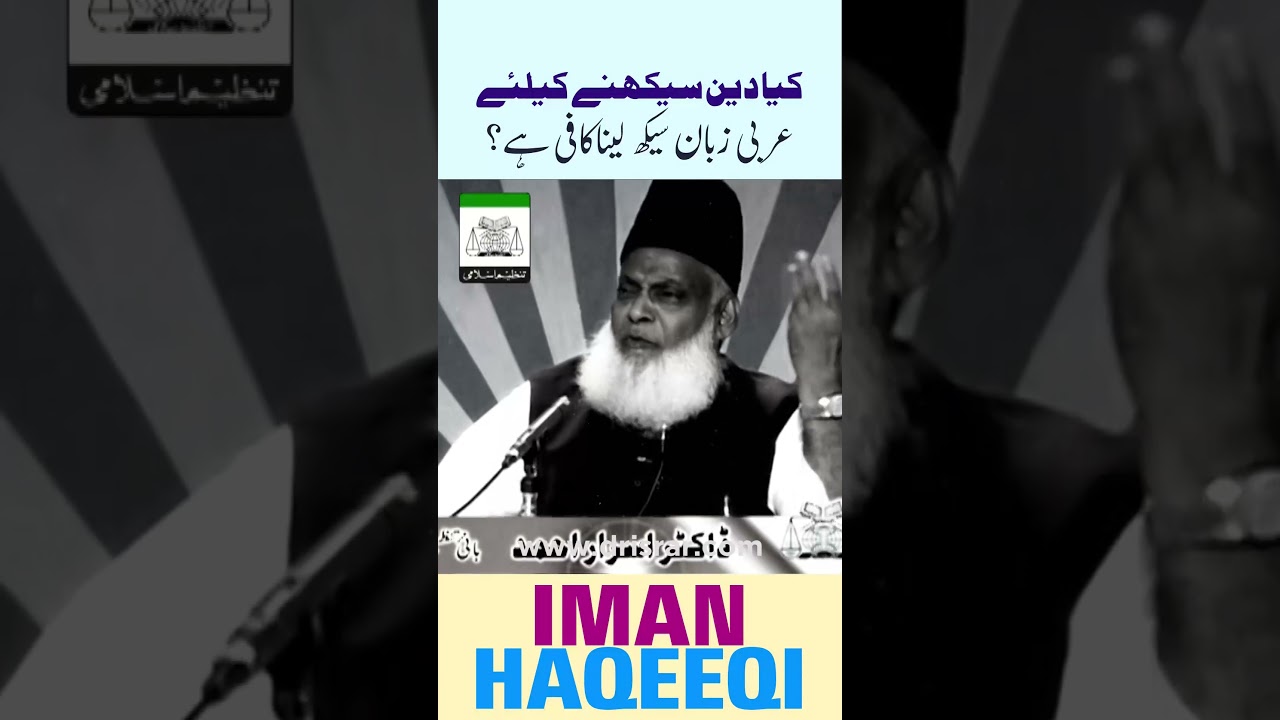
This lecture explores the profound meaning of ‘La Ilaha Illallah’ (There is no god but Allah) and its connection to genuine faith. It clarifies that merely reciting Arabic phrases is insufficient; true belief originates from a deep, internal conviction. The speaker emphasizes that imitating ancestral practices without understanding is a form of superficiality. Real faith, the lecture asserts, is a personal affirmation arising from the heart, encompassing belief in Allah, the Messenger, the Quran, Gabriel, and the Day of Judgement. This internal validation is the foundation of genuine Iman.
78
