شلوار کوتاه
This lecture discusses the proper timing for ending the daily fast (iftar) according to different Islamic schools of thought. It clarifies the disagreement between Shia and Sunni perspectives, with Shia scholars advocating for waiting until complete darkness and Sunni scholars linking it to sunset. The discussion extends to the importance of avoiding extremes – neither rushing the pre-dawn meal (sehri) nor excessively delaying iftar. It emphasizes adhering to established timings and completing the fast correctly, without unnecessary hardship or innovation. The lecture stresses the need for practical application of religious principles and cautions against unnecessary complications in observing religious rituals.

72
The Prophet Muhammad (peace be upon him) stated that the greatest struggle is the internal battle against one's own base desires (nafs). External enemies are easier to confront; the true enemy resides within. This internal struggle, or *jihad*, against the commanding self is the most virtuous form of worship. The Prophet clarified that the most excellent form of *jihad* is striving against one’s *nafs* in obedience to God. This lecture explores the profound significance of self-discipline and spiritual refinement.
50
During a gathering, a young, frail boy named Ali, approximately ten or eleven years old, with visibly affected eyes, volunteers to accompany the group despite his physical limitations. He acknowledges his youth, thin legs, and impaired vision, yet resolutely offers his support. This act evokes laughter and signifies a shift in perspective, highlighting the power of unwavering commitment even from the most unexpected sources. The speaker then issues a call to action, encouraging everyone to rise and participate.
50
The Quran, as divine speech, reflects the complete personality of its speaker – Allah. The eloquence and depth of language reveal the speaker's knowledge, sophistication, and the heights of their thought. It is a complete representation of divine attributes, offering insight into Allah’s characteristics, wisdom, and the breadth of divine understanding. The very nature of speech embodies the speaker’s status, intellect, and the scope of their perception. Consequently, the Quran serves as a perfect manifestation of Allah’s complete personality and attributes.
78
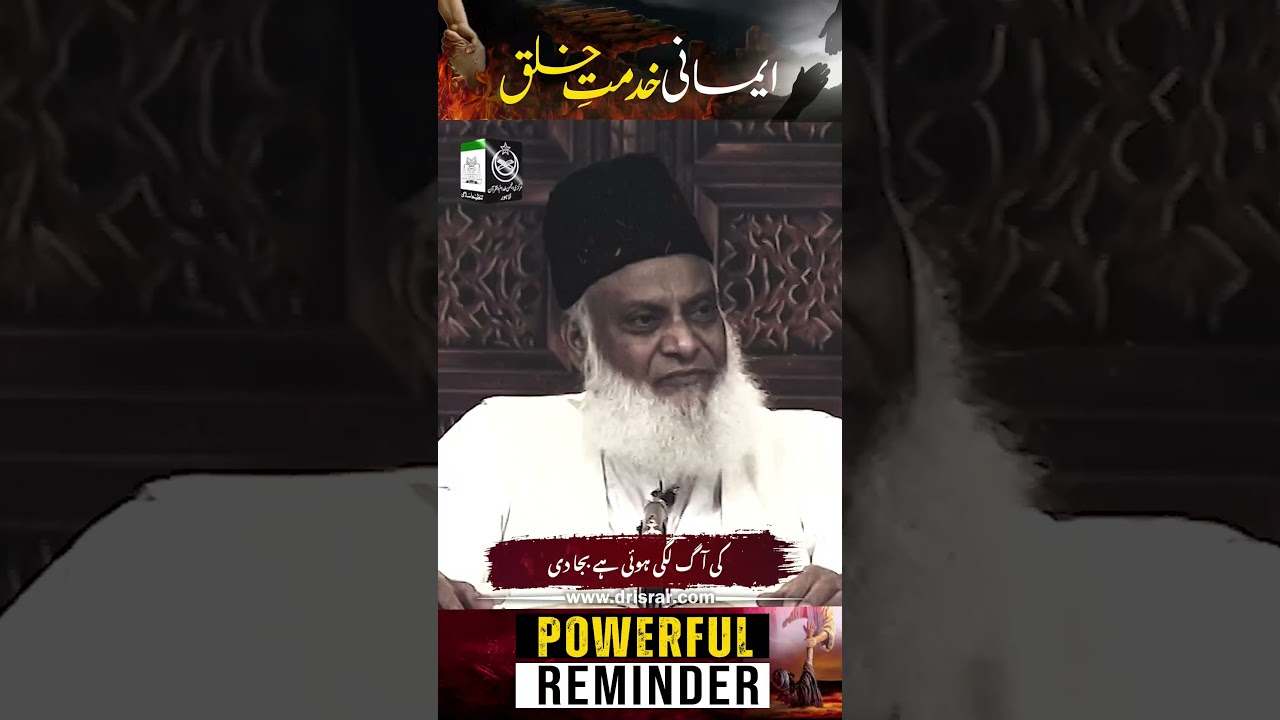
This lecture emphasizes that true service to humanity lies in saving people from the torment of hellfire, rooted in the belief that the afterlife is the true existence. It highlights that indifference to the suffering of others, particularly their spiritual peril, demonstrates a lack of compassion. The core message is that preventing someone from entering hell is the greatest act of service, especially if one is aware of the consequences of disbelief. Genuine faith necessitates actively guiding others towards salvation and alleviating their spiritual hunger.
70
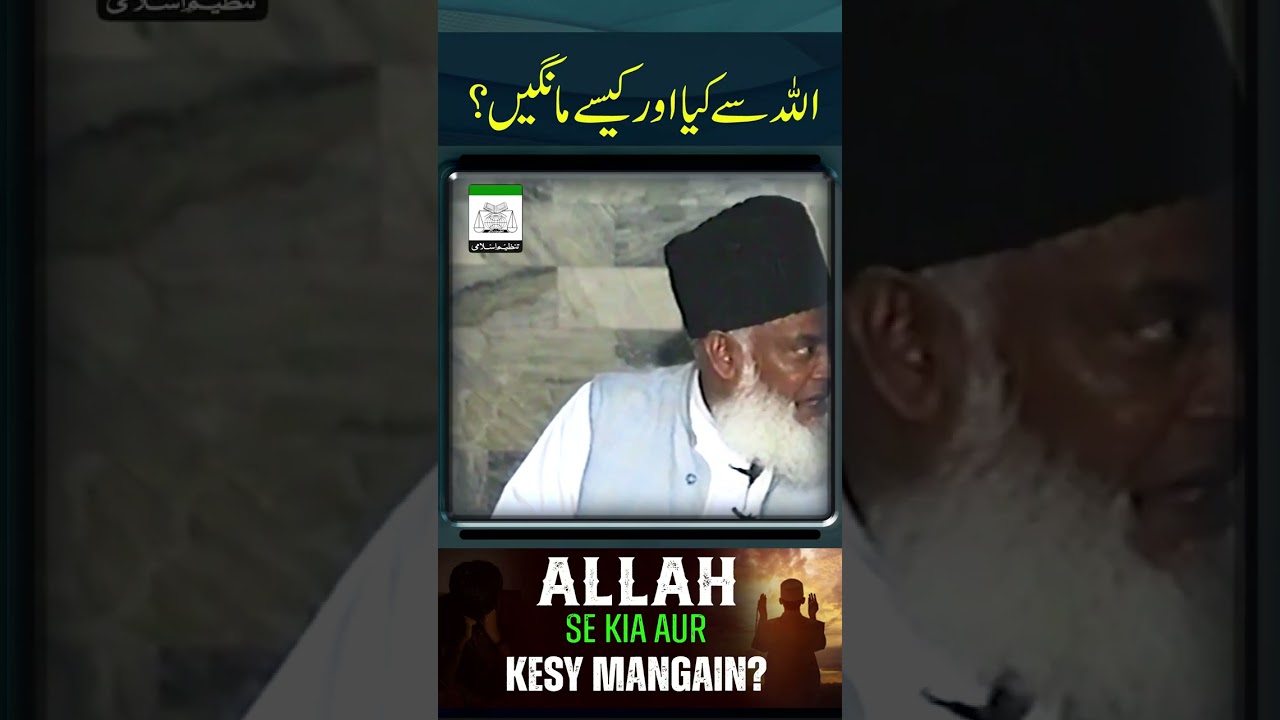
Humans often ask for what appears good to them, unaware of what truly benefits them. This lecture explains the importance of *Istiqarah* – seeking guidance from Allah to discern true good from apparent good. Dr. Israr Ahmad elucidates that humans are prone to short-sightedness and hasty decisions, often requesting things that are ultimately detrimental. True benefit lies in asking Allah to grant what is best for us, acknowledging our limited knowledge. The lecture highlights a specific prayer taught by the Prophet Muhammad (peace be upon him) to his companions, emphasizing the need to surrender to divine wisdom and accept what Allah ordains, even if it differs from our initial desires. It’s a call to seek Allah’s guidance in all matters, recognizing that He knows what is best for us, even when we do not.
65
