Kurze Hose

True faith necessitates prioritizing devotion to God above all else, even familial bonds. This lecture explores the conditions for attaining genuine faith, emphasizing that complete obedience to God is a continuous struggle against internal desires and external temptations. Four fundamental acts of worship are presented as pillars supporting a life of sincerity and devotion. The lecture stresses the difficulty of this pursuit, acknowledging the influence of the self and the constant efforts needed to overcome worldly inclinations. Genuine worship demands a wholehearted commitment, transcending mere ritualistic observance.

52
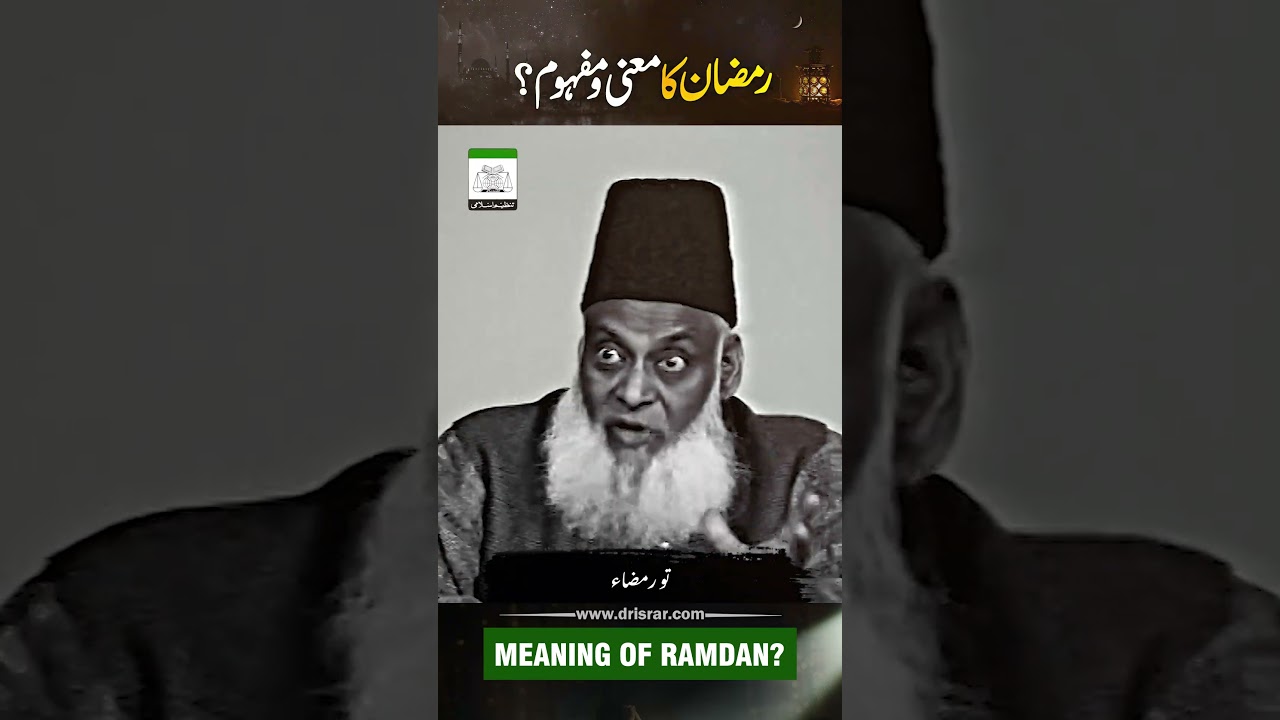
The name Ramadan originates from the intense heat that once prevailed in Arabia, causing hardship and even death. People perceived this time as one where purification occurred naturally. The month of Ramadan was thus associated with cleansing and seen as a period where accumulated impurities within the human body were naturally eliminated. The practice of fasting was ordained by God to facilitate this process. Another interpretation connects the name Ramadan to one of God’s names, signifying ‘the month of God.’ This is supported by a tradition of the Prophet Muhammad, who identified Sha’ban as his month and Ramadan as God’s month.
58

The lecture emphasizes that a lack of empathy and compassion leads to spiritual deprivation. True piety isn’t demonstrated through rituals alone, but through actively alleviating the suffering of others. One who witnesses another’s pain and possesses the means to help, yet fails to do so, forfeits blessings. Genuine faith demands shared sorrow and a commitment to easing the burdens of fellow humans. Mere observance of prayers and nocturnal worship are insufficient without accompanying heartfelt compassion and practical assistance.
58

This lecture explores the dual nature of *dawat* (invitation) and *tabligh* (propagation). It clarifies that both involve conveying a message and guiding someone toward a particular path. *Dawat* focuses on reaching out and delivering the message, while *tabligh* emphasizes bringing someone along that path, accepting the invitation. The lecture highlights that these are not separate actions, but two sides of the same effort—communicating a message and encouraging acceptance. The speaker emphasizes the importance of conveying the message and guiding others towards righteousness.
52

Dr. Israr Ahmad discusses the historical context of Islam’s arrival in the Mewat region, an area initially lacking formal religious education and practice. He explains how early conversions were often superficial, lacking deep understanding of Islamic rituals. The speaker details the common practice of validating marriages through symbolic acts—exchanging garments and circling each other—to ensure the commitment was genuine, rather than merely a verbal agreement. This ensured a true bond was established, solidifying the marriage contract beyond a simple recitation.
65

Human life is inherently filled with hardship, regardless of socioeconomic status. Those who have left their homes face particular struggles, but even the wealthy experience a different kind of toil – mental anguish. While physical labor may be less prevalent among the affluent, they often rely on tranquilizers and sleep aids to cope with stress. In contrast, a laborer, after eight hours of physical work, achieves natural, restorative sleep. True peace of mind and contentment are elusive, manifesting as either physical or mental strain for everyone.
79
