ショーツ
The term ‘Infaq’ in the Quran differs from general charity. It’s not limited to helping the poor, orphans, or the needy. Infaq specifically refers to spending in the way of Allah – for the propagation, elevation, and establishment of the religion. This spending, considered a loan to Allah, fuels the struggle for Islam's dominance. Supporting relatives is a personal obligation, while investing in the religion is a direct loan to Allah, a debt He Himself acknowledges. This concept distinguishes between familial support and investment in faith.

84
This lecture details a profound moment of supplication by the Prophet Muhammad (peace be upon him), expressing vulnerability and seeking divine assistance amidst adversity. The Prophet articulates his powerlessness, the humiliation faced, and the feeling of being abandoned to his enemies. He then humbly submits to God’s will, stating that he has no concern even if it means divine displeasure, as long as God’s decree is accepted. The lecture emphasizes complete surrender and trust in God's plan, even in the face of hardship and perceived injustice. It highlights the essence of *'ubudiyyat* (servitude) and accepting whatever comes from the Divine Source.
47
This lecture emphasizes that genuine access to the essence of the Quran is only possible through self-purification. The speaker highlights a lament about humanity’s disregard for this immense blessing – neglecting to read, understand, implement, or make the Quran a guiding principle in life. Instead, many actively reject it, shaping their own unfortunate destiny through denial. The core message is a call to prioritize internal purification to unlock the true meaning and benefits of divine revelation.
114

During the time of Lord Wellington, the British government offered Allama Iqbal a governorship in South Africa, with the condition that Begum Iqbal accompany him to all official events. Iqbal declined, stating that while he may be a flawed Muslim, he would not compromise his wife's modesty for a government position. This incident, documented by Maulana Maududi in *Batool* magazine (April 1978), highlights Iqbal’s commitment to Islamic values. He similarly refused to attend a foreign delegation where wives were expected to accompany their husbands, upholding his wife’s observance of *purdah* (veil).
87
This lecture explores the profound meaning of ‘La Ilaha Illallah’ (There is no god but Allah) and its connection to genuine faith. It clarifies that merely reciting Arabic phrases is insufficient; true belief originates from a deep, internal conviction. The speaker emphasizes that imitating ancestral practices without understanding is a form of superficiality. Real faith, the lecture asserts, is a personal affirmation arising from the heart, encompassing belief in Allah, the Messenger, the Quran, Gabriel, and the Day of Judgement. This internal validation is the foundation of genuine Iman.
81
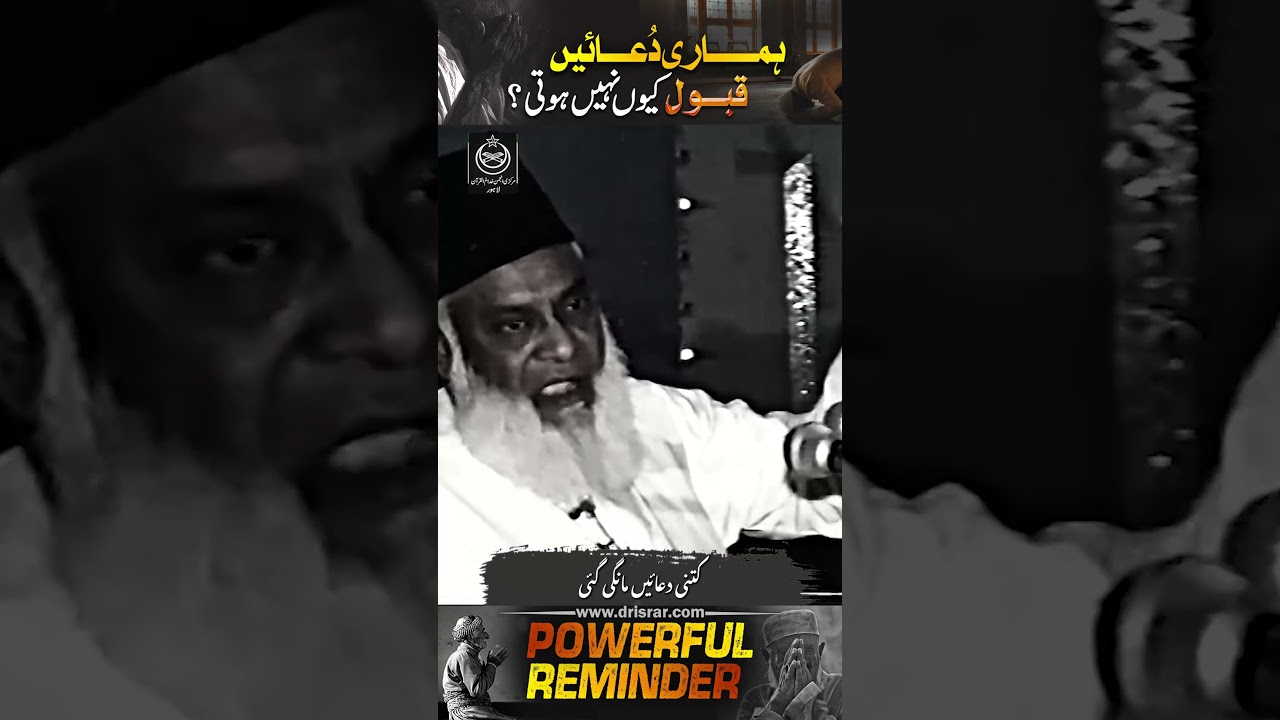
Genuine success requires a balance of effort and prayer. Prayer alone is insufficient; it must be coupled with practical action. Divine acceptance of supplication is contingent upon sincere exertion and adherence to divine guidance. The lecture emphasizes that divine assistance is earned through one’s own efforts, referencing the Quranic principle that help from God comes to those who strive. The speaker critiques a reliance on mere supplication without corresponding action, highlighting the futility of prayers offered without diligent effort. The lecture stresses that divine support isn't a one-way street but a reciprocal relationship contingent upon human striving and commitment to faith.
49
