מִכְנָסַיִים קְצָרִים
This lecture details the stages of human development from conception to old age, emphasizing the divine process governing life. It outlines creation from a sperm, its development into an embryo, then a fetus, followed by growth and maturity. The lecture acknowledges that some individuals are taken before reaching full potential, while others experience a decline in cognitive function with age, forgetting what they once knew. It reflects on the cyclical nature of life and the ultimate return to the Divine.

106

This lecture explores the life of Syeda Fatima, the beloved daughter of the Prophet Muhammad (peace be upon him). It details her hardships, including physical strain from household chores and the challenges faced by early Muslims. The discussion emphasizes her devotion, piety, and the sacrifices she made for her father and the nascent Muslim community. It also addresses a poignant moment where she questions the disparity in worldly possessions, highlighting her spiritual focus despite material needs. The lecture concludes with a reflection on the immense love and respect the Prophet held for his daughter and the practice of reciting specific praises after each prayer.
54
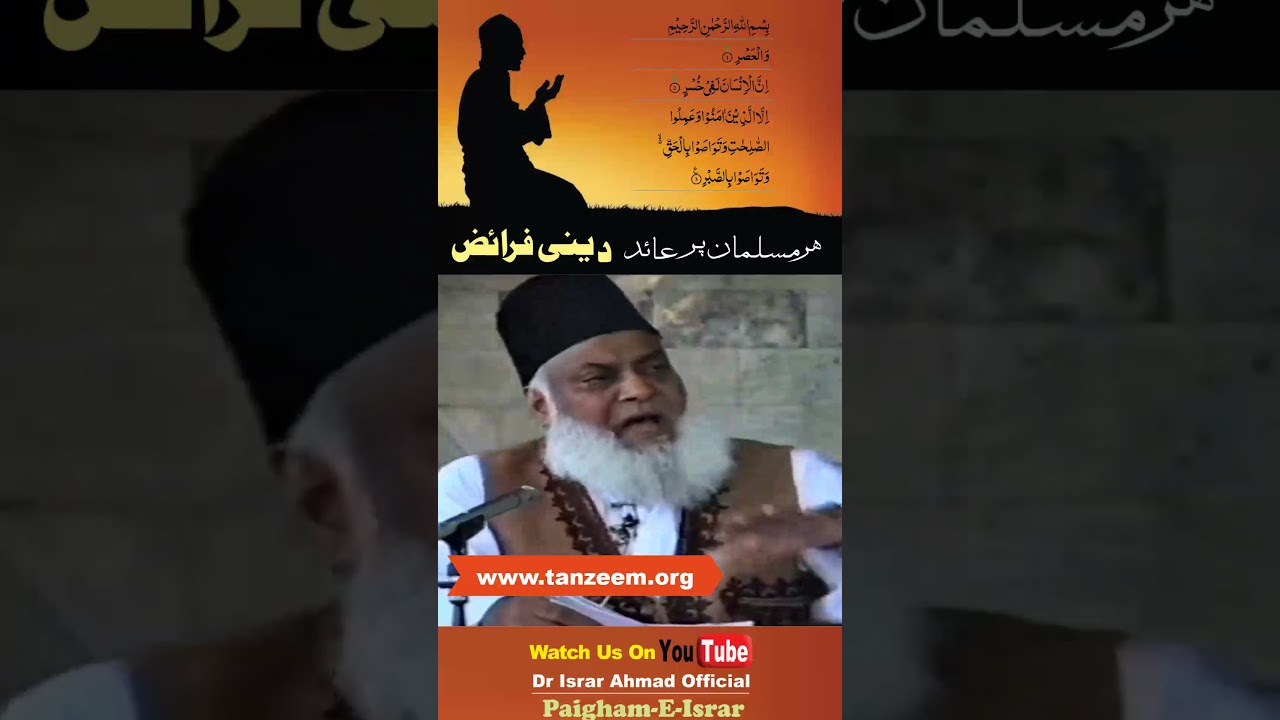
Every Muslim, regardless of location or majority/minority status, has fundamental duties transcending time and space. These encompass complete devotion and obedience to God, fueled by love. Beyond personal worship, believers are obligated to actively invite others to the faith, promoting good and forbidding evil. The highest level of responsibility is establishing religion as a complete system of life, fostering a just and righteous society. This lecture details the levels of religious obligation for every believer.
80

This lecture discusses an incident from the life of the Prophet Muhammad (peace be upon him) involving a traveler who entered a mosque without securing his mount. The Prophet questioned him about it, and the man explained he was relying on God. The Prophet corrected him, stating that true reliance on God does not mean neglecting practical precautions. He emphasized that reliance on God, or *tawakkul*, is not abandoning effort or means, but acknowledging that all outcomes ultimately depend on God’s will and permission. True *tawakkul* involves making an effort and then trusting in God's plan. The lecture underscores the importance of balancing effort with faith and understanding that means are essential, but God's decree is ultimate.
79
Earthquakes are not based on superstition or coincidence, but are a natural phenomenon linked to the Earth’s structure. The Earth is described as balanced on two horns, similar to a bull. When one ‘horn’ weakens, the Earth shifts to the other, causing seismic activity. This concept predates modern science and is found in revealed texts. The Quran emphasizes abandoning speculation and basing beliefs on knowledge, as highlighted in Surah Al-Furqan and verses in Surah Bani Israel that discourage following what one lacks understanding of. The lecture stresses the importance of grounding faith in reason and observable reality.
73

This lecture emphasizes that voting is an act of entrusting responsibility, akin to appointing a trustworthy advisor. Voters should prioritize competence, integrity, and suitability when selecting representatives at all levels—from local officials to national leaders. The speaker cautions against prioritizing personal connections, nepotism, or self-interest. The selection process must ensure that chosen individuals are truly capable of serving the nation, community, and wider collective, upholding principles of justice and competence in governance. The ultimate goal is to establish an organization built on merit and dedicated to selfless service.
53
