Corti

This lecture clarifies a common misconception regarding the dowry (jehez) of Hazrat Fatima (RA), the daughter of the Prophet Muhammad (peace be upon him). It explains that Hazrat Fatima’s marriage was unique in that her father, the Prophet, asked Ali (RA) if he had anything to offer as *mahr* (dower). Ali, being among the poorer companions, had nothing. He sold his armor, and Hazrat Usman (RA) purchased it, later gifting it back. The proceeds, along with a small contribution from the Prophet, were used to furnish a modest home for Fatima, including items like a mat made of date palm leaves, pillows, a water skin, and a hand mill. The Prophet did not contribute any money directly to the dowry; all provisions came from Ali’s effort and the generosity of others.

79

This lecture explains that the night of Decree (Laylat al-Qadr) is when the measures and destinies for the upcoming year are determined. While these decrees exist within Allah's eternal knowledge, the specifics of their manifestation – events, circumstances, and incidents – are communicated to the angels for execution. This process occurs annually, mirroring a budgetary session where yearly affairs are assigned. The lecture highlights that Allah's ancient knowledge encompasses all that will occur, and the angels are tasked with bringing these divine decisions to fruition.
55

Musab bin Umar, a young man raised in luxury, faced ostracism when he refused to renounce his faith after his father’s death. His mother, unable to defy her brother, the head of the family, was forced to comply with the uncle’s decree that Musab forfeit his inheritance and leave the house. The uncle, angered by Musab's adherence to his father’s religion, demanded he relinquish all property acquired through his father's wealth. Musab accepted the exile, even removing the clothes he wore, which were purchased with that wealth, before leaving his home. This demonstrates a powerful commitment to belief and principle.
52

This lecture discusses the historical context of modest dress and covering for women in Arab and Islamic cultures. It clarifies that covering the head and body with a *chadar* (outer garment) was a common practice for both men and women when outside the home, while an *odhni* (shawl) was typically worn indoors. The discussion emphasizes that the concept of facial covering was not prevalent in pre-Islamic Arab society. It highlights how these practices were part of the cultural norms and traditions of the time, serving as a form of modesty and protection.
42
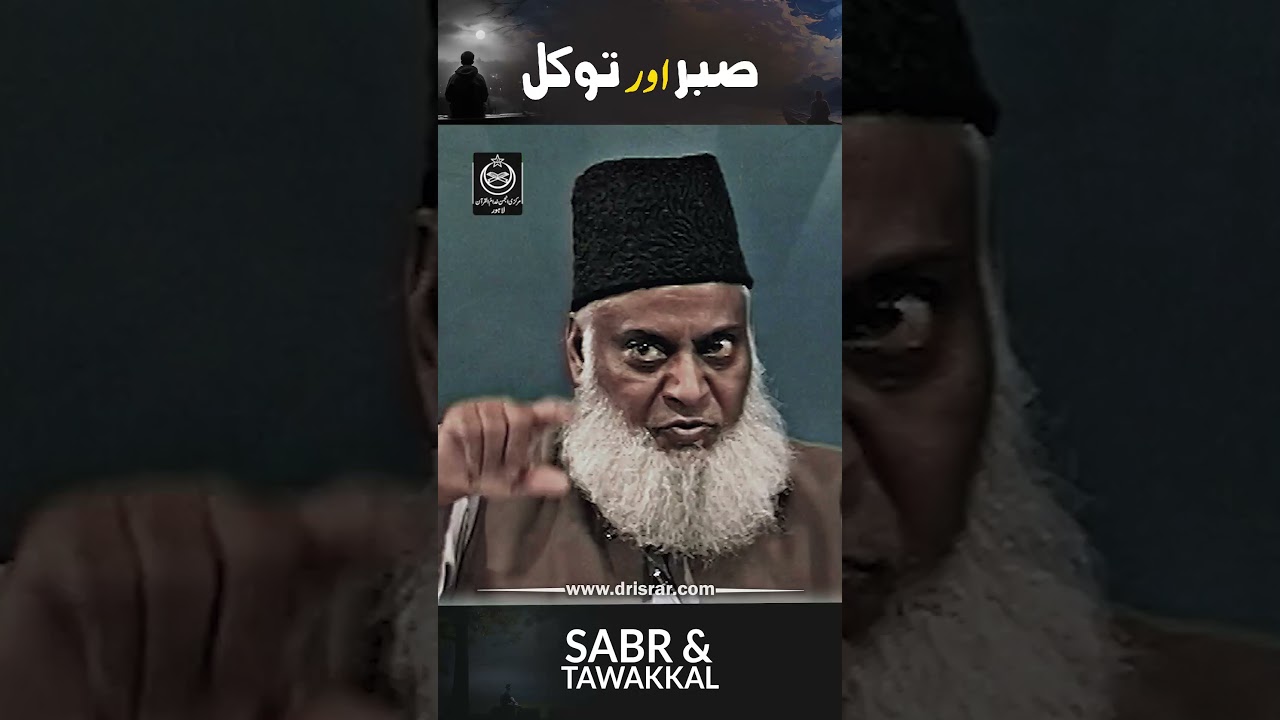
This lecture emphasizes the twin virtues of patience (sabr) and reliance on God (tawakkul) as fundamental principles for navigating life’s challenges. It stresses complete surrender to divine will, rejecting self-reliance on personal abilities, intelligence, or qualifications. True strength lies in enduring hardship with patience and placing unwavering trust in God’s plan. The core message advocates for abandoning dependence on one’s own efforts and instead, cultivating a complete and absolute trust in Allah for all outcomes.
63

The speaker clarifies the distinction between legitimate leasing (ijara) and purchases financed through interest (riba). Leasing involves renting an asset for a specified period, with the renter paying a monthly fee and covering operational costs. In contrast, an interest-based purchase involves financing the full price of an asset over time, accruing interest on the outstanding amount. The speaker emphasizes that financing a purchase with interest, even if labeled differently, constitutes riba and is prohibited. Legitimate leasing does not involve any form of interest or profit on the asset itself, only a rental fee for its use. The discussion highlights that changing the label of an interest-based transaction does not alter its fundamentally prohibited nature.
60
