Kurze Hose
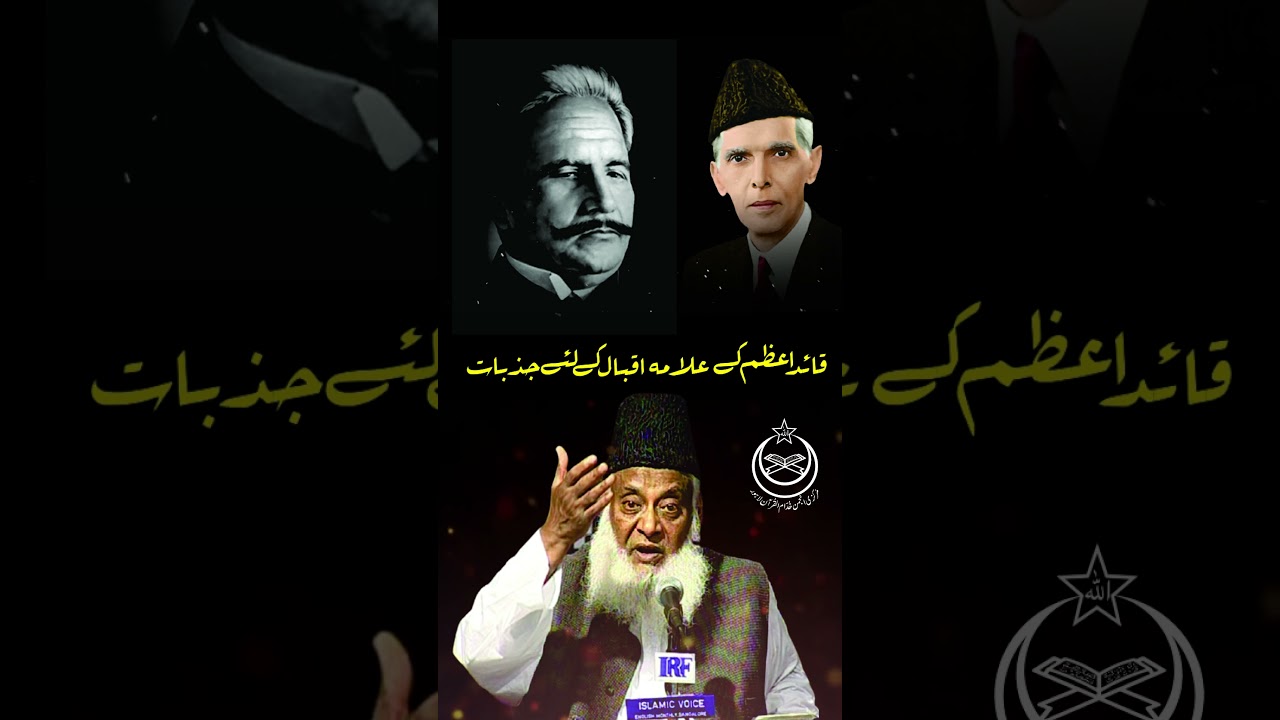
This lecture discusses the precise and deliberate manner of speech employed by Muhammad Ali Jinnah. It highlights that Jinnah was not one to engage in frivolous talk, but rather carefully considered each word before speaking. The speaker emphasizes Jinnah's commitment to accuracy and thoughtfulness in his communication, contrasting it with superficial rhetoric.

72

This lecture emphasizes that assisting others in their needs is a direct path to receiving divine help. True service isn't about expecting reward from people, but establishing a sincere connection with God. When a person dedicates themselves to God’s purpose, divine assistance is guaranteed. This assistance manifests through fulfilling essential needs – faith, certainty, and trust in God. A genuine connection with God is fostered by inner reflection and the unwavering belief that God will never abandon those who turn to Him sincerely.
59

This discourse emphasizes that times of hardship are often precursors to positive change and divine reward. It asserts that current difficulties are not signs of abandonment but rather tests of faith and resilience. The speaker encourages perseverance, highlighting that enduring trials will ultimately lead to a brighter future and the fulfillment of potential. The message stresses that even within darkness, the seeds of a new life are germinating, and those with insight should not lose hope in the face of adversity.
59

A traveler lost in the desert, deprived of his camel, water, and provisions, despairs until, through divine intervention, his camel reappears. Overjoyed, he momentarily forgets his place before God, exclaiming God is his servant. This prompts a reflection on the immense joy God feels when a servant repents, exceeding the joy the servant experiences upon receiving a blessing. The story emphasizes God’s boundless mercy and the importance of humility.
58

True piety (taqwa) isn't about outward appearances or rituals, but an internal state of consciousness and unwavering faith. It’s a complete immersion of one's personality in the principles of divine guidance. Genuine piety manifests as a consistent effort to please God and avoid disobedience, permeating the entire being with a distinct spiritual color. It resides in the heart and is intrinsically linked to faith. The Prophet Muhammad (peace be upon him) repeatedly pointed to his chest to emphasize that piety dwells within the heart, not in external displays.
41

Early Arabs primarily believed in Allah, though they also worshipped various deities and idols. They believed these idols would intercede on their behalf in the afterlife. While many acknowledged the existence of the afterlife, they struggled to reconcile the concept of resurrection with the physical decay of the body. Some believed their deities would protect them, reflecting a complex blend of monotheistic and polytheistic beliefs. This lecture explores the nuances of their faith and understanding of the divine and the hereafter.
35
