Corti

During the days of Hajj, the Prophet Muhammad encountered six individuals from the Khazraj tribe. These men had heard rumors from Jewish communities that the final prophet would appear among them and that they would ultimately defeat their enemies. They had consistently lost conflicts with Jewish communities. When invited to Islam by the Prophet, they recognized the fulfillment of these prophecies and immediately accepted the faith, fearing being left behind when the Jews converted. This event demonstrates the power of divine guidance and the swift acceptance of truth by those destined to believe.

60

This lecture emphasizes the importance of fulfilling obligations to God and to humanity. It highlights the necessity of standing firm for justice, adhering to divine principles, and respecting revealed scriptures. The speaker stresses that true faith requires both upholding the rights of God – encompassing worship and obedience – and fulfilling the rights of others, including upholding justice and fairness. A key point is the responsibility to study, reflect upon, and act in accordance with the teachings of divine books like the Torah, the Gospel, and the Quran. The lecture concludes with a call to establish justice and follow the guidance revealed by God.
51

Surah Al-Ikhlas is considered the most important surah in the Quran due to its comprehensive articulation of Tawhid (the Oneness of God). While comprising only four verses, it’s equivalent to one-third of the Quran in significance. This is because the foundation of Islam is Tawhid, and Surah Al-Ikhlas encapsulates this concept in its purest form, making it the core root of the faith. Dr. Israr Ahmad explains this foundational concept with clarity and depth.
55

The Prophet Muhammad (peace be upon him) observed Tarawih prayers individually for only three nights, leading an eight-rak’ah congregation. He performed these prayers after the Tahajjud prayers. The practice of offering twenty rak’ahs in congregation did not exist during the Prophet’s era or the caliphate of Abu Bakr. It began during the caliphate of Umar ibn al-Khattab, who standardized the practice after observing fragmented congregations in the mosque. He instituted a system of twenty rak’ahs to be performed immediately after Isha, led by a single imam.
83
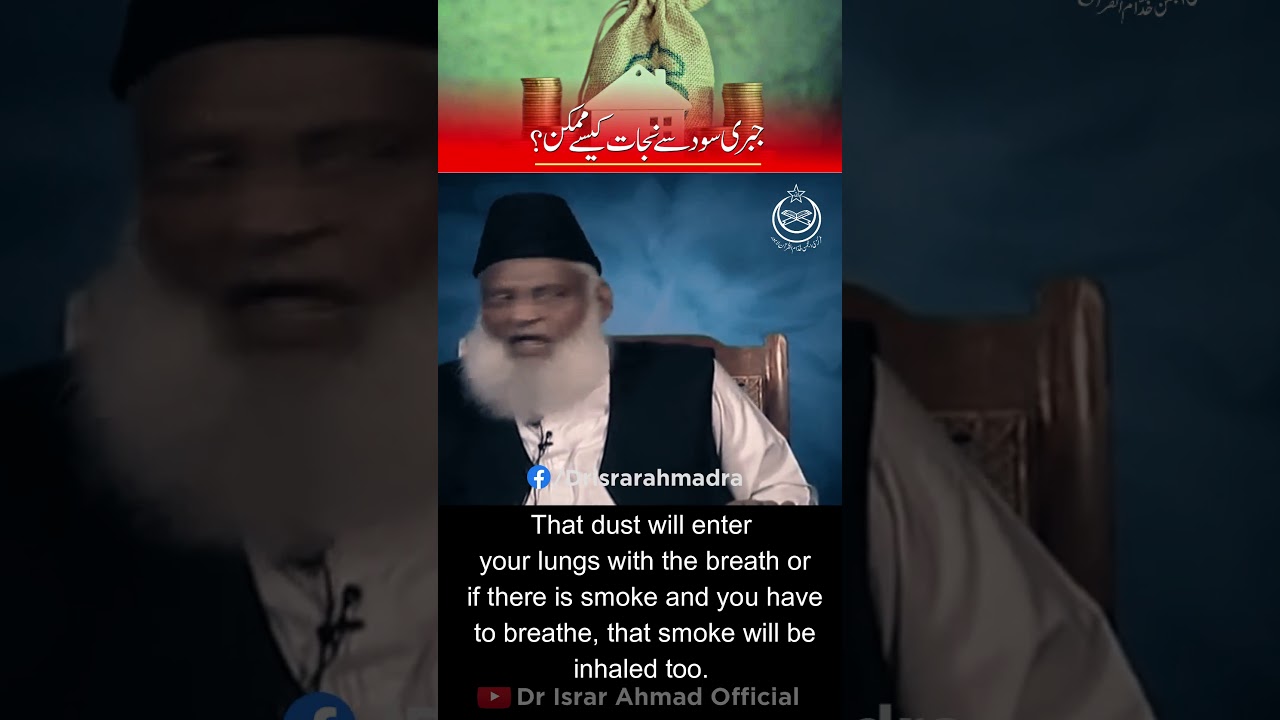
This lecture addresses the question of accountability for unintentional involvement with interest (riba). It clarifies that if someone unknowingly consumes something containing interest, they are not exempt from sin. However, the speaker proposes that sincere effort dedicated to establishing and strengthening religious practice can serve as expiation. The analogy of involuntary inhalation of dust is drawn; just as one cleanses their lungs, striving for faith cleanses the soul. The lecture emphasizes that consistent, dedicated work for the cause of religion is a valid form of atonement for unintentional transgressions.
62

This lecture discusses the significance of Friday sermons (Jum'ah) as a weekly reminder of life's true purpose: seeking the pleasure of God. It emphasizes that worldly possessions are merely necessities, not ultimate goals. The speaker highlights the importance of regularly renewing one's commitment to faith, clearing away distractions, and continuously seeking knowledge and spiritual training. The weekly gathering serves as a forum for reaffirming core beliefs and strengthening the foundations of faith, much like a revolutionary movement dedicated to God.
74
