শর্টস

This lecture addresses the importance of individual engagement with religious teachings and self-reflection. It critiques the professionalization of religious roles, arguing that every Muslim should be capable of leading prayers, performing marriage ceremonies, and conducting funeral rites. The speaker emphasizes that religious knowledge and practice should not be limited to a select few, but accessible to all Muslims. The core message urges listeners to examine their own faith and commitment to religious principles instead of criticizing religious scholars.

226

This lecture clarifies the Islamic obligation of Hajj for those with the means to perform it. It emphasizes that Hajj is a right of Allah upon those who are physically and financially able, and delaying it after fulfilling the necessary conditions constitutes a grave sin. The discussion frames Hajj not merely as a religious act, but as a debt owed to Allah, requiring immediate fulfillment once capacity exists. The lecture underscores the importance of providing for dependents during the period of pilgrimage, highlighting the complete preparation needed for this sacred journey.
74
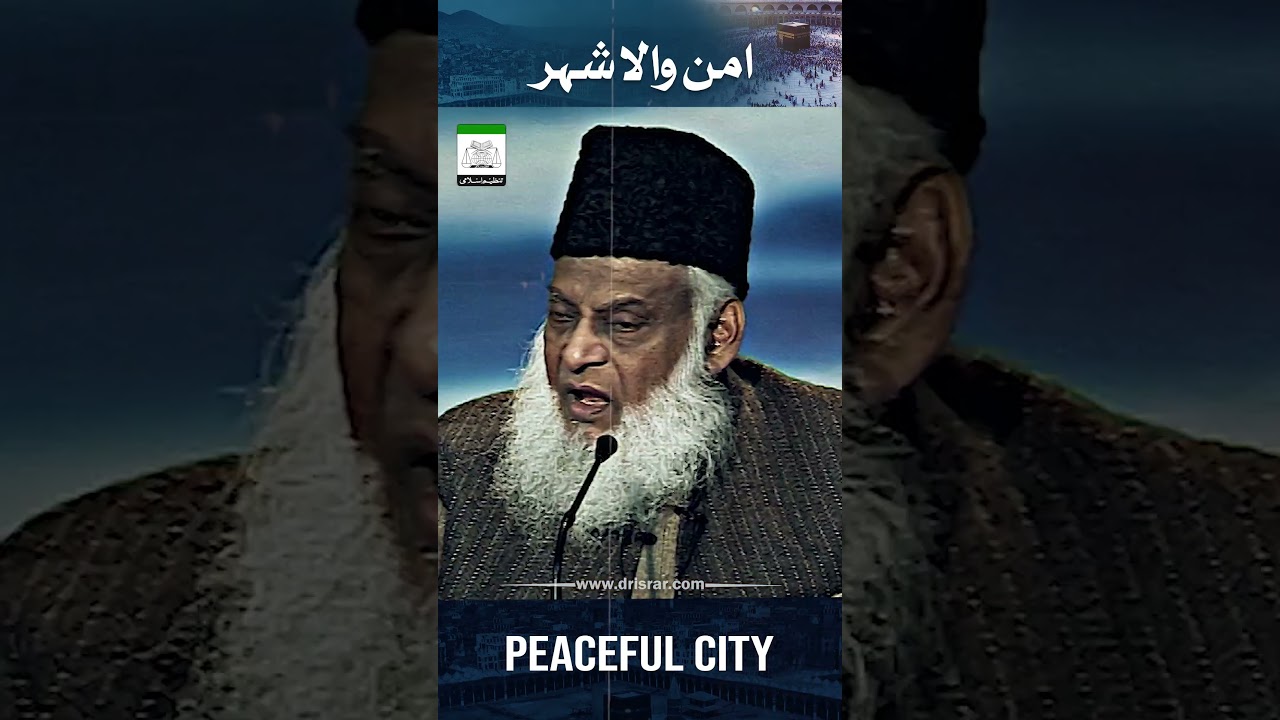
This lecture discusses the unique sanctity of Mecca, highlighting its historical role as a place of peace amidst a turbulent Arab society. Despite centuries of tribal conflict, feuds, and cycles of revenge killings, Mecca’s sacred precinct remained a sanctuary. Even those seeking retribution for deeply personal grievances—like the murder of a father—would refrain from violence within its boundaries. This demonstrates Allah’s provision of security and peace to the city, earning it the title 'City of Peace.' This inherent protection continues to be a defining characteristic of Mecca today.
41

This lecture explores the concept of *talaawat* beyond mere recitation, emphasizing its true meaning as actively following the Quran's guidance. The speaker explains how beginners often rely on physical aids like fingers to maintain focus while reading. True *talaawat*, however, involves making the Quran one’s leader, adhering to its principles, and seeking its light. This entails complete submission and following its path, as expressed in the prayer for the Quran to be an Imam, a source of light, guidance, and mercy.
52

This lecture explores the critical connection between mindful prayer and genuine spiritual transformation. The speaker explains that rote recitation without internal presence renders prayer ineffective. A wandering mind, preoccupied with worldly concerns, prevents the experience of divine connection. True prayer requires focused attention, a conscious awareness of standing before God, and a heartfelt submission. Only when the mind and heart are fully engaged does prayer become a powerful force for character building and positive change. The speaker emphasizes that a distracted mind will fill with anxieties and worldly matters, negating the spiritual benefits of prayer. The essence of prayer lies in experiencing a direct connection with the Divine.
81

Islamic law grants men the right to initiate divorce independently, while women’s options are more limited. Women can seek divorce through negotiation, offering compensation, appealing to a court, or requesting intervention from family elders if they face injustice or incompatibility. However, a woman cannot unilaterally initiate divorce as a man can. The lecture clarifies this disparity within the framework of Islamic jurisprudence.
124
