Corti
This lecture addresses the importance of individual engagement with religious teachings and self-reflection. It critiques the professionalization of religious roles, arguing that every Muslim should be capable of leading prayers, performing marriage ceremonies, and conducting funeral rites. The speaker emphasizes that religious knowledge and practice should not be limited to a select few, but accessible to all Muslims. The core message urges listeners to examine their own faith and commitment to religious principles instead of criticizing religious scholars.

226
This lecture details three categories of people whose prayers are not accepted by God. These include a man who remains with a wife of bad character but refuses divorce, an individual who entrusts wealth to a foolish person despite divine prohibition, and a person who has a debt outstanding but did not establish proper witnesses. God will not answer the prayers of such individuals.
51
This discourse details the path of *Sirat-e-Mustaqeem* (the straight path) as it transitions from this world into the intermediate realm (Barzakh) and ultimately becomes the bridge over Hell on the Day of Judgement. It explains how the righteous will traverse this path to enter Paradise, witnessing the salvation granted by God, while the wrongdoers will fall from it due to their lack of divine guidance. The lecture emphasizes the immense value of God’s mercy and forgiveness for those who adopted a path of piety in this world. Those devoted to *taqwa* (piety) will be rescued, while the unjust will remain fallen. This path will be a test of faith and a demonstration of God’s justice.
48
The Quran’s true greatness lies in its being the expression of the Divine Speaker, revealing the entirety of God's attributes. Just as one can discern a person's intellect, understanding, and character from their speech, the Quran manifests all of God’s qualities. The text’s eloquence embodies complete divine attributes, making it a reflection of the Divine Being.
70
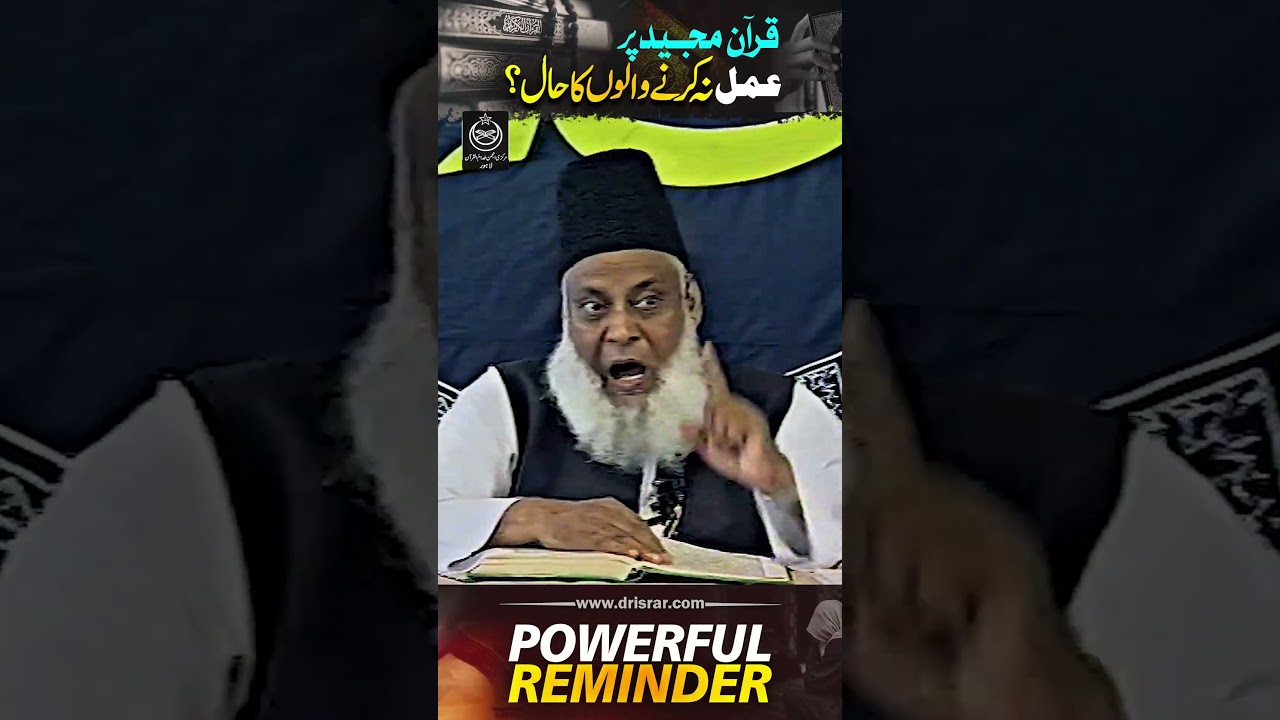
This lecture examines the decline of the Muslim Ummah due to negligence of religious duties and disregard for the Quran. It draws parallels between the current state and the fate of previous nations who rejected divine guidance, becoming spiritually hardened and ultimately failing to fulfill their potential. The speaker emphasizes that being designated ‘the best of peoples’ carries a responsibility to act upon that status and avoid repeating the mistakes of the past. The hardening of hearts, as described in the Quran, is a critical warning against spiritual apathy and the abandonment of faith. It highlights the importance of internalizing divine teachings and consistently striving for moral and spiritual excellence.
65
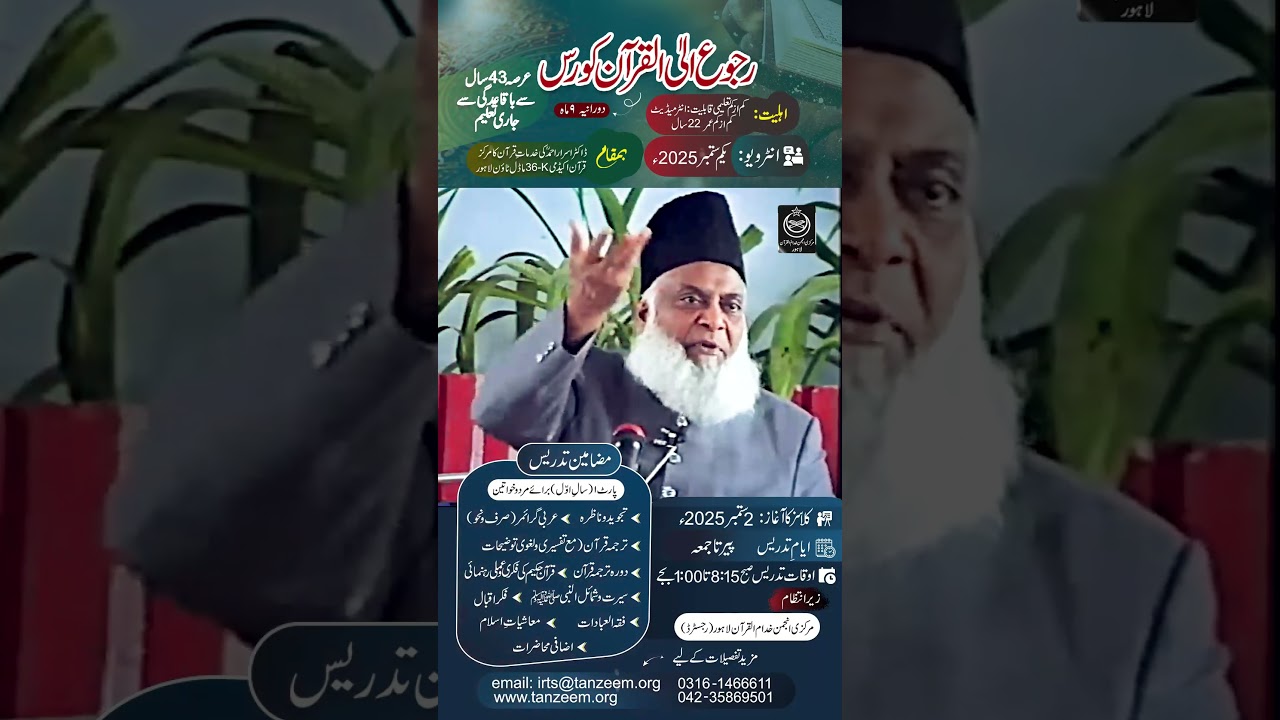
This lecture emphasizes the necessity of personal repentance (tawbah) and its expansion into a collective movement. It urges listeners to prioritize learning Arabic to properly understand and convey the Quran, as the primary medium for inviting others to the faith. The speaker stresses the urgency of life, the potential for unforeseen circumstances, and the importance of dedicating time to religious education and the preparation of a dedicated group (da'i) committed to spreading the message of Islam. He shares his life's dedication to Quranic study, teaching, and the organization of a committed group, viewing this as a vital struggle for the faith. The ultimate goal is the growth of a movement devoted to upholding and propagating Islamic principles.
63
