短裤
The speaker discusses the permissibility and desirability of conducting nikah ceremonies in mosques. Initially, the idea was met with some resistance, but convincing arguments were presented. He emphasizes a tradition from the Prophet Muhammad encouraging publicizing nikah and performing it in mosques, citing a narration from Jami’ al-Tirmidhi. While some scholars interpret the directive as not obligatory but rather recommended, the speaker questions why one would abandon a practice favored by the Prophet. He highlights that the nikah ceremonies of the Prophet’s daughters were also held in mosques and appeals to community leaders to embrace this practice, motivated by love for the Prophet.

63
Many women arbitrarily fulfill numerical requirements for religious permissions, obtaining consent from scholars under duress. This practice is questioned as potentially disrespectful to Islamic law. The discussion clarifies that it doesn't prohibit leaving the home entirely, but emphasizes the importance of spending nights within the home and avoiding excessive adornment. The permissions sought are often linked to going out while still applying makeup, which is problematic.
52
Hares Ahshari reports that the Messenger of Allah commanded Muslims to adhere to five principles: maintaining unity and cohesion within the community, obedience to leadership, migration for the sake of faith, and striving in the path of God. This directive, relayed by the Prophet, is not of his own volition but a direct command from God. These principles are essential for the strength and progress of the Muslim community, ensuring collective action and spiritual advancement. The report emphasizes that these are divine instructions, communicated through the Prophet, and should be followed diligently.
48
This lecture addresses the rights and societal treatment of children born out of wedlock in Islam. It firmly states that such children bear no guilt for the actions of their parents and should be treated with the same respect and dignity as any other child. The speaker emphasizes that these children are considered relatives (mawali) and should not be stigmatized or held accountable for parental transgressions. Any wrongdoing remains the responsibility of the parents, and the child is considered innocent.
54

Rebellion obscures the imprint of devotion. This lecture explores the purpose of fasting as a means to renew commitment to worship. Fasting serves as a shield against base desires. The month-long practice of abstaining from food and permissible pleasures, even when readily available, cultivates self-discipline and restraint. This rigorous training strengthens the ability to resist unlawful acts for the remaining eleven months of the year. It is an exercise in devotion, preparing the soul for a life of obedience and spiritual growth.
41
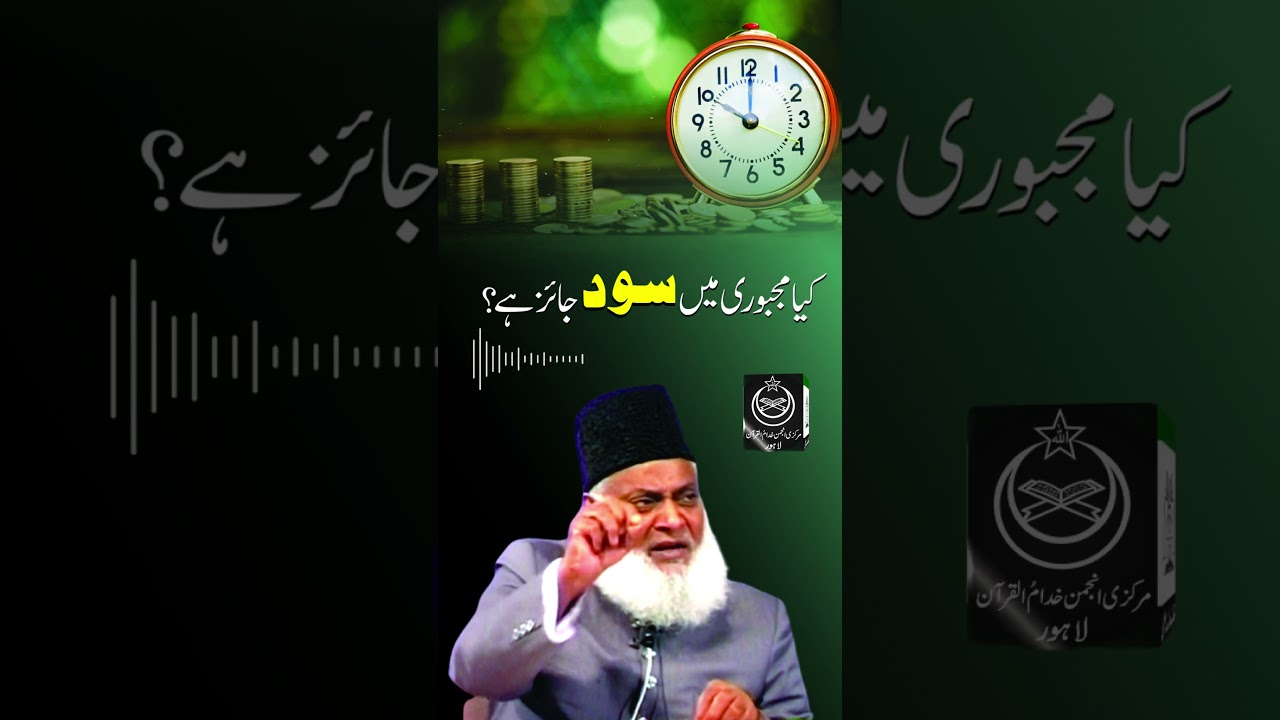
This lecture addresses the issue of a widow relying on interest income for her children's upbringing and explores permissible alternatives. It emphasizes avoiding *haram* (forbidden) earnings, even in dire circumstances, and suggests seeking lawful means of income like home-based work, such as sewing. The speaker clarifies that while permissible in extreme need to survive, interest is generally not justifiable. He highlights that true sustenance comes from Allah and encourages reliance on Him while pursuing *halal* (lawful) earnings.
56
