Шорты
Musab bin Umar, a young man raised in luxury, faced ostracism when he refused to renounce his faith after his father’s death. His mother, unable to defy her brother, the head of the family, was forced to comply with the uncle’s decree that Musab forfeit his inheritance and leave the house. The uncle, angered by Musab's adherence to his father’s religion, demanded he relinquish all property acquired through his father's wealth. Musab accepted the exile, even removing the clothes he wore, which were purchased with that wealth, before leaving his home. This demonstrates a powerful commitment to belief and principle.

59
This lecture discusses the profound knowledge of Quranic interpretation possessed by Hazrat Abdullah Ibn Abbas, a prominent companion of the Prophet Muhammad. He received special prayers from the Prophet for understanding of religion and deep comprehension of the Quran. Abdullah Ibn Abbas is considered a leading authority on Tafsir, with a significant number of narrations attributed to him through his students like Mujahid and Ikramah. The term 'Habr', meaning a highly knowledgeable scholar, is explained in relation to his status as 'Habr al-Ummah', the scholar of the Muslim community. The lecture also clarifies the origin of the term 'Habr' and its historical context regarding scholars of other faiths.
108
This lecture discusses the extension of the principles of Hajj beyond the physical pilgrimage. It explains how the reverence associated with specific locations in Hajj, and the importance of sacrifice within the Hajj rituals, are mirrored in the universal practice of offering sacrifice. The speaker highlights how participation in sacrifice, even when unable to physically perform Hajj, allows Muslims worldwide to share in a core tenet of the pilgrimage. Similarities between the restrictions observed during Ihram and the spirit of sacrifice are drawn, emphasizing the broader application of Hajj’s principles to the entire Muslim community.
64
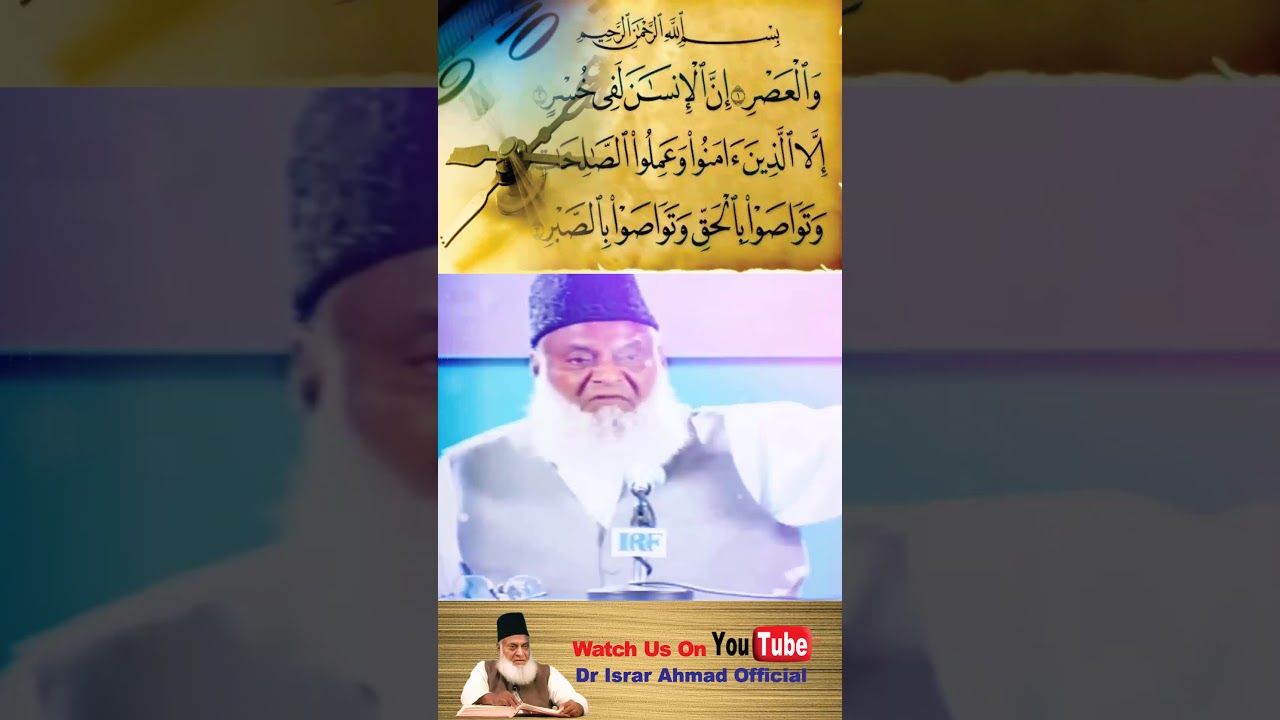
Humanity, universally, is in loss. Salvation is achieved through four essential conditions: faith, righteous deeds, advocating truth, and encouraging good conduct. These are not merely recommendations, but fundamental requirements for achieving deliverance. Without fulfilling these conditions, true salvation remains unattainable. This lecture details these prerequisites for spiritual success and a meaningful life.
220
This lecture explains how the Quran served as the instrument of a profound revolution, fundamentally altering beliefs, values, and perspectives. Before, life was considered the greatest blessing; now, martyrdom is the highest aspiration. This transformation occurred not through worldly gains, but through adherence to the Quranic command to resist disbelief and engage in a great struggle, as stated in Surah Al-Furqan. The Quran reshaped the mindset of people, prioritizing spiritual strength over material possessions.
78
A recent gathering of Islamic movement leaders in London assessed global regions for the potential revival of Islam and the establishment of an Islamic system. The consensus identified Pakistan as the sole viable country for this purpose, possessing the inherent capabilities, resources, and challenges necessary for this undertaking. The lecture emphasizes Pakistan’s unique position and potential in the context of global Islamic resurgence.
239
