Şort

Dr. Israr Ahmad explains the importance of performing the movements of prayer (Salat) correctly and with complete attention. He highlights that rushing through the postures – especially transitions between standing, bowing (Ruku), prostration (Sujud), and sitting – constitutes a deficiency in prayer. Complete upright posture after rising from each movement is crucial, ensuring a moment of stillness (Qawmah) before proceeding. This meticulous adherence to the rituals, coupled with appropriate supplications during the sitting position, constitutes a truly accepted prayer.

67

This lecture discusses the destructive nature of arrogance (takabbur) and its prohibition in Islam. It highlights that even a grain-sized amount of pride can prevent entry into paradise. God considers arrogance as a garment fit only for Him, and engaging in it is akin to stripping away His covering. The speaker emphasizes the importance of humility and recognizing one's limitations as essential qualities for spiritual growth and attaining divine favor. The lecture draws upon Quranic verses and prophetic traditions to illustrate the severity of arrogance and its consequences.
61

The lecture discusses the diminishing spiritual impact of ritualistic worship, despite the continuation of practices like prayer, fasting, sacrifice, and pilgrimage. It argues that simply performing these acts does not guarantee societal change or personal transformation. The speaker emphasizes that a significant number of pilgrims return from Hajj without exhibiting any noticeable positive impact on their communities or themselves, and some even become more self-assured in their past wrongdoings, feeling free from accountability. The core message is that true worship must lead to genuine inner change and positive societal contribution.
65

Dr. Israr Ahmad explains that the greatest form of *jihad* is the struggle against one’s own base desires (*jihad e nafs*), achieved by dedicating oneself to God. This internal struggle protects against worldly temptations that constantly demand attention and resources. He contrasts this with physical *jihad* – fighting in the path of God – which, while important, is considered a lesser form of struggle. The constant internal demands of the *nafs* are portrayed as a relentless pursuit of material possessions and immediate gratification. Overcoming these internal pressures constitutes the superior *jihad*.
52
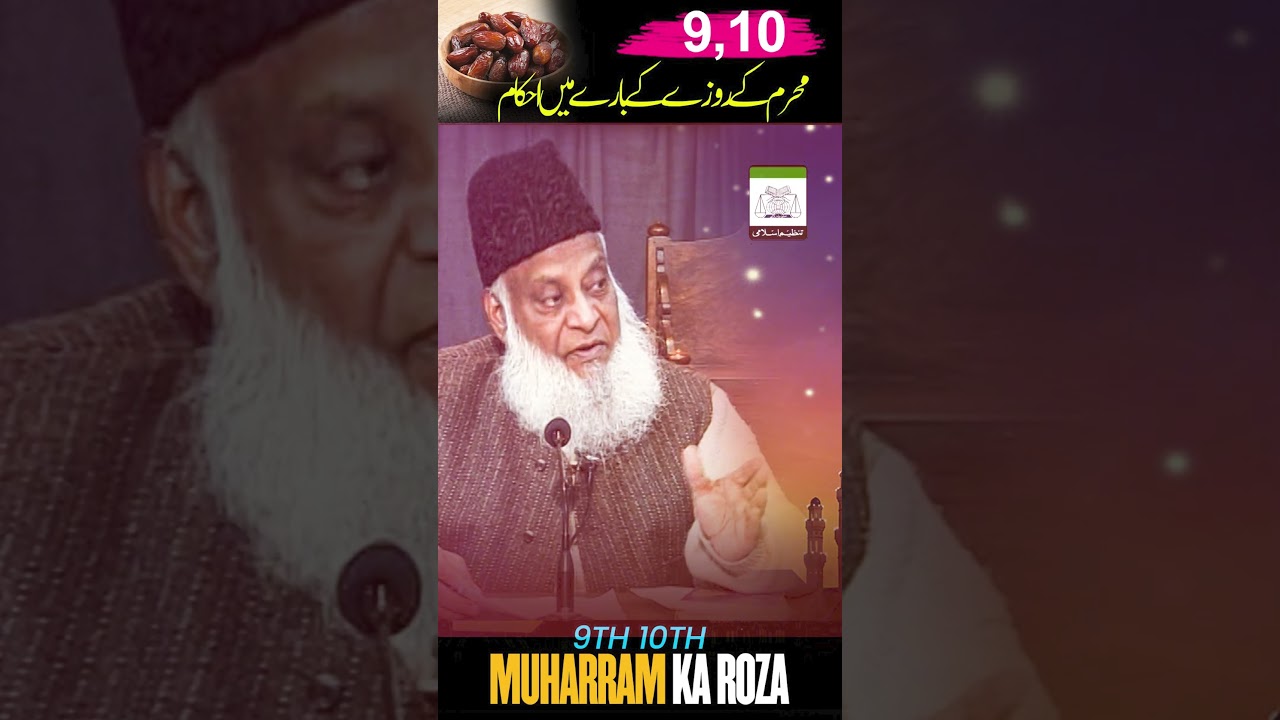
The observance of fasting on the 9th and 10th of Muharram is a recommended practice, not obligatory. This practice originated when the Prophet Muhammad learned that the Jews of Medina fasted on the 10th of Muharram to commemorate their deliverance from Pharaoh. The Prophet stated that the Muslims have a greater right to Moses than the Jews, and thus instructed his companions to fast on the 9th and 10th of Muharram instead, to differentiate their practice. This was done even before Ramadan fasting was made obligatory. The intention was to establish a distinct practice, fasting for two days instead of one.
63

The natural progression of love shifts throughout life. Initially, a child's love is wholly focused on their parents due to dependence. As individuals mature, marry, and have children, the sphere of their affection expands, inevitably diminishing the exclusivity of parental love. Maintaining a strong connection with parents requires conscious effort and is considered a divine command. This lecture explains that prioritizing parental affection isn't automatic; it's a deliberate act of obedience to God’s will and a demonstration of gratitude for their sacrifices. It is a reminder to treat parents with kindness and respect, recognizing that fulfilling this obligation is not merely a natural impulse but a religious duty.
60
