Шорты

True goodness originates from faith, manifesting as sincere intention and the pursuit of Allah’s pleasure. This involves acting with love for God and ensuring actions are righteous and beneficial. The most prominent expression of goodness is selfless service to humanity, driven by compassion. This includes prioritizing support for family, orphans, the poor, travelers, those in need, and freeing the oppressed. Good deeds are not merely for worldly reward, but for eternal recompense.

55

The history of Islam and Muslims reveals a pattern of rise and decline. Initially unified, Islam flourished during the Rashidun Caliphate. Post-Caliphate, while Islam experienced decline, Muslim power continued to ascend, reaching its peak. Subsequently, Muslims also faced decline, followed by a resurgence. The Tartars, despite inflicting immense casualties on Muslims, ultimately converted to Islam and became its champions. Successive Turkic dynasties—Timurids in India, Safavids in Iran, Seljuks in the Middle East, and Ottomans—led Islamic power for centuries. The Ottoman Caliphate held prominence for four hundred years, before ultimately declining after World War I.
53

Fasting cultivates self-control by imposing restrictions not only on prohibited things but also on permissible enjoyments. This practice aims to develop restraint throughout the year, extending beyond the month of Ramadan. The purpose of these limitations is to foster discipline and the ability to control one’s desires and impulses, even when not explicitly forbidden, leading to a strengthened will and self-governance. This self-control is the primary wisdom behind the practice of fasting.
64

This lecture discusses the recitation of at least three verses of the Quran in each *rak'ah* (prayer cycle) after Surah al-Fatiha, based on the practice and guidance of the Prophet Muhammad (peace be upon him). It highlights that the Quran itself is structured in sections of at least three verses. The lecture specifically references Surah al-Kausar and Surah al-Asr as examples of Quranic sections containing exactly three verses, emphasizing their significance. The speaker explains that this practice ensures complete engagement with the Quran during prayer, aligning with the prophetic tradition.
45
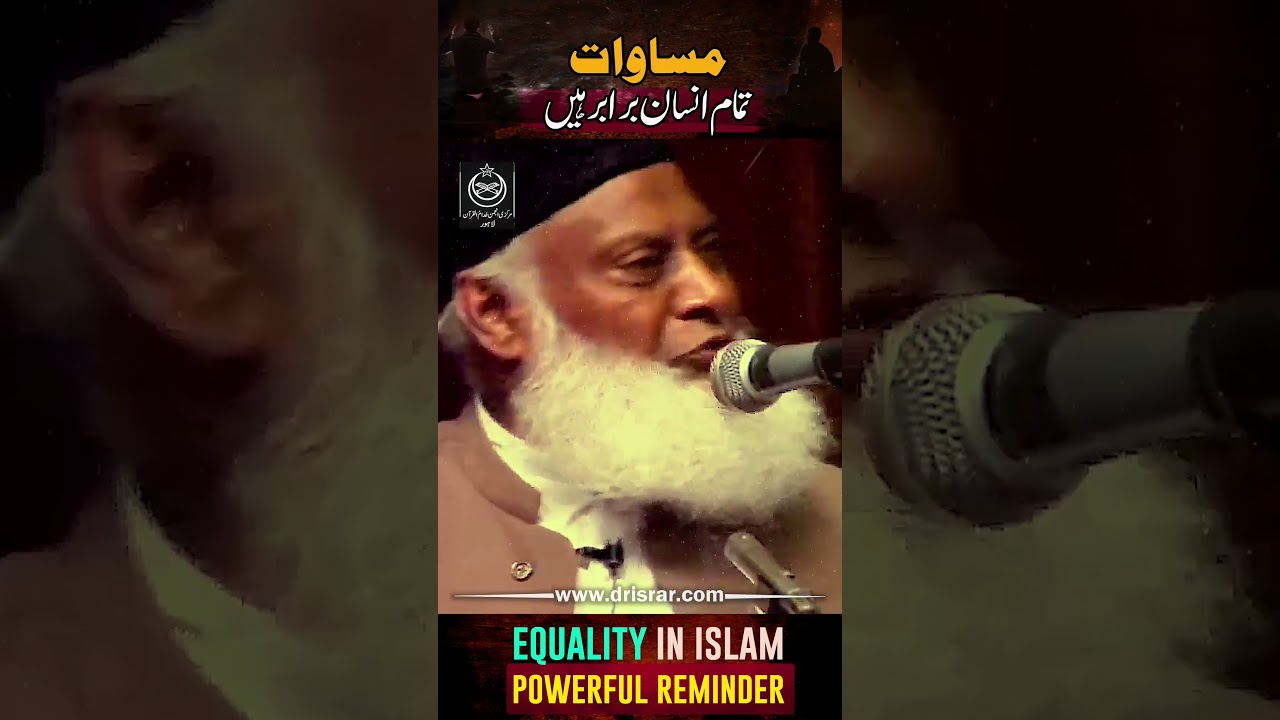
All humans are born equal, possessing inherent dignity regardless of birth, race, or gender. Social hierarchies are not innate but are acquired through knowledge, piety, and character. True honor is derived from devotion to God, with the most esteemed individual being the most righteous. While men may hold institutional leadership roles within the family, this does not equate to inherent superiority. Women can surpass men in moral and spiritual standing. Examples like Maryam, Khadija, Asiya, and Aisha demonstrate the potential for women to achieve exceptional spiritual heights. The core message emphasizes equality, character, and spiritual elevation as the foundations for respect and honor.
47

This lecture challenges conventional definitions of success, which often equate it with wealth, property, or business expansion. It asserts that true success lies beyond material possessions and external achievements. The speaker contends that societal perceptions of success are flawed, and genuine fulfillment stems from something deeper than worldly gains. The core message emphasizes a shift in perspective, urging listeners to redefine success based on intrinsic values rather than external metrics.
219
