Shorts
This lecture emphasizes adhering to the traditional Islamic method of marriage ceremonies, rooted in the practices of the Prophet Muhammad and his companions. It warns against incorporating innovations or customs not supported by authentic Islamic sources. The speaker stresses the importance of simplicity and rejecting practices that deviate from the established Sunnah, advocating for a return to the original, pure form of the marriage contract and celebration. Any social work related to marriage should align with these principles.

268
Dr. Israr Ahmad discusses the degree to which adopting modern terminology with Islam is permissible or undesirable. He argues for caution regarding new terms, asserting each carries inherent connotations inseparable from its meaning. However, he acknowledges effective communication requires utilizing contemporary language to reach modern audiences, advocating for a balanced approach – using current terminology for conveyance but avoiding rigid adherence to it.
44
Musab bin Umar, a young man raised in luxury, faced ostracism when he refused to renounce his faith after his father’s death. His mother, unable to defy her brother, the head of the family, was forced to comply with the uncle’s decree that Musab forfeit his inheritance and leave the house. The uncle, angered by Musab's adherence to his father’s religion, demanded he relinquish all property acquired through his father's wealth. Musab accepted the exile, even removing the clothes he wore, which were purchased with that wealth, before leaving his home. This demonstrates a powerful commitment to belief and principle.
55
The core message of the Quran centers on the singular worship of Allah. This lecture explains that the foundational principle of the Quranic invitation is devotion to Allah alone, rejecting all other forms of worship. The Quran emphasizes establishing worship of the Creator, as highlighted in Surah Hud’s opening verses, which describe the Quran as a firmly established book with detailed revelations from the All-Knowing, Wise Creator. The Quranic command, 'Do not worship anyone besides Allah,' reinforces this central theme, making the exclusive worship of Allah the essence of the Quranic message. This singular devotion is the key takeaway of the entire scripture.
85
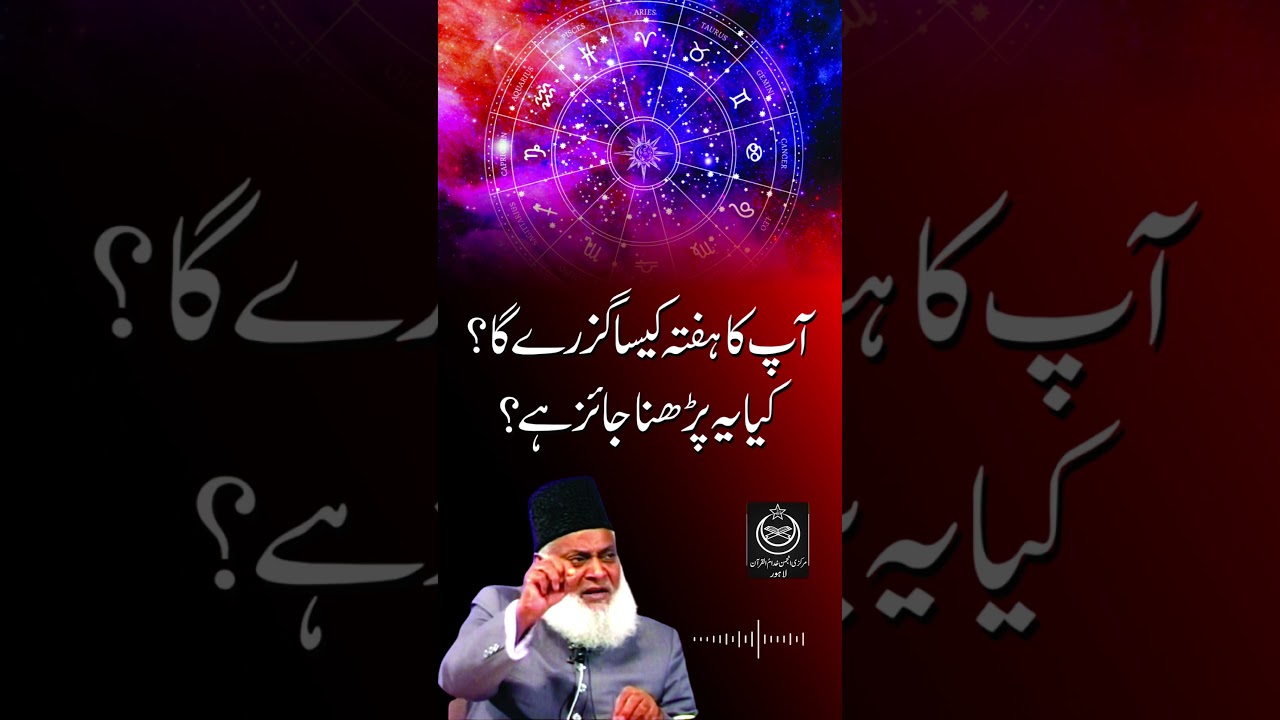
Dr. Israr Ahmad discusses whether reading newspapers or believing in astrological predictions constitutes a sin. He argues that engaging in frivolous activities is undesirable, and time should be dedicated to beneficial and righteous deeds. The lecture centers on the importance of safeguarding one’s time and utilizing it for constructive purposes, rejecting activities that distract from spiritual growth and meaningful work. Belief in astrology is explicitly identified as sinful.
59
Islam establishes four fundamental pillars of faith and practice. Two are related to belief – the declaration of faith – and two are acts of worship: prayer and fasting, which are obligatory for all Muslims regardless of wealth or status. Zakat is required of those with financial means, while pilgrimage to Mecca is an obligation for those who possess the ability to undertake it. This lecture clarifies the scope and requirements of each pillar, differentiating between universally mandated acts and those dependent on individual capacity.
74
