شلوار کوتاه
This lecture discusses the historical and cultural significance of veiling practices, specifically addressing a hadith about a woman who approached the Prophet Muhammad (peace be upon him) after the martyrdom of her son. The speaker contrasts traditional Islamic concepts of modesty and privacy with modern, Westernized norms. He emphasizes the importance of maintaining boundaries within the home and the distinction between spaces for women and men, highlighting how these practices reflect a commitment to modesty and dignity even in times of grief. The discussion also points to the historical context of veiling as a marker of respectability and cultural identity, contrasting it with later interpretations. The speaker underscores that a dignified life, even after loss, is a cornerstone of Islamic culture.

147
This lecture emphasizes the importance of fulfilling obligations to God and humanity. It stresses standing firm for justice and truth, and adhering to divine guidance as outlined in the Quran and previous scriptures. The speaker highlights the interconnectedness of rights – those owed to God, the Prophet, and fellow human beings. A crucial aspect is the responsibility to understand and reflect upon the scriptures received, particularly the Quran, Torah, and Gospel, and to act upon their teachings. The message underscores that true communication with God requires commitment to justice and adherence to revealed knowledge.
66
The Prophet Muhammad (peace be upon him) once asked his companions about bankruptcy. They defined it as a lack of wealth. The Prophet corrected them, stating the true bankrupt in his nation will be the one who comes with a large number of prayers, fasts, and pilgrimages, but also with the burdens of having wronged others – having insulted someone, unjustly taken their wealth, or falsely accused them. On the Day of Judgment, these wronged individuals will present their claims, depleting the bankrupt’s good deeds. If the deeds are insufficient, their sins will be transferred to them, leading to their destruction in Hell. This is the true meaning of bankruptcy – a spiritual and moral deficiency.
52

Dr. Israr Ahmad delineates the distinct yet complementary roles of Allama Iqbal and Quaid-e-Azam in the creation of Pakistan. He emphasizes that Iqbal was the visionary and philosopher who conceived the idea of a separate homeland, while Quaid-e-Azam was the architect and founder who materialized that vision into reality. Iqbal focused on conceptualizing the nation through thought and imagination, while Quaid-e-Azam concentrated on the practicalities of building and establishing it. The lecture highlights the importance of recognizing this difference in their contributions.
56
This lecture explores the three dimensions of Allah's knowledge as detailed in Surah Taghabun. The first is His knowledge of everything in the heavens and earth. The second is His awareness of both outward actions and hidden intentions. The third, and most profound, is His knowledge of the contents of the human heart, including subconscious thoughts and motivations. Humans often deceive themselves, believing their intentions are pure when they are not. Allah knows these hidden biases. This discussion connects these concepts to modern psychology, explaining the conscious, subconscious, and unconscious mind. It highlights that Allah is aware of the internal struggles, temptations, and the turmoil within the human psyche, even before the individual is consciously aware of them.
83
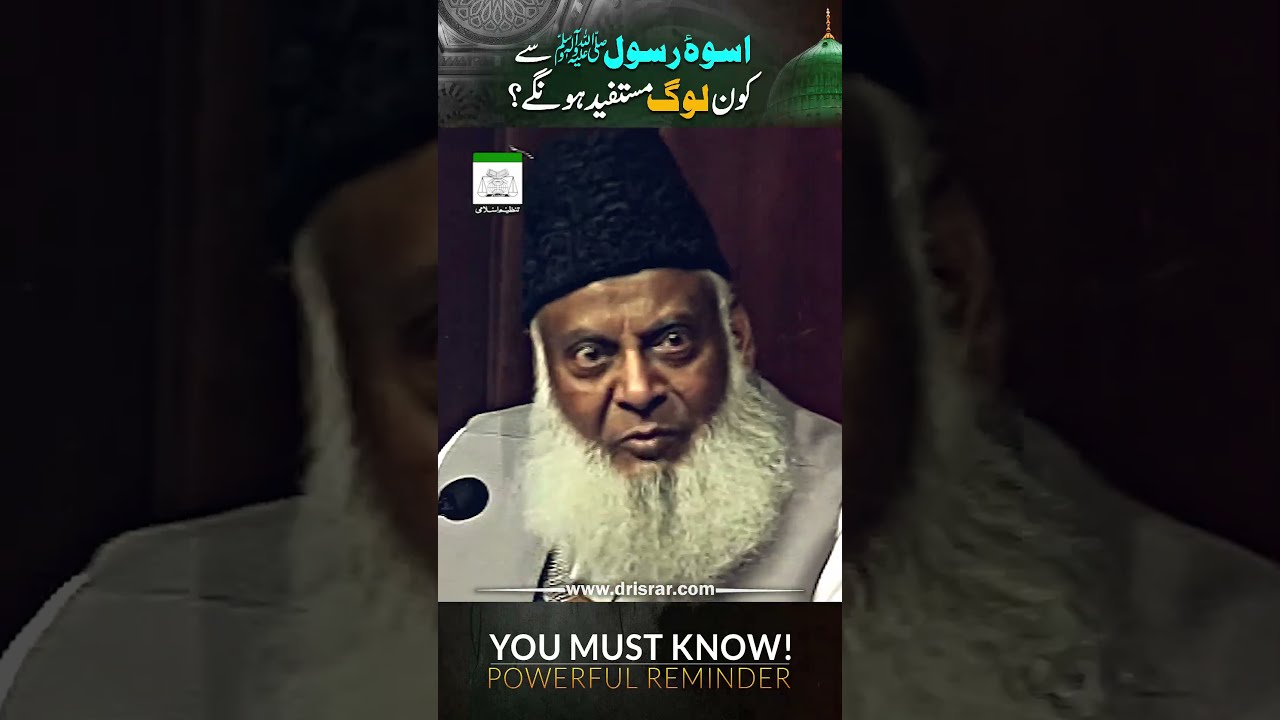
The Prophet Muhammad (peace be upon him) serves as the best example for those who believe in God and the Day of Judgement, and who consistently remember God. The Quran provides guidance for all, but only those who are pious and fulfill specific conditions—faith in God and the afterlife, and constant remembrance of God—will truly benefit. This lecture highlights the Prophet’s life as a complete argument for humanity. The establishment of Islam's social justice system was achieved through persistent effort, hardship, sacrifice, patience, perseverance, and resilience, not through miracles or divine comforts. The example of the Battle of Tabuk demonstrates the dedication of early Muslims, even sharing meager rations to support one another. This is the essence of the Prophet’s legacy.
78
