Korte broek
This lecture discusses the historical context of modest dress and covering for women in Arab and Islamic cultures. It clarifies that covering the head and body with a *chadar* (outer garment) was a common practice for both men and women when outside the home, while an *odhni* (shawl) was typically worn indoors. The discussion emphasizes that the concept of facial covering was not prevalent in pre-Islamic Arab society. It highlights how these practices were part of the cultural norms and traditions of the time, serving as a form of modesty and protection.

42
Dr. Israr Ahmad discusses the enigmatic figure of Zul-Qarnain mentioned in the Quran. He explores the possibility that Zul-Qarnain may be connected to the historical figure of Gautama Buddha, noting the lack of detailed information about Zul-Qarnain in both the Quran and Hadith. He suggests a link based on geographical references within Surah Al-Kahf and the story of a prince from Kapilavastu. Dr. Ahmad acknowledges the potential for later interpretations and additions to Buddha’s teachings, similar to those surrounding Jesus Christ, while also pointing out a possible consistency between the core principles of all prophets of God. He emphasizes the need for critical analysis and understanding of historical and religious figures.
51
Religion, or *deen*, is a timeless system of life, consistent throughout the ages with prophets like Noah, Abraham, Moses, Jesus, and Muhammad. *Shariat* (law) is a variable component that adapts to specific eras. True religion is a just system, a framework for social justice. Lasting positive results require the implementation of this just system, not merely the enforcement of laws. Both religious principles and Islamic law are essential for societal betterment.
44
This lecture explores the critical importance of trustworthiness and fulfilling promises in Islam, drawing from a hadith narrated by Hazrat Anas bin Malik. The Prophet Muhammad (peace be upon him) emphasized that a person lacking trustworthiness and commitment to their word lacks both faith and religion. The discussion highlights that upholding promises is a fundamental pillar of a believer's character and a crucial component of a strong moral foundation. The lecture underscores the severe consequences of dishonesty and the rewards of being a person of one's word.
49
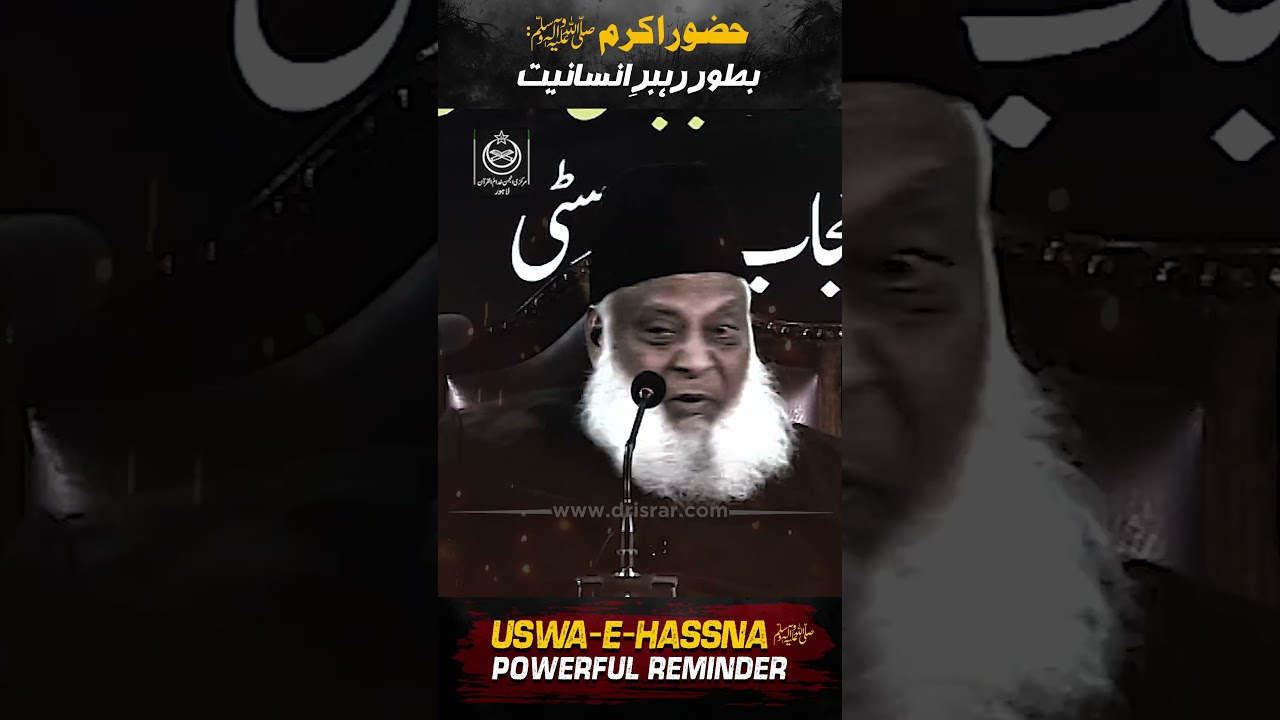
Dr. Israr Ahmad discusses the comprehensive nature of Prophet Muhammad’s personality, highlighting his multifaceted roles as a ruler, leader, judge, husband, father, and spiritual guide. He contrasts this with the limitations of modern religious leaders who often struggle to fulfill even basic duties like leading five daily prayers consistently. The lecture emphasizes that the Prophet Muhammad embodied all these roles flawlessly, serving as a complete example for believers. The speaker points out a disconnect in modern religious practice, where individuals dedicated to self-purification often avoid leading congregational prayers.
49
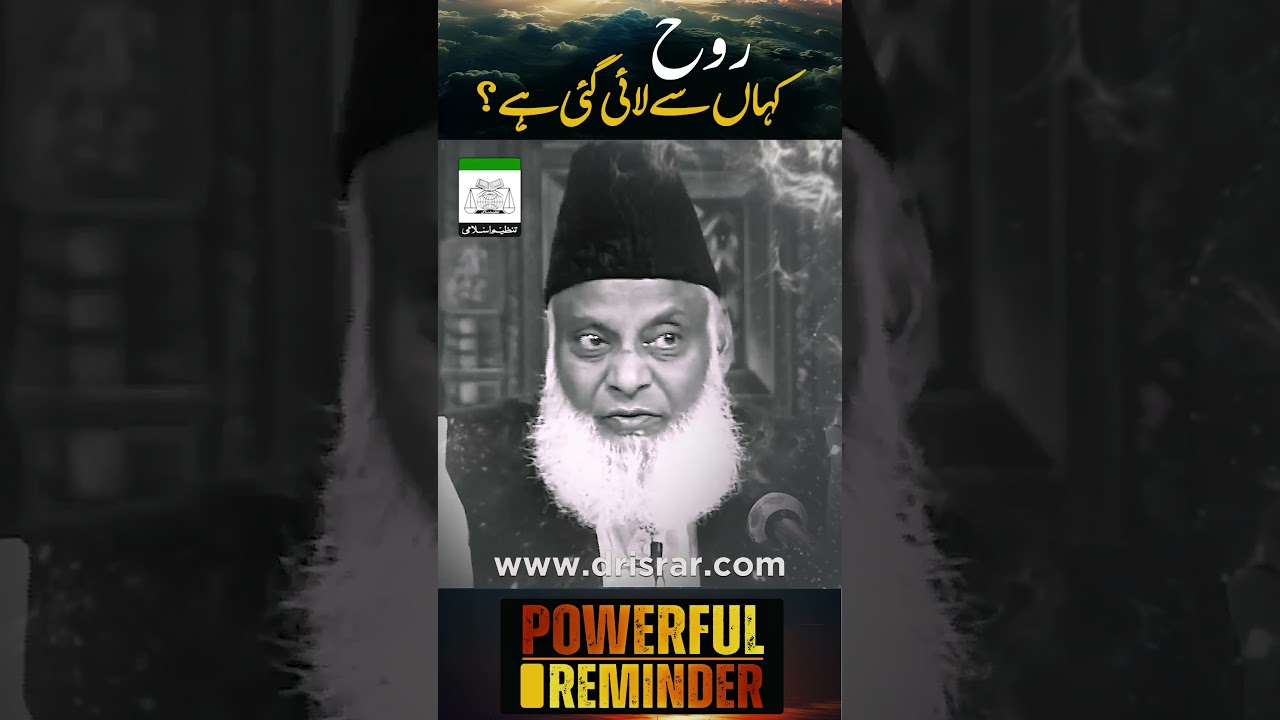
The soul is distinct from the body. While death seizes the body, returning it to the earth from whence it came, the soul does not experience death itself. It is a transfer, originating from God and returning to Him. The soul temporarily inhabits the body during earthly life, then either resides in 'Aliyeen' or 'Sijjeen' – realms of varying states – awaiting eventual return to its divine source. The body is subject to earthly cycles of creation and dissolution, but the soul is eternal and its destiny lies with God.
40
