السراويل القصيرة
The Quran, as divine speech, reflects the complete personality of its speaker – Allah. The eloquence and depth of language reveal the speaker's knowledge, sophistication, and the heights of their thought. It is a complete representation of divine attributes, offering insight into Allah’s characteristics, wisdom, and the breadth of divine understanding. The very nature of speech embodies the speaker’s status, intellect, and the scope of their perception. Consequently, the Quran serves as a perfect manifestation of Allah’s complete personality and attributes.

85
The concept of *shahadat* (witnessing) in Islam extends beyond martyrdom. It encompasses bearing witness to the Oneness of God, the Prophethood of Muhammad, and the truth of the Quran, both through verbal affirmation and practical conduct. This witnessing occurs on both individual and collective levels, demonstrated through one's character, actions, and adherence to a righteous life. True faith is proven not merely by professing belief, but by embodying it in every aspect of life, reflecting a sincere connection with God, the Prophet, and the divine message.
64

This lecture critiques the modern banking system, arguing it is fundamentally based on interest (riba) which constitutes a declaration of war against God and His Messenger. The speaker asserts that the claim a system cannot function without interest is an expression of disbelief in God’s knowledge and provision. It implies either God was unaware of a future where interest-free systems would be necessary, or He prohibited something essential. The argument highlights that God does not burden any soul beyond its capacity, and therefore, reliance on interest demonstrates a lack of faith in divine support and provision.
85
This lecture explores the boundless power and knowledge of Allah. It emphasizes humanity's limited capacity to fully comprehend divine attributes. The speaker highlights the vastness of creation, from the Earth to the galaxies, and how our understanding falls short. The discussion centers on recognizing Allah’s absolute power while acknowledging the limits of human perception and intellect. It asserts that while we cannot measure Allah’s attributes, we can perceive His signs and become grateful worshippers. The lecture underscores the importance of acknowledging Allah’s greatness and submitting to His will.
60
Parents deserve kindness and respect as a natural obligation for their nurturing, especially a mother’s sacrifices. However, obedience to parents does not extend to accepting commands that contradict faith or morality. While good conduct, service, and respect are essential, adherence should be to the path of righteousness, not blind obedience. The core principle is honoring parents while remaining steadfast in one’s faith and ethical principles. True respect lies in guiding them towards the right path, not following them into wrongdoing.
60
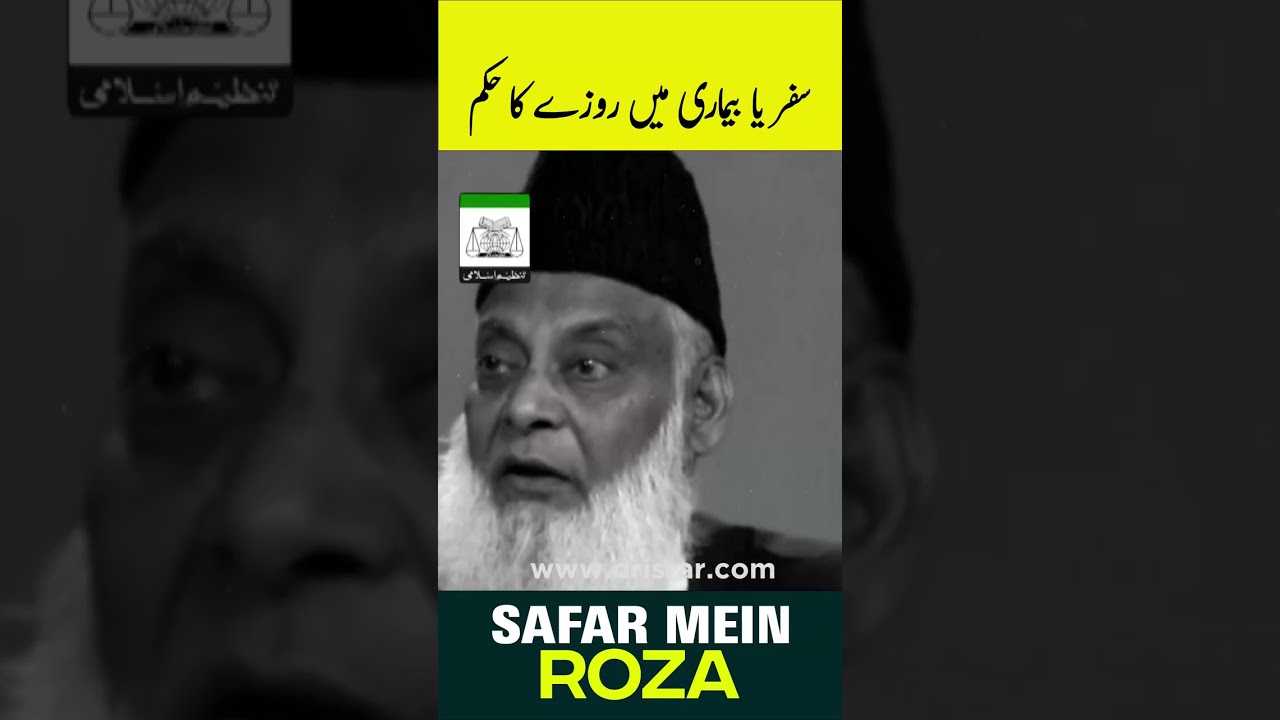
Dr. Israr Ahmad discusses a common misconception regarding fasting during travel. He clarifies that rigidly adhering to a fast while severely weakened or during hardship is not a virtuous act but a form of self-inflicted extremism. The lecture highlights an incident during a military expedition where those observing fasts collapsed from exhaustion while others efficiently established camp. He explains that such rigid adherence stems from a flawed understanding of piety and can lead to harmful, self-destructive behavior. The key message is that religious observance should not cause undue hardship or compromise one’s ability to fulfill responsibilities, and that flexibility is essential when circumstances demand it.
88
