निकर
The Quran is presented as the primary miracle of the Prophet Muhammad (peace be upon him). Its greatest miracle in the modern world is its power to instigate a monumental revolution in human history, establishing a just system. This transformation occurred entirely through the message of the Quran, and its continued invitation is through its verses.

101
This lecture details a specific, undisclosed hour on Friday when prayers are believed to be particularly effective. Various interpretations exist regarding its timing. Some scholars suggest it's the period between the two khutbas during Jummah prayer. Others believe it spans from immediately after the Jummah prayer until Asr. Consequently, many observant Muslims spend this time in mosques, engaging in remembrance and recitation of the Quran. The precise timing remains intentionally concealed, adding to its spiritual significance.
67
Those close to God experience no fear or grief. Fear stems from what God wills, and even seemingly undesirable events contain hidden benefits. The Quran highlights that what we dislike may be good, and what we desire may be harmful, as God’s knowledge surpasses our own. We perceive only the outward appearance of actions and events, unaware of the divine intention and wisdom behind them. Our vision is limited; we cannot comprehend the ultimate purpose of God. Therefore, we are easily affected by superficial occurrences. True understanding lies in recognizing God’s overarching plan, which remains beyond our immediate perception.
54
This lecture emphasizes the constant remembrance of Allah in all aspects of life. It highlights the importance of incorporating supplications (du'a) into daily routines – upon entering and exiting homes, markets, and even restrooms – without disrupting one's activities. The core message is maintaining a continuous connection with Allah through these acts of devotion. The speaker further emphasizes the significance of reciting the Quran and offering prayers as the greatest forms of remembrance. This constant connection, the lecture argues, is the essence of a believer’s life.
63

The text highlights a unique distinction granted to Prophet Muhammad (peace be upon him). The Quran uses specific phrasing – “Rasool Allah” – exclusively for him, while other prophets are described with various roles like witness, herald, example, caller, messenger, teacher, trainer, and helper. This emphasizes his singular status as the final messenger of God.
106
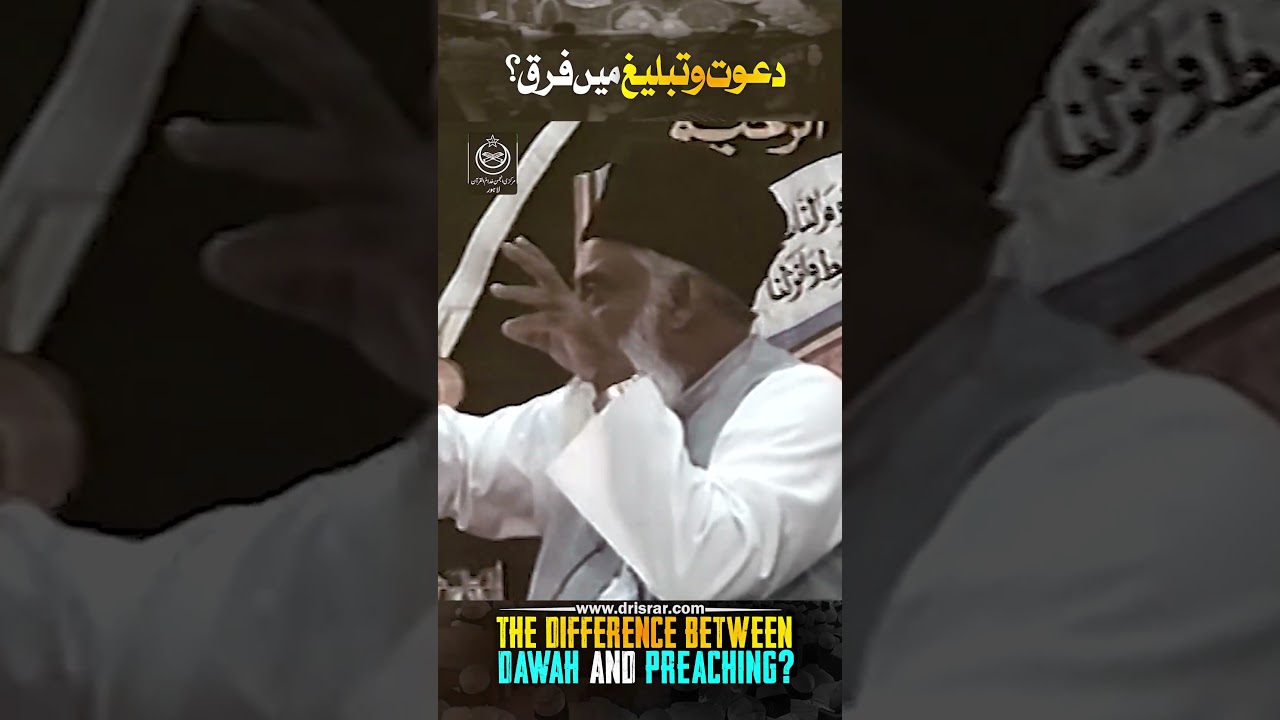
This lecture explores the dual nature of *dawat* (invitation) and *tabligh* (propagation). It clarifies that both involve conveying a message and guiding someone toward a particular path. *Dawat* focuses on reaching out and delivering the message, while *tabligh* emphasizes bringing someone along that path, accepting the invitation. The lecture highlights that these are not separate actions, but two sides of the same effort—communicating a message and encouraging acceptance. The speaker emphasizes the importance of conveying the message and guiding others towards righteousness.
59
