Kurze Hose

The Quran offers two levels of comprehension: understanding its lessons (tazkir bil Quran) and deeply reflecting upon it (tadabbur bil Quran). Tazkir bil Quran involves deriving moral and practical guidance. Tadabbur requires consistent contemplation and deeper analysis. Achieving success necessitates mastering both levels, as the principles derived from Tazkir form the logical foundation for the insights gained through Tadabbur. Understanding these levels leads to personal transformation, emphasizing the importance of faith, righteous deeds, truthfulness, and compassion. Those who embrace these principles avoid loss and attain spiritual fulfillment.

58
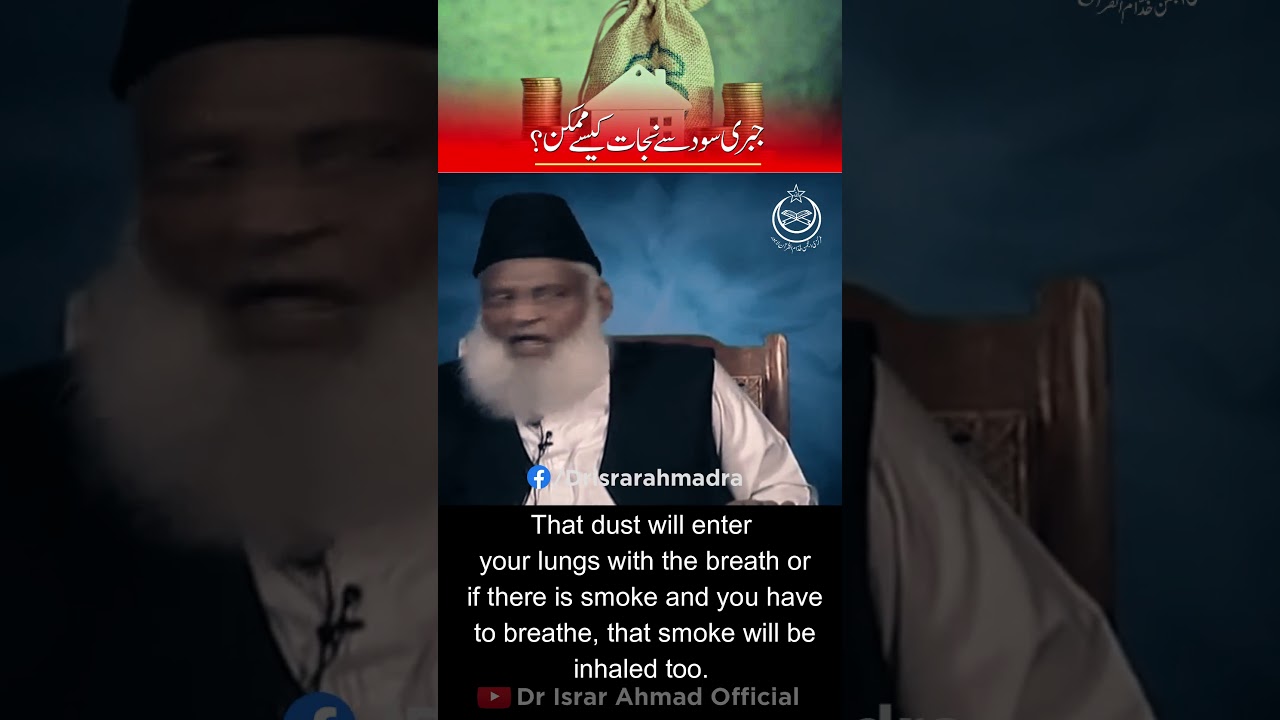
This lecture addresses the question of accountability for unintentional involvement with interest (riba). It clarifies that if someone unknowingly consumes something containing interest, they are not exempt from sin. However, the speaker proposes that sincere effort dedicated to establishing and strengthening religious practice can serve as expiation. The analogy of involuntary inhalation of dust is drawn; just as one cleanses their lungs, striving for faith cleanses the soul. The lecture emphasizes that consistent, dedicated work for the cause of religion is a valid form of atonement for unintentional transgressions.
62

The lecture clarifies that love for anyone or anything should not equal or exceed love for God. Equating love with God constitutes *shirk* (associating partners with God). The Quran states some people create equals to God and love them as they should love God. True believers, however, possess a stronger love for God. Love for parents and children is permissible, but it must not surpass the love for God. This principle ensures devotion remains solely to God, preventing the elevation of created beings to a level comparable to the Creator.
61

This lecture explains the hadith stating that Muslims should be mirrors to one another. This means Muslims should respectfully and compassionately point out each other’s flaws, not to demean, but to facilitate self-improvement. This guidance emphasizes delivering constructive criticism with kindness, sincerity, and a genuine desire for the other’s betterment. The focus is on offering advice from a place of goodwill, devoid of arrogance or self-righteousness, and with a spirit of empathy and heartfelt concern.
57

This lecture explores the dual nature of *dawat* (invitation) and *tabligh* (propagation). It clarifies that both involve conveying a message and guiding someone toward a particular path. *Dawat* focuses on reaching out and delivering the message, while *tabligh* emphasizes bringing someone along that path, accepting the invitation. The lecture highlights that these are not separate actions, but two sides of the same effort—communicating a message and encouraging acceptance. The speaker emphasizes the importance of conveying the message and guiding others towards righteousness.
59
This lecture emphasizes the importance of reason ('aql) as a pathway to understanding divine guidance. It asserts that belief should be grounded in either rational thought, the teachings of the Quran, or the traditions of the Prophet Muhammad. The speaker stresses that knowledge stems from sensory experience, intellectual reasoning, or reliable transmission. Blind adherence to anything without understanding is discouraged. True knowledge is either acquired through one’s own senses, intellect, or through verified sources.
47
