শর্টস

This lecture discusses the significance of sacrifice, specifically the practice of offering animals during Eid al-Adha. It explains that sacrifice is a universal practice ordained by God for every community throughout history. The discussion highlights the historical context of animal sacrifice, particularly the use of camels in Arab culture, and connects this practice to a deeper spiritual relationship with God. The act of sacrifice, whether a camel, goat, or other animal, serves as a symbolic offering and a demonstration of devotion, ultimately bringing blessings and goodness to the believer.

68

Human life is a constant series of choices. At every moment, individuals face a crossroads, deciding between worldly gain and divine guidance. This perpetual decision-making process defines our values and priorities. Each step involves prioritizing some things over others, a continuous evaluation of what we hold most dear. The choice between immediate profit and long-term spiritual well-being, between embracing corruption or adhering to ethical principles, shapes our destiny. This lecture explores the fundamental nature of these choices and their impact on our lives.
60

The Prophet Muhammad (peace be upon him) observed Tarawih prayers individually for only three nights, leading an eight-rak’ah congregation. He performed these prayers after the Tahajjud prayers. The practice of offering twenty rak’ahs in congregation did not exist during the Prophet’s era or the caliphate of Abu Bakr. It began during the caliphate of Umar ibn al-Khattab, who standardized the practice after observing fragmented congregations in the mosque. He instituted a system of twenty rak’ahs to be performed immediately after Isha, led by a single imam.
83

A person deeply entrenched in sin and prejudice experiences a dimming of their inherent spiritual nature. The path to reformation begins with understanding their beliefs and misconceptions. Purification of thought, focusing on the principles of Tawhid (Oneness of God), accountability, and Prophethood, is paramount. Once faith takes root in the heart and mind, negative habits and character flaws will naturally diminish. This process, known as Tazkiya, prioritizes intellectual purification as a precursor to moral refinement.
56

This lecture explores the concept of unwavering commitment to a goal, even in the face of difficulty. It emphasizes that true progress requires consistent effort and striving, not complacency. The speaker highlights that a firm resolve, coupled with persistent struggle, is essential for achieving spiritual and worldly success. The text draws a parallel between a 'firm promise' (pakka wada) and the necessary exertion to fulfill it, suggesting that without dedicated struggle, even a strong commitment remains unrealized. It further connects this principle to the broader context of realizing divine unity and the eventual flourishing of existence.
58
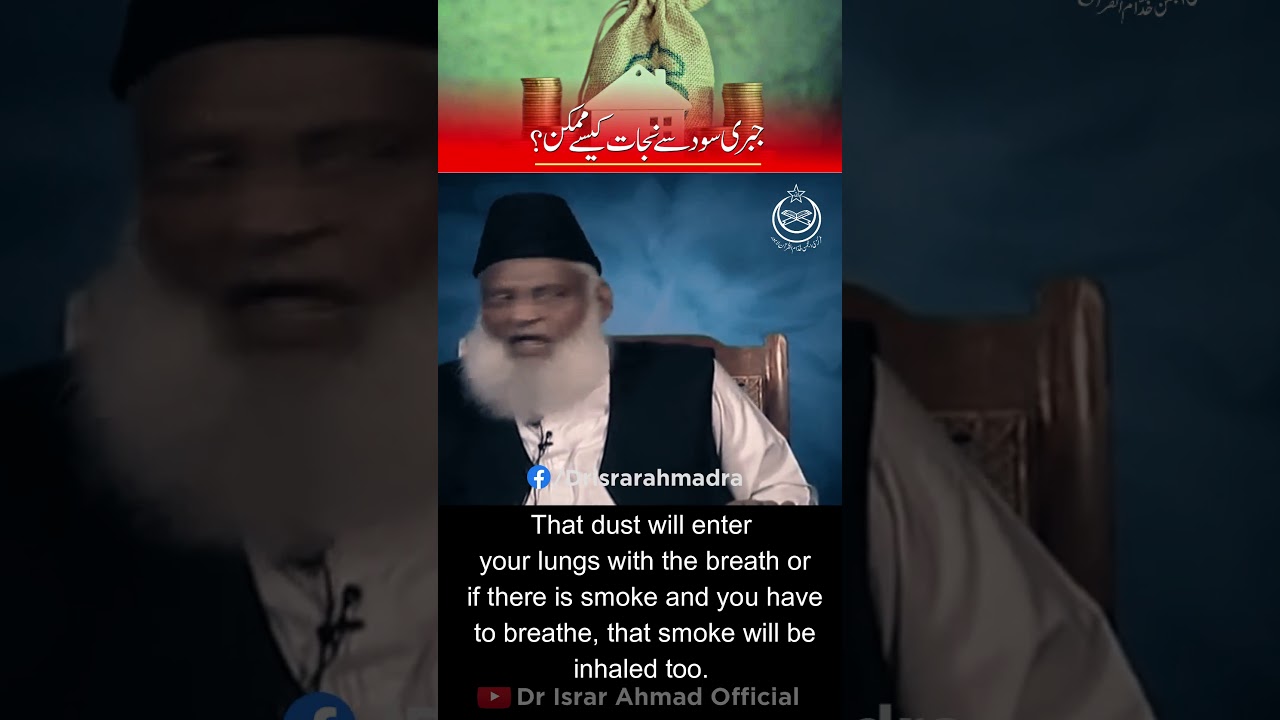
This lecture addresses the question of accountability for unintentional involvement with interest (riba). It clarifies that if someone unknowingly consumes something containing interest, they are not exempt from sin. However, the speaker proposes that sincere effort dedicated to establishing and strengthening religious practice can serve as expiation. The analogy of involuntary inhalation of dust is drawn; just as one cleanses their lungs, striving for faith cleanses the soul. The lecture emphasizes that consistent, dedicated work for the cause of religion is a valid form of atonement for unintentional transgressions.
62
