Celana pendek
This lecture discusses the significance of sacrifice, specifically the practice of offering animals during Eid al-Adha. It explains that sacrifice is a universal practice ordained by God for every community throughout history. The discussion highlights the historical context of animal sacrifice, particularly the use of camels in Arab culture, and connects this practice to a deeper spiritual relationship with God. The act of sacrifice, whether a camel, goat, or other animal, serves as a symbolic offering and a demonstration of devotion, ultimately bringing blessings and goodness to the believer.

68
The existence of multiple deities would inevitably lead to chaos and disorder within the universe, disrupting the established harmony. Conflicting wills and opinions would prevent the precise, balanced operation of creation. The consistent order observed—where every action aligns with its intended consequence—demonstrates a single, unifying will governing all existence. This consistency serves as proof of the oneness of God.
52
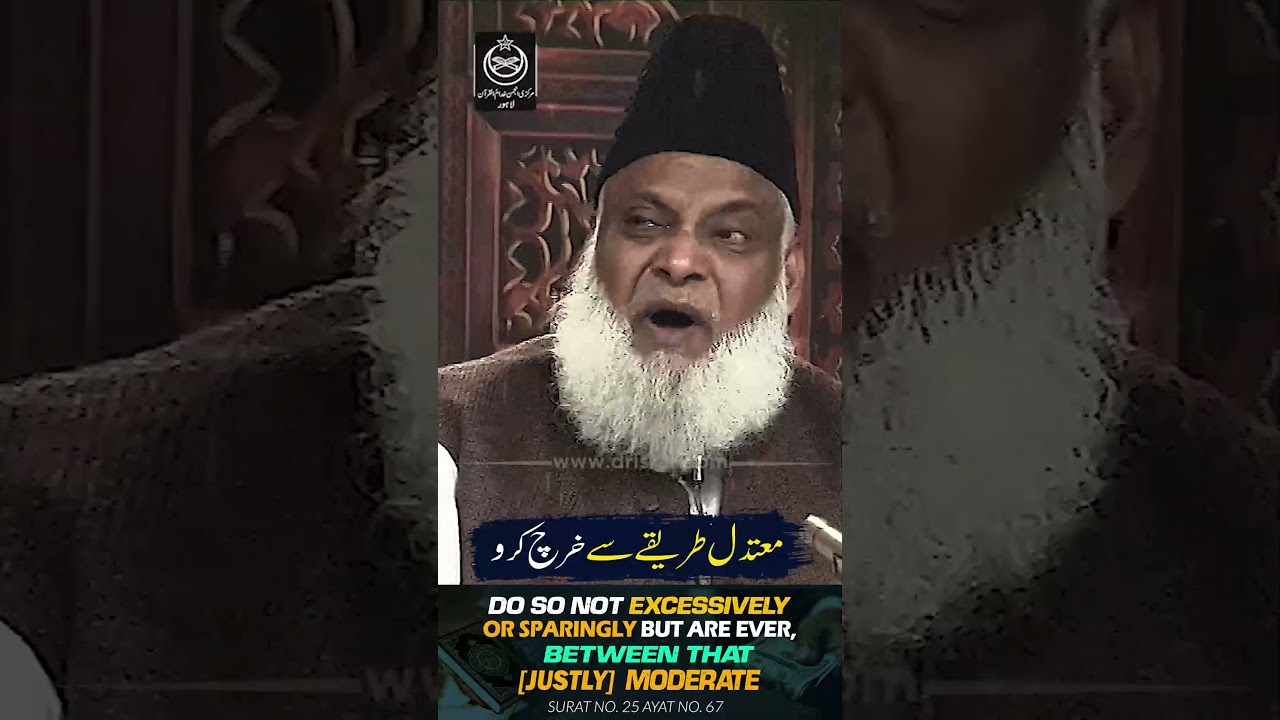
Extremism in charitable giving is undesirable. Intense emotion can lead individuals to impulsively donate all their wealth, potentially harming themselves. The Quran and the teachings of the Prophet emphasize the necessity of balance in spending. The verse from Surah Al-Furqan highlights that true believers spend neither stingily nor wastefully, but maintain a moderate course between these extremes. This approach ensures both the well-being of the giver and the effective distribution of resources to those in need. It’s crucial to consider consequences and adopt a reasoned approach to charity.
54
When the Prophet Muhammad arrived in Medina, he observed that the Jewish community fasted on the tenth of Muharram (Ashura), commemorating the day the Israelites were saved from Pharaoh and his army. They explained this was a day of thanksgiving. The Prophet stated that Muslims, as followers of Moses, had a greater right to commemorate this event. He instructed Muslims to fast on both the ninth and tenth of Muharram to distinguish themselves from the Jews, who only fasted on the tenth. This practice marks the beginning of observing days of worship based on the traditions of earlier communities present in Medina.
44
True prayer transcends ritual; it’s a direct communion with God achieved when the soul awakens. This lecture emphasizes that merely performing the actions of prayer—recitation and physical movements—is insufficient. Real connection occurs when one feels present before God, experiencing a sense of humility and closeness akin to placing one’s head in God’s lap. If the soul is dormant, oppressed, or dead, genuine prayer cannot occur, regardless of adherence to schedules or outward displays of devotion. Awakening the soul and establishing direct communication with God is the essence of achieving the spiritual elevation that prayer promises.
69
True prayer transcends ritual; it’s a direct communion with God, achieving a spiritual ascent akin to *mi'raj*. This lecture emphasizes that the essence of prayer lies in a conscious awareness of God’s presence and heartfelt submission. Without this spiritual awakening, even diligent performance of obligatory prayers remains incomplete. The speaker stresses that a dormant or ‘dead’ soul cannot experience this profound connection. Reviving the soul is crucial to unlock the true potential of prayer and achieve a state of direct communication with the Divine.
59
