Kratke hlače

The Prophet Muhammad (peace be upon him) was asked about the most virtuous form of migration. He responded that the most excellent migration is abandoning everything displeasing to God. This necessitates a personal assessment of one’s life and the eradication of actions contrary to the spirit of Islamic law. The lecture emphasizes immediate action, stating that the time for rectifying oneself is now, before it is too late. It's a call for sincere repentance and a commitment to living a life aligned with divine guidance.

236
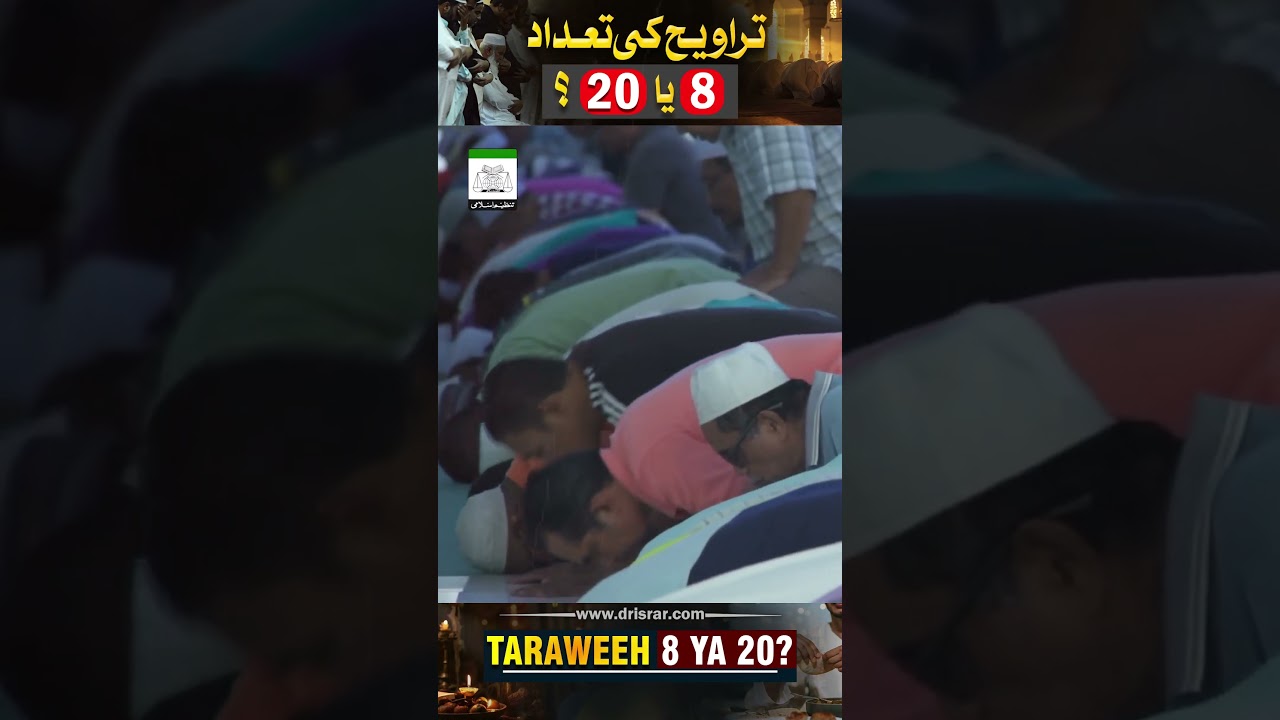
This lecture details the historical development of Taraweeh prayers. Initially, the Prophet Muhammad (peace be upon him) led the congregation for only three nights, praying eight rak'ahs and combining it with Tahajjud. The practice of twenty rak'ahs connected to Isha prayer originated during the Caliphate of Umar ibn al-Khattab, an innovation aimed at unifying diverse congregations. While some, like the Ahl-e-Hadith, maintain the original eight rak'ahs, the majority of Sunni schools (Hanafi, Maliki, Shafi'i, Hanbali) follow Umar's practice, citing the principle of adhering to the traditions of the Prophet and the rightly guided Caliphs. This practice is also observed in the Haramain Sharifain. The lecture clarifies the historical context and differing viewpoints surrounding Taraweeh.
129

This lecture explores the transient nature of worldly possessions and the true purpose of life as a test from God. It highlights that the beauty of the earth is a temporary distraction designed to evaluate humanity's actions and devotion. The sermon details the inevitable destruction of all material things on the Day of Judgement, transforming the earth into a barren plain. The ultimate measure of success lies not in accumulating wealth or indulging in earthly pleasures, but in maintaining a sincere connection with God amidst the allure of this world. The lecture emphasizes that true believers will remain steadfast in their faith and devotion, while others will be consumed by the fleeting attractions of the world. The earth, as described in the Quran, will be leveled, devoid of mountains, valleys, or any trace of its former beauty, serving as a stark reminder of the impermanence of all creation.
50

Dr. Israr Ahmad discusses the reasons behind the lack of fervor within the Muslim community, connecting it to a lack of understanding of the prophetic revolution. He argues that the current state of disillusionment and self-destructive behaviors – exemplified by acts of desperation and misguided aggression – stem from a loss of direction and a failure to comprehend the principles of the Prophet Muhammad’s revolutionary message. He emphasizes that without grasping the essence of this revolution, individuals will remain lost and misdirected.
375

This lecture clarifies the distinction between cooperation and organizational commitment within the context of establishing religious practice. Cooperation allows for individual discretion; participants can choose when and how to contribute. However, joining an organization, specifically Tanzeem-e-Islami, requires a pledge of allegiance, or *ba’it*, relinquishing personal autonomy to adhere to the organization’s discipline and fulfill its collective objectives. This commitment is foundational to the organization’s structure and its effectiveness in fulfilling its religious mission. The lecture emphasizes that true dedication to establishing faith necessitates joining an organized structure through a formal commitment.
54

The history of Islam and Muslims reveals a pattern of rise and decline. Initially unified, Islam flourished during the Rashidun Caliphate. Post-Caliphate, while Islam experienced decline, Muslim power continued to ascend, reaching its peak. Subsequently, Muslims also faced decline, followed by a resurgence. The Tartars, despite inflicting immense casualties on Muslims, ultimately converted to Islam and became its champions. Successive Turkic dynasties—Timurids in India, Safavids in Iran, Seljuks in the Middle East, and Ottomans—led Islamic power for centuries. The Ottoman Caliphate held prominence for four hundred years, before ultimately declining after World War I.
64
