Pantalones cortos
This lecture discusses the Islamic perspective on charitable giving and the rights of heirs. A companion of the Prophet Muhammad (peace be upon him) inquired about donating all his wealth for the sake of Allah. The Prophet advised against leaving heirs destitute, emphasizing their rightful share. The companion then proposed donating half, then a third, with the Prophet accepting the one-third contribution as appropriate. This highlights a balanced approach to charity, respecting both the act of giving and the welfare of one’s family.

62

True prayer transcends ritual; it’s a direct communion with God, achieving a spiritual ascent akin to *mi'raj*. This lecture emphasizes that the essence of prayer lies in a conscious awareness of God’s presence and heartfelt submission. Without this spiritual awakening, even diligent performance of obligatory prayers remains incomplete. The speaker stresses that a dormant or ‘dead’ soul cannot experience this profound connection. Reviving the soul is crucial to unlock the true potential of prayer and achieve a state of direct communication with the Divine.
55

This lecture emphasizes the importance of meticulously documenting all religious transactions, regardless of their size. It stresses the necessity of immediate recording to ensure transparency, accountability, and legal validity. The speaker highlights that delaying documentation can lead to disputes and invalidates the transaction. This practice aligns with Sharia law and promotes fairness and justice. It also reinforces the reliability of testimony and safeguards future dealings. This recording is essential for both small and large matters, aligning with principles of speed, justice, and sound testimony.
41
This lecture explores the speaker’s reflections on his life’s purpose and original objectives. He emphasizes a shift from viewing faith as merely a tool to embracing it as the ultimate goal. The speaker laments the fragmentation of the Muslim community and expresses a desire to rebuild unity, guiding people towards the destination set by God and the Prophet Muhammad. He highlights a longing to restore a cohesive community focused on divine guidance and shared purpose.
35
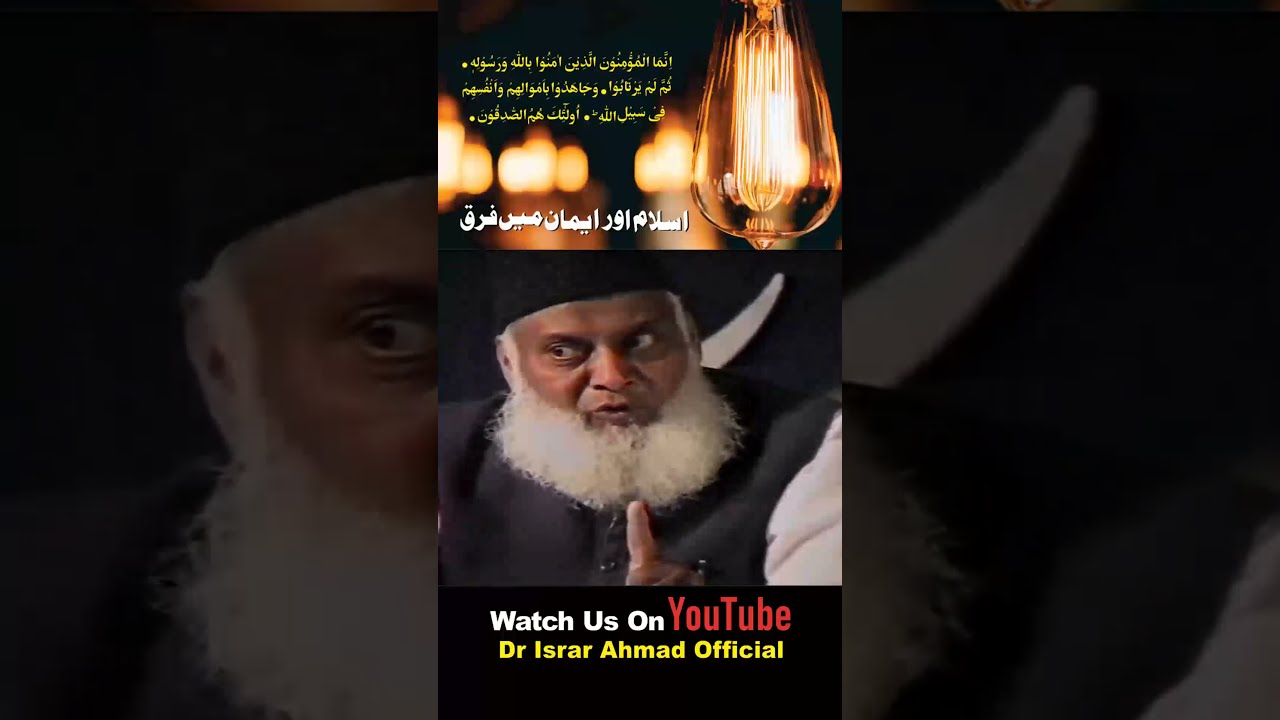
This lecture explores the distinction between Islam and Iman (faith). The speaker clarifies that simply professing Islam is insufficient; true faith requires the internalization of belief within the heart. The Quranic verse from Surah Al-Hujurat, chapter 49, verse 14, highlights the difference between outward submission and genuine belief. The speaker elaborates on the verse in Surah Al-Saf, chapter 6, verse 10, which emphasizes the need for a faith free from doubt and supported by striving in the path of Allah with wealth and life. The lecture emphasizes that a complete faith is demonstrated through both belief and action, and that true believers continuously strive to deepen their connection with Allah.
104
All humans are born equal, possessing inherent dignity regardless of birth, race, or gender. Social hierarchies are not innate but are acquired through knowledge, piety, and character. True honor is derived from devotion to God, with the most esteemed individual being the most righteous. While men may hold institutional leadership roles within the family, this does not equate to inherent superiority. Women can surpass men in moral and spiritual standing. Examples like Maryam, Khadija, Asiya, and Aisha demonstrate the potential for women to achieve exceptional spiritual heights. The core message emphasizes equality, character, and spiritual elevation as the foundations for respect and honor.
47
