Corti

The Quran places significant emphasis on the observance of Salah (prayer) and Zakat (charity), repeatedly outlining their importance. While the verses detailing the complete regulations for fasting are concentrated in Surah Al-Baqarah, references to fasting are often limited to instances requiring expiation. Unlike fasting, the Quran consistently presents Salah and Zakat as independent, fundamental obligations. The repeated emphasis on these two pillars suggests their central role in Islamic practice and faith.

54
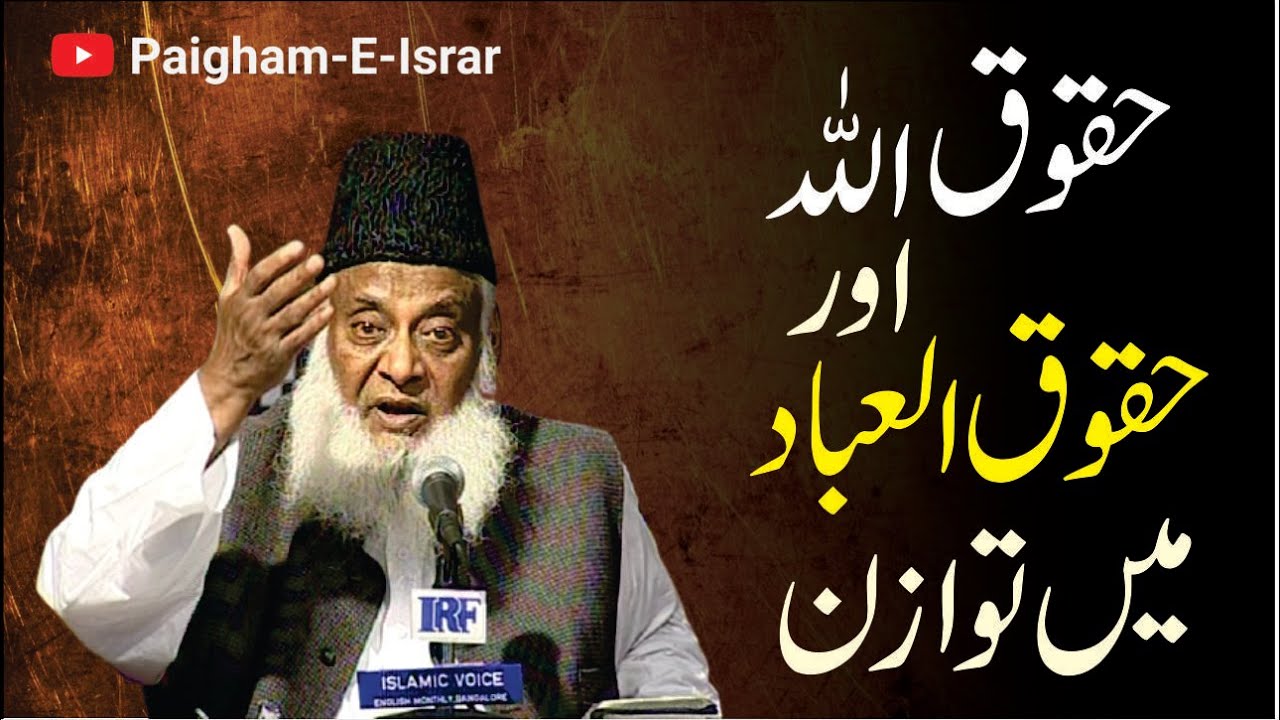
The Prophet Muhammad’s life exemplified a perfect balance between fulfilling obligations to people and devotion to God. He showed immense love and attention to his wives, ensuring their emotional well-being and rights were always met. Simultaneously, at the call to prayer, he would immediately and completely devote himself to worship, appearing as if unaware of his surroundings. This demonstrates a harmonious integration of worldly responsibilities and spiritual pursuits, highlighting the importance of both aspects of a balanced life. His behavior showed complete dedication to both rights of God and rights of people, a perfect example for all believers.
61

Goodness is fundamentally linked to faith, not merely action. True goodness originates from an internal state of belief. Every act has both an external manifestation and an internal motivation. The core of a good deed lies in the intention behind it—the desire to please God and attain His blessings. Faith fosters both positive motivation to do good and negative motivation to avoid evil. Love for God and the fear of His punishment drive righteous behavior. Belief in the afterlife—heaven and hell—further strengthens these motivations, prompting individuals to seek reward and avoid condemnation. Thus, faith is the driving force behind genuine goodness and moral conduct.
55

Humans are born equal, possessing inherent dignity regardless of race, ethnicity, gender, or social status. This equality is a fundamental principle, as highlighted by Allama Iqbal. Differences in status arise from acquired qualities like knowledge and piety, not from birth. True honor stems from devotion to God and righteous conduct, not from inherited characteristics. The Quran emphasizes that superiority is based on *taqwa* (piety), not on arbitrary distinctions like race or lineage. This concept rejects all forms of discrimination and promotes a society based on justice and merit.
66

This lecture elaborates on Surah Al-Asr, emphasizing that humanity is in loss except for those who believe, perform righteous deeds, encourage truthfulness, and practice patience. It details the conditions for escaping this universal loss, highlighting the importance of faith, action, and moral character. The surah serves as a timeless reminder of accountability and the path to success in this life and the hereafter. Dr. Israr Ahmad meticulously analyzes each verse, providing insightful commentary on its meaning and application to contemporary life. The discussion focuses on how to achieve a balanced life grounded in faith and good deeds, and the consequences of neglecting these principles. It underscores the need for individual and collective responsibility in upholding truth and practicing patience in the face of adversity.
55

This lecture addresses the dangers of linguistic and cultural biases, clarifying that regional, ethnic, and linguistic identities are not inherently sinful. It emphasizes that every culture and language has a right to flourish, provided any elements conflicting with Islamic teachings are removed. The lecture highlights the unique status of the Arabic language not due to its speakers, but because it is the language of the Quran and the sayings of the Prophet Muhammad, making its study essential for direct understanding of religious texts. It cautions against exclusionary attitudes based on language or culture, likening such behavior to a useless tool.
66
