Corti
This lecture discusses the permissibility of stock market transactions in Islam. It clarifies that legitimate trade involves the actual exchange of goods, while stock trading, often based on speculation, resembles gambling. Direct purchase and sale with actual monetary exchange and receipt of shares is considered different. The speaker highlights the concerns surrounding speculative trading and its potential conflict with Islamic principles.

80

This narrative recounts the brutal torture inflicted upon Hazrat Samia and Hazrat Yasir, early converts to Islam, by Abu Jahl. Despite relentless physical abuse, including being tied to pillars and subjected to intense pain, they refused to renounce their faith. Abu Jahl offered to spare Hazrat Samia's life if she acknowledged the divinity of an idol, but she spat at it, intensifying his wrath. The account highlights their unwavering commitment to Islam in the face of extreme adversity and the prophetic announcement of their eventual reward in paradise, delivered by the Prophet Muhammad (peace be upon him).
44
Dr. Israr Ahmad discusses the creation of Jinn and Adam, highlighting their distinct compositions and the source of their creation. He explains that Jinn were created from smokeless fire, while Adam was created from clay. This difference in origin accounts for the superiority of Adam, as he was imbued with the divine spirit (Ruh Muhammadi) that Jinn lacked. The lecture emphasizes that Adam’s creation involved a spiritual dimension absent in the Jinn, making him a more complete and worthy creation. The speaker argues that the Jinn's inferior nature stems from this lack of spiritual essence.
55
This lecture explores the lasting consequences of our actions, both good and bad, extending beyond our lifetime. It emphasizes that righteous offspring benefit society and contribute to ongoing religious service, while poorly raised children spread negativity, for which we are accountable. All deeds, visible and hidden, are known to God, and ultimately, all matters return to Him. The speaker highlights that the effects of our actions continue even after death, impacting future generations and our ultimate reckoning.
44
Dr. Arshad Maqbool discusses the permissibility of marriage to People of the Book (Ahl-e-Kitab) even though they associate partners with God. He clarifies that while Muslims who commit *shirk* remain Muslim but sinful, the category of People of the Book is distinct by divine decree. He highlights that despite the Quran refuting their beliefs, marriage to their women is permissible, based on God's command, not personal preference. This lecture explores the nuances of faith, sin, and divine law in the context of interfaith marriage.
70
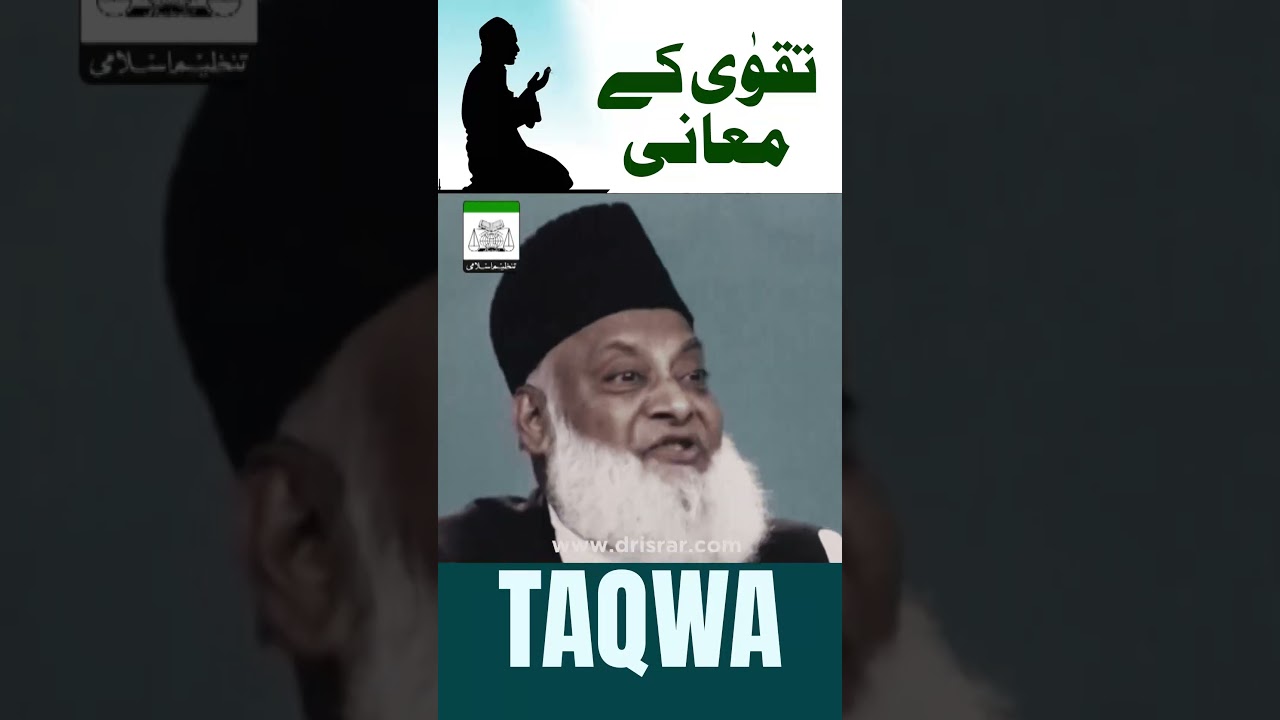
Taqwa, often translated as piety or God-consciousness, is fundamentally about safeguarding oneself from disobedience to God. It encompasses avoiding prohibited acts, adhering to divine commands, and shielding oneself from God’s wrath and the consequences of wrongdoing in this life and the hereafter. This involves a consistent, lifelong effort to protect oneself from anything that displeases God, fostering a constant awareness of divine judgment. It's a proactive approach to avoiding sin and seeking God's favor.
37
