Quần short
The Quran emphasizes the husband's role as a protector and provider within marriage, requiring the wife’s obedience unless the command involves sin. It highlights that righteous wives are obedient to their husbands, but obedience is not required in matters of disobedience to God. Husbands are responsible for guiding their wives towards righteousness and maintaining a just and loving relationship. This lecture clarifies the rights and responsibilities within a marital bond, emphasizing the importance of mutual respect and adherence to divine guidance.

120
This lecture emphasizes the religious obligation of every Muslim to strive for the establishment of the Caliphate system. It asserts that failing to do so constitutes a contradiction of faith and a disregard for divine law. The speaker criticizes a narrow focus on material possessions and worldly concerns, arguing that a true Muslim’s life should be dedicated to this essential struggle, regardless of whether their efforts are recognized or accepted by others. The lecture draws a parallel to the tireless work of past prophets, highlighting that persistent effort is key to success, even in the face of rejection.
64
This lecture explores the concept that those who oppose divine guidance attempt to extinguish the light of God through baseless claims and actions. The speaker clarifies that this attempt is futile, as God will always perfect and sustain His light. The analogy of blowing out a lamp is used to illustrate the misguided effort to negate truth with falsehood, a concept beautifully expressed in a poetic verse by Maulana Zafar Ali Khan. The message emphasizes the invincibility of divine truth and the ultimate triumph of faith over opposition.
47
The Quraysh delegation arrived to Abu Talib during his final moments, issuing an ultimatum: control Muhammad or face open conflict. They didn’t seek wealth, power, or possessions, but demanded Muhammad cease his proclamation of One God. Abu Jahl immediately recognized the core issue – this message threatened the foundations of their entire belief system and the idols they worshipped. This bayān details the pivotal confrontation and the essence of the demand made against the Prophet Muhammad.
60
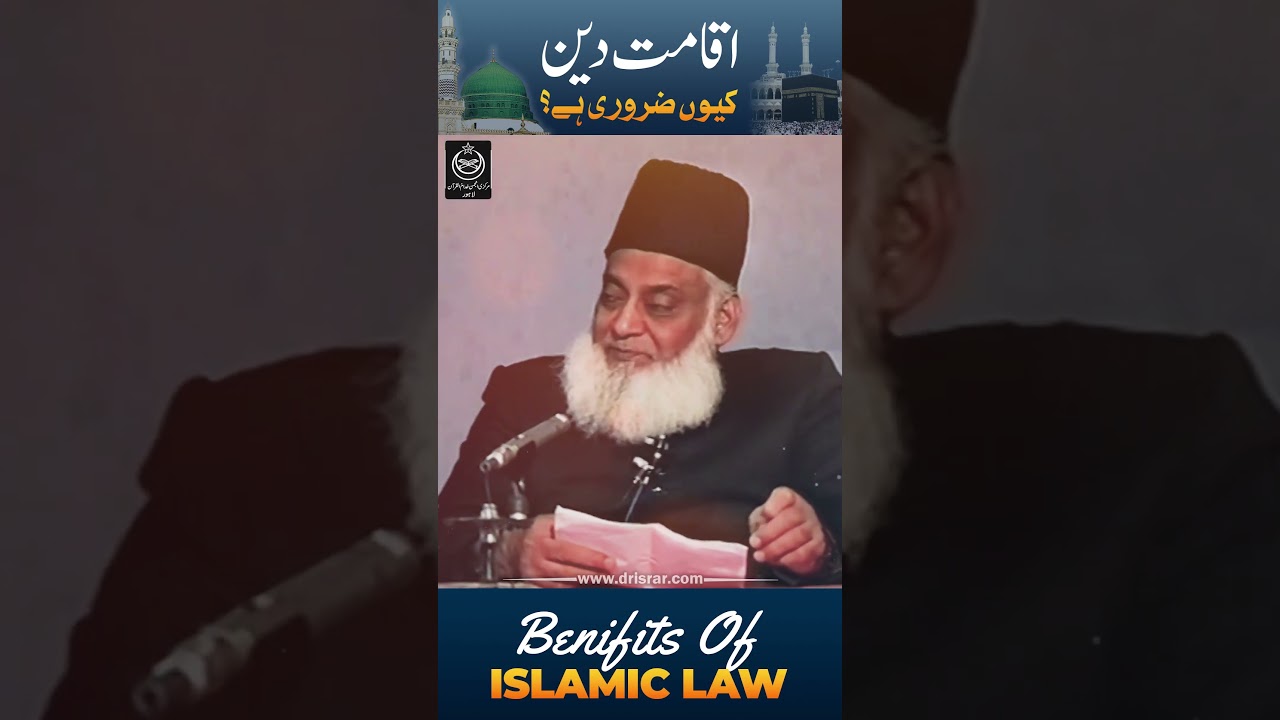
This lecture emphasizes the necessity of establishing a complete Islamic system of life, ensuring that divine law governs all aspects of society, including the legal and parliamentary systems. It argues that adherence to the Quran and the teachings of the Prophet Muhammad is crucial for societal well-being and that neglecting these principles leads to spiritual and societal decline. The speaker stresses that Islam is intended to be a dominant force for good, not to be subjugated, and highlights the importance of unwavering commitment to its principles, even in the face of opposition. The discussion also addresses the historical context of divine scriptures and the consequences of deviating from them.
52

This lecture explores the historical development and varying scholarly opinions regarding the Taraweeh prayer. It details how the Prophet Muhammad (peace be upon him) practiced Taraweeh, focusing on the practice of eight rak'ats followed by Tahajjud. The discussion highlights the practice established during the Caliphate of Umar ibn al-Khattab, which introduced twenty rak'ats performed immediately after Isha prayer with a single Imam. The lecture clarifies that the four major schools of Sunni Islamic jurisprudence – Hanafi, Maliki, Shafi'i, and Hanbali – concur with the practice established by Umar. It also addresses the differing views of the Ahl-e-Hadith, who maintain the original practice of eight rak'ats. The lecture emphasizes the importance of adhering to the Sunnah of the Prophet and the rightly guided Caliphs, as well as the scholarly consensus on the practice of twenty rak'ats, which is observed in the two holy mosques of Mecca and Medina. The lecture also acknowledges Ahmad ibn Hanbal as a prominent scholar and the importance of his Musnad.
108
