Shorts
This lecture clarifies that true piety (taqwa) extends beyond mere ritualistic observance – prayers, fasting, avoiding forbidden foods. It emphasizes abstaining from unjustly acquiring wealth, avoiding deceptive practices, and not using wealth to influence authorities for personal gain. Genuine piety involves a commitment to ethical financial conduct and a sincere avoidance of all forms of injustice. It highlights that simply performing religious duties without inner sincerity and righteous conduct does not constitute true taqwa.

92
The concept of *ubudiyat* (devotion) encompasses two essential elements: the utmost love and complete submission. True devotion is achieved when both reach their peak, uniting in a profound connection with the Divine. This lecture emphasizes that devotion is fundamentally rooted in intense love for God, coupled with total surrender and humility before Him. These two aspects are inextricably linked; one cannot exist without the other. The complete yielding of self, and an absolute devotion, are the hallmarks of genuine worship.
49

Shirk fi zāt, considered the most egregious form of polytheism, involves associating partners with God's very essence. This belief, tragically prevalent amongst some communities claiming Abrahamic lineage, manifests as attributing offspring to God. The argument posits that just as offspring inherit traits from parents, a divine 'offspring' would necessarily share God's attributes, thereby equaling God. This concept fundamentally contradicts the absolute uniqueness and transcendence of God, and is a severe transgression. It represents the ultimate in associating partners with God, exceeding even the worship of idols.
58
This lecture emphasizes true repentance (tawbah) as requiring a complete removal of un-Islamic practices from one’s life, family, and economic activities. Superficial displays of religious observance, such as multiple pilgrimages or verbal expressions of regret, are insufficient without genuine behavioral change. The speaker criticizes hypocrisy, particularly continuing interest-based transactions after performing Hajj. True repentance demands a willingness to sacrifice even personal comfort or face hardship rather than compromise on Islamic principles. The lecture also addresses the decline of modesty and the erosion of Islamic values in Pakistan, lamenting the failure to establish a society grounded in Islamic ethics.
88
This lecture discusses the Islamic perspective on charitable giving and the rights of heirs. A companion of the Prophet Muhammad (peace be upon him) inquired about donating all his wealth for the sake of Allah. The Prophet advised against leaving heirs destitute, emphasizing their rightful share. The companion then proposed donating half, then a third, with the Prophet accepting the one-third contribution as appropriate. This highlights a balanced approach to charity, respecting both the act of giving and the welfare of one’s family.
63
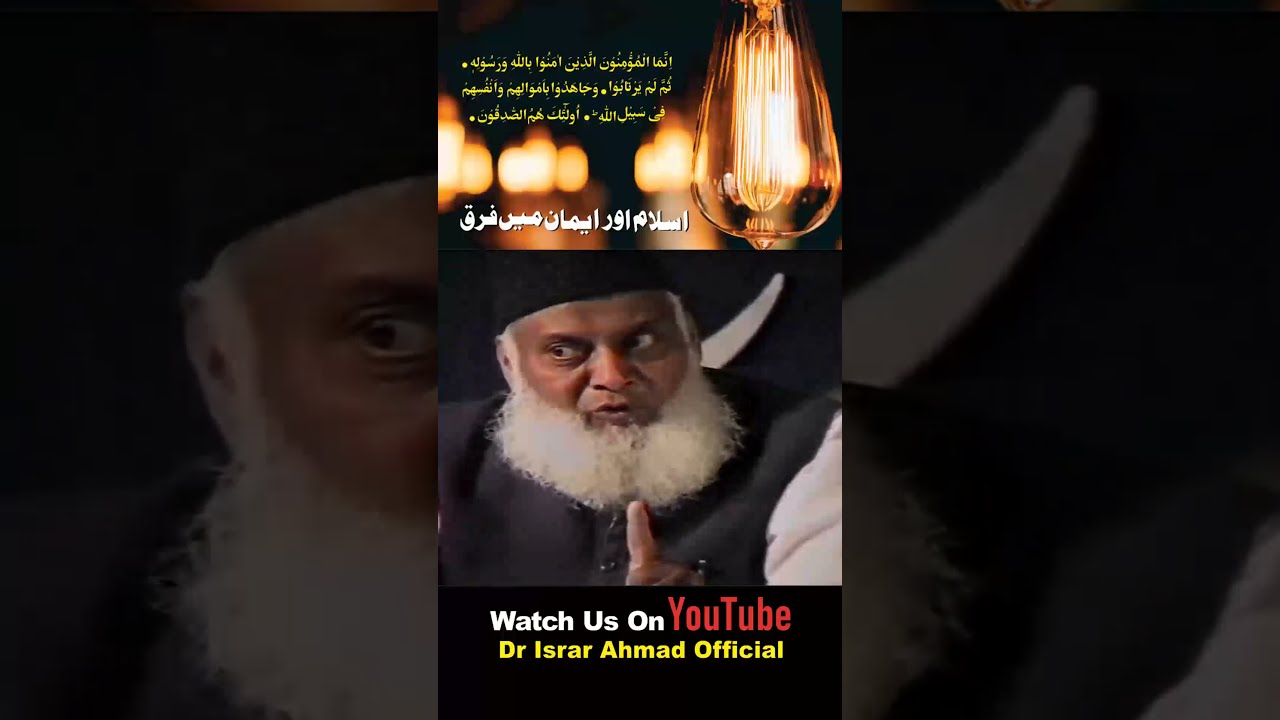
This lecture explores the distinction between Islam and Iman (faith). The speaker clarifies that simply professing Islam is insufficient; true faith requires the internalization of belief within the heart. The Quranic verse from Surah Al-Hujurat, chapter 49, verse 14, highlights the difference between outward submission and genuine belief. The speaker elaborates on the verse in Surah Al-Saf, chapter 6, verse 10, which emphasizes the need for a faith free from doubt and supported by striving in the path of Allah with wealth and life. The lecture emphasizes that a complete faith is demonstrated through both belief and action, and that true believers continuously strive to deepen their connection with Allah.
108
