Kratke hlače

A traveler lost in the desert, deprived of his camel, water, and provisions, despairs until, through divine intervention, his camel reappears. Overjoyed, he momentarily forgets his place before God, exclaiming God is his servant. This prompts a reflection on the immense joy God feels when a servant repents, exceeding the joy the servant experiences upon receiving a blessing. The story emphasizes God’s boundless mercy and the importance of humility.

53
This lecture explores the concept of finding God not in distant realms, but within one’s own heart. It emphasizes the accessibility of divine connection through introspection and remembrance. The speaker highlights that the essence of faith lies in recognizing God’s presence within, and that the human heart is the primary locus for experiencing the divine. The lecture also contemplates the trials faced by humanity, particularly the greatest test for the most noble of creations. It stresses the importance of self-reflection and finding beauty and divine signs in the world around us.
139
This lecture explores the unique relationship between Prophet Ibrahim (Abraham) and God, highlighting his status as a close friend (Khalil) of God as mentioned in the Quran. It details how God chose Ibrahim as an Imam (leader) for humanity and traces the lineage of prophets through his descendants, ultimately leading to Prophet Muhammad (peace be upon him). The lecture emphasizes the continuous chain of prophets spanning 1400 years, from Moses and Aaron through Jesus and John, culminating in the prophethood of Muhammad (peace be upon him). It underlines Ibrahim's pivotal role in the history of divine guidance.
57
This lecture differentiates between *munazra* (debate) and *mujadla* (dialogue). *Mujadla* focuses on invitation and mutual respect, prioritizing the other party’s feelings and aiming to increase wisdom. *Munazra*, conversely, aims for victory and silencing the opponent, characterized by harshness and aggression. The term *munazra* does not appear in the Quran, highlighting a key distinction in approach.
58
This lecture explores the conflict between intellect and passionate faith, using the story of Ibrahim and Nimrod as a central analogy. It argues that true devotion requires transcending rational self-preservation. The speaker emphasizes that while intellect provides guidance and direction, moments of profound commitment demand acting beyond logical calculation, fueled by unwavering belief. It highlights the importance of emotional conviction in propagating a message, even at personal risk, and asserts that intellectual analysis alone cannot drive transformative action. The lecture encourages listeners to move beyond purely rational thought when pursuing higher purposes, embracing the power of heartfelt conviction.
66
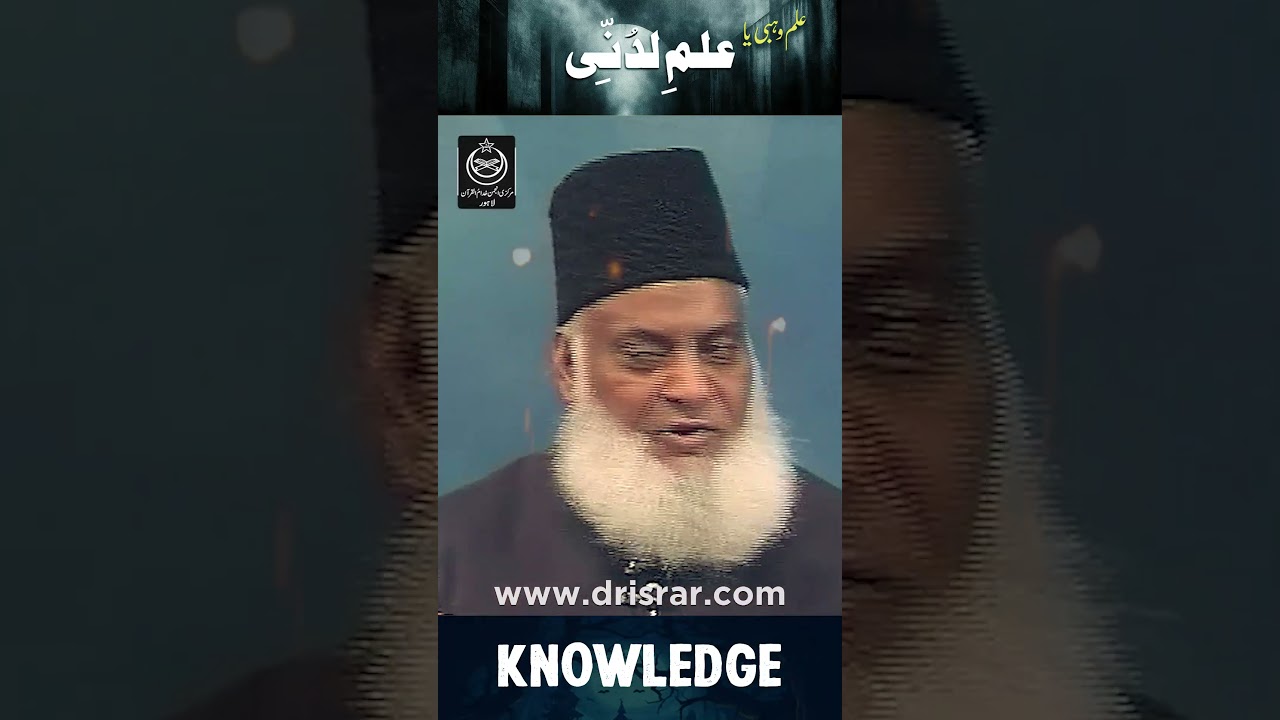
This lecture discusses the concept of *Ilm-e-Ladunni*, or divine knowledge, distinguishing it from knowledge acquired through conventional education. It emphasizes that this knowledge is a direct bestowal from God, implanted in the heart without formal learning or scholarly effort. The speaker clarifies that while traditional fields like theology, geography, history, and Arabic language studies are valuable, *Ilm-e-Ladunni* represents a unique and exceptional form of understanding granted by divine grace. This knowledge is not attained through hardship or academic pursuit, but is a special blessing from God.
73
