Calção
This lecture clarifies whether performing Umrah necessitates performing Hajj. It addresses the scenario of someone performing Umrah while on official government travel, funded by the state, and lacking the financial means for Hajj. The core point is that Umrah itself does not automatically make Hajj obligatory. However, if an individual possesses the financial capability, they should prioritize fulfilling the obligatory Hajj pilgrimage. The lecture emphasizes that if someone can afford to perform Hajj, it becomes an obligation upon them.

75
Human beings are inherently predisposed to recognizing Allah. The knowledge and love of Allah reside within the soul, obscured by layers of neglect. Individuals fail to delve into the depths of their own hearts to rediscover this innate connection. This lecture explores the inherent human capacity for divine recognition and the importance of introspective spiritual inquiry. It emphasizes that recognizing Allah is not an acquired skill, but a natural inclination veiled by worldly distractions. The core message is a call to self-reflection and a return to the inherent spiritual awareness within each individual.
140
The lecture clarifies the distinction between being a Muslim and a true believer (Momin). Simply identifying as a Muslim based on lineage is insufficient; genuine faith requires complete submission to God and His Messenger, unwavering conviction, and active struggle in the path of God with both wealth and life. The speaker references Surah Al-Hujurat, verse 14, emphasizing that true faith enters the heart and is demonstrated through action, not merely claimed through words. Those who genuinely believe are those who strive in the way of Allah with their possessions and lives.
84
The Quran is uniquely preserved compared to all other texts. The world’s scholars acknowledge this fact. Every letter and pronunciation within the various recorded recitations – Sab’a Qira’at and ‘Ashara Qira’at – is meticulously documented, detailing even the use of *zabar* or *zir* for each word. The official text was standardized by Hazrat Uthman (RA), a significant service to the Muslim community. This preservation extends to the precise documentation of variations in recitation, ensuring the integrity of the divine text.
54
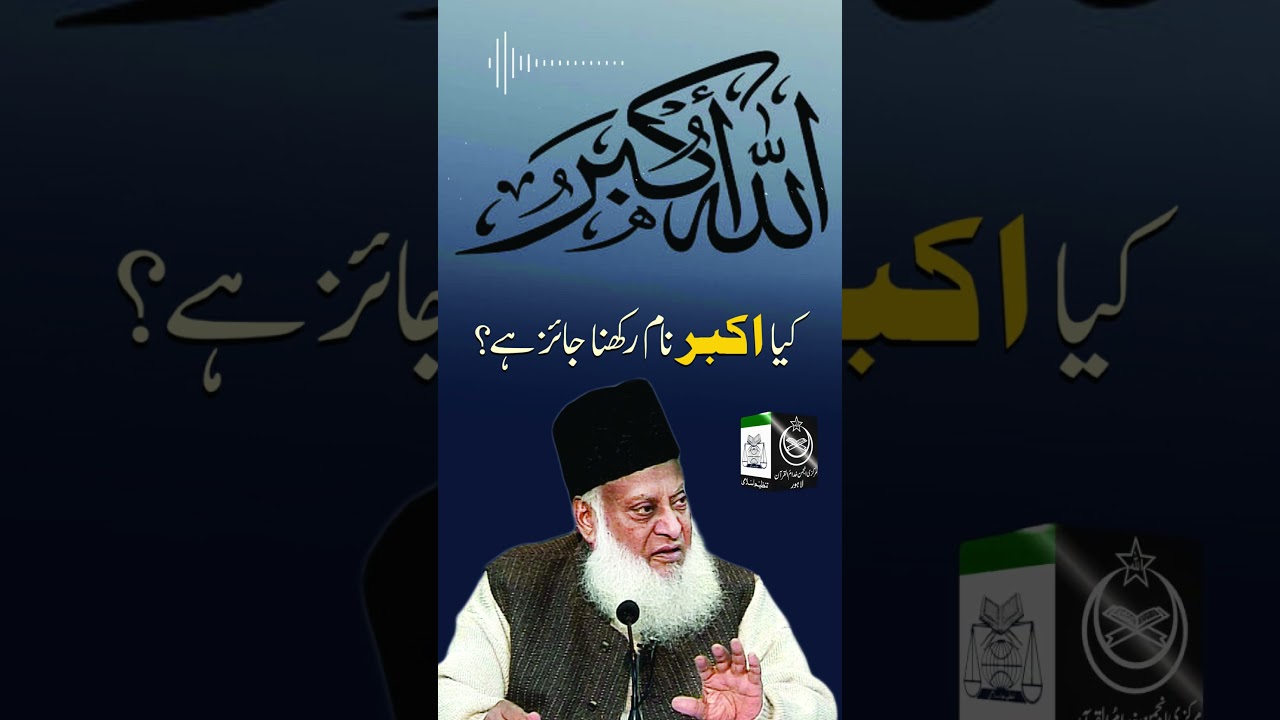
The lecture addresses the permissibility of naming someone 'Akbar'. It clarifies that the name 'Akbar' in itself does not equate to the name of God, as 'Allah Akbar' is a specific phrase denoting God’s greatness. The name 'Akbar' becomes associated with God only when prefixed with 'Al-' (the definite article). Therefore, using 'Akbar' as a personal name is permissible, as it does not inherently invoke the divine name without the necessary prefix.
80

Expanding one’s intellect through the study of science, philosophy, and logic is crucial for comprehending the wisdom within the Quran. True benefit lies not only in acquiring this knowledge but also in sharing it with others. The greatest wealth is the ability to disseminate this understanding, and the greatest service to humanity is to guide others toward divine direction. This pursuit of knowledge, and its subsequent sharing, is the highest form of generosity and selfless service.
54
