Shorts

This lecture emphasizes the reciprocal relationship between a believer and God. Remembering God leads to God remembering the believer, fostering a deep spiritual connection. The discussion highlights the importance of sincere remembrance (zikr) in gatherings and individually, leading to divine response and acceptance. True faith requires unwavering loyalty, love, and making God the ultimate beloved, surpassing all other desires and goals. This establishes a profound bond where God alone becomes the purpose and objective of life.

93

Faith is not merely an external practice, but an inherent connection to the Divine residing within each individual. The universe, from the earth to the heavens, serves as a constant reminder of God’s existence, power, knowledge, and wisdom. Introspection reveals this divine presence within the soul, a direct link to the Creator. Recognizing this inherent faith requires observation of the natural world and deep self-reflection. This connection is a natural part of human nature, a promise fulfilled through recognizing God’s signs in creation and within oneself.
28

The Prophet Muhammad (peace be upon him) clarified that true bankruptcy isn't financial poverty, but a deficiency in fulfilling rights owed to others. A person may perform numerous prayers, fasts, and pilgrimages, yet be considered bankrupt if they have wronged others through theft, slander, or abuse. On the Day of Judgment, the wronged will claim compensation from the wrongdoer's good deeds. If those deeds are exhausted, the wrongdoer will bear the burden of the wronged’s sins, ultimately facing punishment in Hell. This highlights the importance of justice and accountability.
35

The month of Rabi ul Awwal holds deep significance in the life of the Prophet Muhammad (peace be upon him). His birth and death both occurred in this blessed month, though the exact date of his birth is debated, with many scholars suggesting the 9th of Rabi ul Awwal. Historically, the 12th of Rabi ul Awwal was observed as a day of remembrance of his passing, involving charitable acts. Over time, this has evolved into a celebratory event. While the original Islamic festivals have diminished in prominence, new observances like Mawlid al-Nabi and Pakistan Independence Day have gained greater visibility. The Prophet’s arrival in Medina also occurred in Rabi ul Awwal. Focusing on the life and teachings of the Prophet during this month, without fixating on specific dates, encourages reflection, practical application, and emulation of his example, potentially offering solutions to contemporary problems.
47
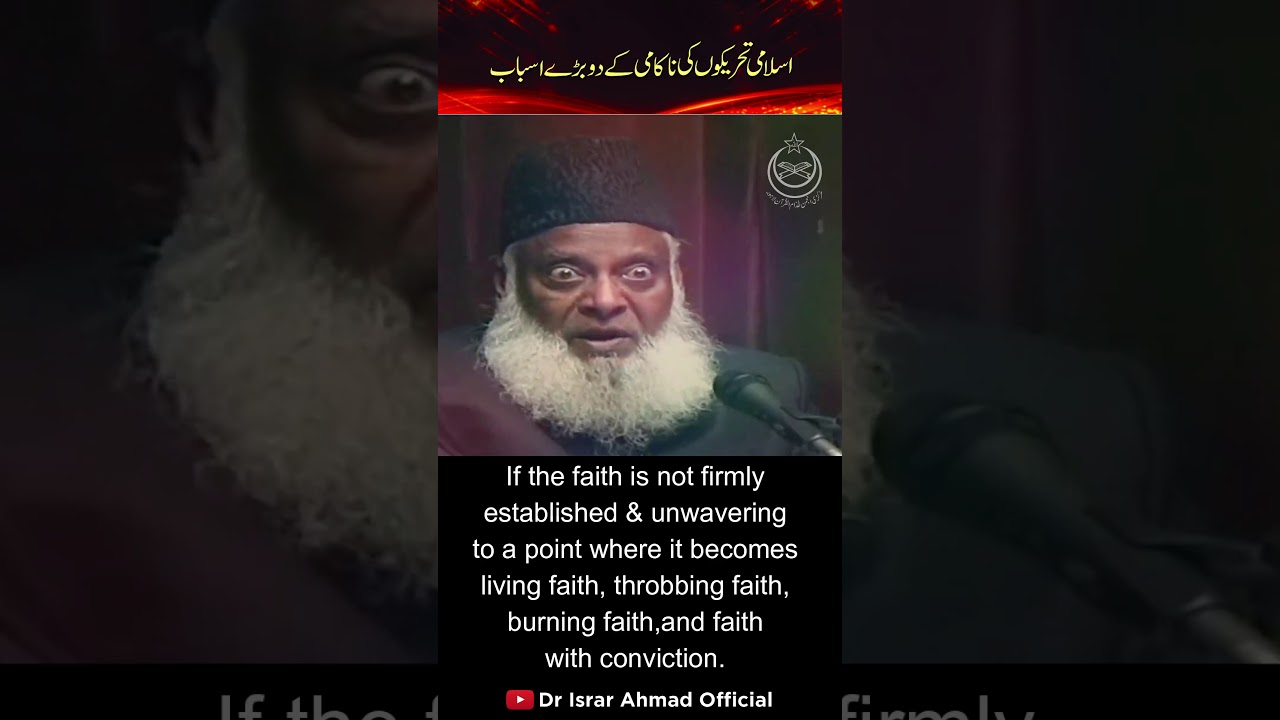
The failure of these movements stems from a focus on the structure of Islam rather than the core of faith. Islam is a building founded upon the bedrock of *iman* (faith); without a strong foundation of faith, these movements cannot succeed. Furthermore, the methodologies employed were borrowed from flawed ideologies – bureaucracy, communism, socialism, fascism, and guerilla warfare – instead of the prophetic model of Muhammad (peace be upon him). These two errors led to the ultimate failure of these movements.
64

Companions of the Prophet Muhammad (peace be upon him) expressed their distress regarding increasing hardships. The Prophet (peace be upon him) reminded them that previous followers of Islam faced even greater trials, including being burned alive, buried alive, and dismembered. He emphasized the importance of patience and perseverance, stating that trials are a test from God and that relief will come in due time. He cautioned against impatience and assured them that enduring hardship is a characteristic of true believers.
82
